
The Short Answer
If you can only afford one upgrade right now, install solar panels first. They cost less, pay back faster, and generate income from day one. A heat pump is a bigger investment with a longer payback, but when you eventually add one and power it partly with solar electricity, the combination is the most effective energy upgrade you can make to a UK home in 2026.
That said, the right answer depends on your home, your heating system and what you’re trying to achieve. Here’s the full comparison.
Cost: What You’ll Actually Pay
Solar panels
A typical 4kW solar panel system costs £5,500–£7,500 fully installed in 2026. That includes panels, inverter, mounting, electrical work and DNO notification. A larger 6kW system runs to £7,500–£10,000. All installations currently carry 0% VAT (until March 2027).
There’s no upfront grant for solar panels if you’re a standard-income homeowner. Low-income households may qualify for free solar through the Warm Homes Local Grant, see our grants guide for details.
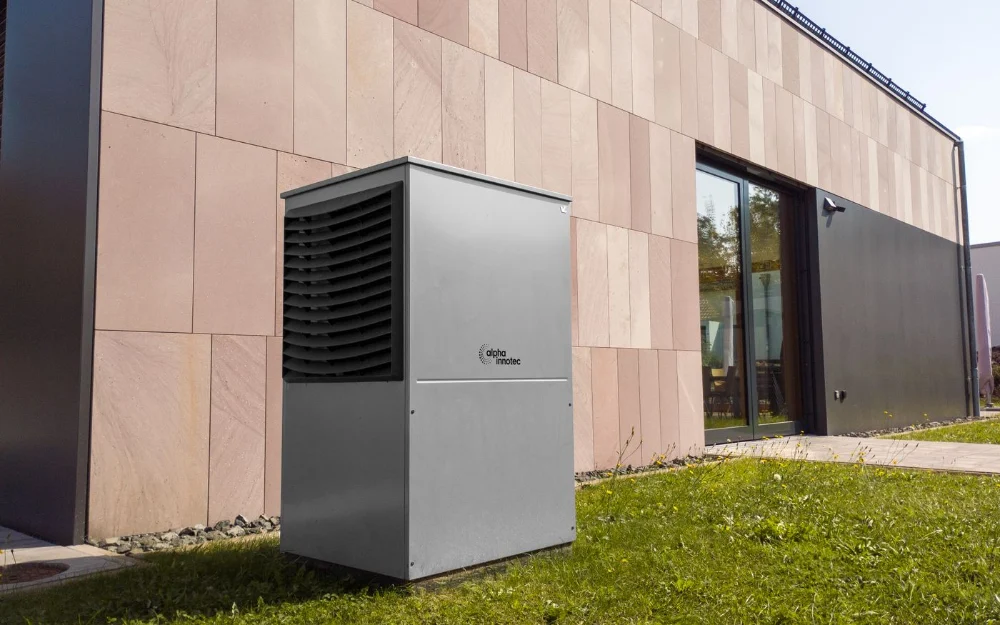
Air source heat pump
An air source heat pump for a typical 3–4 bedroom UK home costs £10,000–£15,000 before the grant. The Boiler Upgrade Scheme (BUS) provides a £7,500 grant. This brings your out-of-pocket cost down to roughly £2,500–£7,500.
However, there’s a significant hidden cost that many comparison articles skip: if your home doesn’t already have underfloor heating or large radiators, you may need to upgrade your heat distribution system. Heat pumps produce water at a lower temperature than gas boilers (around 35–45°C vs 60–80°C), so standard radiators often need upsizing. Budget an extra £3,000–£8,000 for radiator upgrades if needed, which can push total costs well above the headline figure.
Savings: How Much Will You Actually Save Per Year?
Solar panels
A 4kW solar system in an average UK location generates roughly 3,400–3,800 kWh per year. At current electricity rates (around 24.5p/kWh as of Q2 2026), that’s worth £830–£930 per year if you use all of it. Realistically, without a battery, you’ll use 30–50% directly and export the rest via the Smart Export Guarantee at 4–16.5p/kWh.
Typical annual saving: £500–£700 without a battery. Add a battery and a good SEG tariff and this rises to £700–£1,000.
Heat pump
A heat pump replaces your gas boiler, so the saving is the difference between your current gas heating costs and the electricity the heat pump uses. An efficient air source heat pump has a Coefficient of Performance (COP) of 2.8–3.5, meaning for every 1 kWh of electricity it uses, it produces 2.8–3.5 kWh of heat.
For a typical household spending £1,200–£1,500 per year on gas heating, switching to a heat pump at current electricity rates produces annual heating costs of £855–£1,200. That’s a saving of £300–£500 per year on heating, less dramatic than many installers claim, because while heat pumps are more efficient, electricity is roughly 4x more expensive per kWh than gas.
Typical annual saving: £200–£500 compared to a gas boiler. The saving is larger if you’re replacing an old, inefficient boiler, and smaller if your current boiler is relatively modern.
Payback Period
Solar panels: 6–9 years, depending on system size, location and how much electricity you use directly vs export. This is a strong payback that beats most home investments.
Heat pump (after BUS grant): 10–20 years, depending on your current heating costs and how much you need to spend on radiator upgrades. If the grant covers a big chunk and your radiators are already suitable, payback can be 10–12 years. If you need significant work, it stretches to 15–20 years.
On pure ROI, solar panels win convincingly, roughly 350% return on investment over 25 years vs around 125% for a heat pump over the same period.
What Each One Actually Does
This is a important distinction that many comparison articles blur:
Solar panels reduce your electricity bill. They generate electricity that powers your lights, appliances, cooking, hot water (if you have an immersion heater) and anything else that runs on electricity. They don’t directly heat your home unless you have electric heating.
A heat pump replaces your gas boiler. It heats your home and your hot water. It doesn’t reduce your electricity bill, in fact, it increases it, because it runs on electricity. Your gas bill drops to zero (or near zero), but your electricity bill goes up.
This is why they work so well together: the solar panels offset the electricity the heat pump uses, dramatically cutting the running costs of both.
The BUS Grant: £7,500 for Heat Pumps
The Boiler Upgrade Scheme is the main reason heat pumps have become financially viable for many households. Here’s what you need to know:
Amount: £7,500 for air source or ground source heat pumps.
Eligibility: You must be a homeowner in England or Wales. The installation must be MCS-certified. You no longer need a valid EPC at the point of application (a recent relaxation that helps owners of older properties).
How it works: Your installer applies for the grant on your behalf. The £7,500 is deducted from your invoice, you never see the money directly. This means you need to find an MCS-certified installer who is registered with the BUS scheme.
Duration: The scheme is funded through to March 2028, so there’s no immediate rush, but grant budgets can be adjusted.
Which Should You Install First?
Here’s our recommendation based on different starting positions:
You have a working gas boiler and no solar: Install solar panels first. The payback is faster, the upfront cost is lower, and you’ll immediately start saving on electricity. When your boiler eventually needs replacing (or you can afford the next step), add the heat pump and power it partly with solar.
Your boiler is failing or needs replacement: This changes the calculation. If you’re going to spend £2,000–£3,000 on a new gas boiler anyway, the incremental cost of a heat pump (after the £7,500 BUS grant) might only be £500–£4,500 more. In this case, the heat pump may be the smarter first move, especially since gas boilers will eventually be phased out for new installations.
You already have solar panels: A heat pump is the logical next step. Your solar panels will offset a significant portion of the heat pump’s electricity consumption, making the combined economics much stronger than either technology alone.
You can afford both: Do both simultaneously. An installer who can handle both solar and heat pump will be able to design a system where they work together optimally. The combined system can reduce your total energy costs by 60–80% compared to a gas boiler and grid electricity.
The Combined System: Solar + Heat Pump
When installed together, solar panels and a heat pump create a virtuous circle:
During summer, your solar panels generate far more electricity than your house needs. The heat pump uses some of this free electricity to heat your hot water (you still need hot water in summer). The rest goes to the battery or the grid via SEG.
During winter, solar generation drops but your heat pump is working hardest. Even in winter, solar panels generate some electricity that offsets the heat pump’s consumption. A battery helps bridge the gap between daytime generation and evening heating demand.
The net result is a household that runs largely on renewable energy, with dramatically lower energy bills than a home using gas heating and grid electricity. Typical combined savings are £1,200–£1,800 per year compared to a gas boiler and no solar.
What About Ground Source Heat Pumps?
Ground source heat pumps are more efficient than air source (COP of 3.5–4.5 vs 2.8–3.5) but cost significantly more, typically £20,000–£35,000 before the grant. They require significant garden space for horizontal ground loops or deep boreholes. For most UK homes, air source is the practical choice. Ground source is worth considering if you have a large garden, a new build, or are doing major renovation work where the ground loop installation can be combined with other earthworks.
The Bottom Line
Solar panels are the better financial investment, lower cost, faster payback, higher ROI. Start here if you’re looking for the best return on your money.
Heat pumps are the better environmental investment, they directly eliminate fossil fuel burning for heating, which is where most UK household carbon emissions come from. The BUS grant makes them financially viable, but the payback is longer.
Together, they’re the gold standard for a low-carbon, low-cost UK home. Install solar first, add the heat pump when your boiler needs replacing or when you can afford it, and you’ll have a home that’s largely energy-independent.
How We Researched This Guide
We compared real installation costs from UK installer networks, verified grant amounts against Ofgem and gov.uk, and calculated savings using current energy prices (Ofgem price cap Q2 2026). COP figures are based on field performance data, not manufacturer lab ratings. This article was last updated April 2026.
This page is part of Look Into’s UK household cost research. For the costed figures behind it — capture date, method and sources — see the Home Upgrade Payback Index.