
Do You Actually Need a Battery? The Honest Answer
Home battery storage is the fastest-growing segment of the UK solar market in 2026, and every installer is keen to upsell you one. But the truth is more detailed than the sales pitch: batteries make strong financial sense for some households and barely break even for others. This guide cuts through the marketing to help you work out which camp you’re in.
What Does a Home Battery Actually Do?
A home battery stores electricity for use later. With solar panels, it captures surplus energy generated during the day (when you’re often out) and releases it in the evening when you actually need it. Without solar, it can still save money by charging from the grid at cheap off-peak rates and powering your home during expensive peak hours.
The result is that you use less electricity from the grid at full price. A typical UK household with solar panels and no battery exports 50–70% of the solar energy they generate. Add a battery and that figure drops to 20–30%, meaning you’re using far more of your own free electricity.
What Does It Cost in 2026?
Here’s what you’ll actually pay for battery storage in the UK right now, fully installed:
Small batteries (3–5 kWh): £2,500–£4,500 installed. Suitable for small households or flats with modest electricity usage. These store enough for an evening’s worth of lighting, cooking and entertainment, but won’t cover overnight heating or an electric vehicle.
Medium batteries (5–10 kWh): £4,500–£7,000 installed. The sweet spot for most three-bedroom homes. A 9.5 kWh battery stores roughly a full evening and night’s worth of electricity for an average household.
Large batteries (10–15 kWh): £7,000–£12,000 installed. For larger homes, households with electric vehicles, or those wanting maximum self-sufficiency. The Tesla Powerwall 3 at 13.5 kWh sits in this bracket at £9,500–£12,000.
All prices include 0% VAT, which is available until 31 March 2027. After that, expect 5% VAT to be added, roughly £250–£600 extra depending on system size.
The Main Brands Worth Considering
GivEnergy
The most popular home battery brand in the UK, and for good reason. GivEnergy is headquartered in the UK, has a strong installer network and their app is one of the best for monitoring and smart tariff integration. Their All-in-One systems range from 5 to 13.5 kWh and cost £5,000–£9,000 installed. If you want a reliable, well-supported system at a reasonable price, GivEnergy is the default choice for most installers and homeowners.
Tesla Powerwall 3
The name everyone knows. The Powerwall 3 offers 13.5 kWh of storage with a built-in hybrid inverter, excellent build quality, storm watch features and a genuinely slick app. The downside is price, it’s more expensive per kWh than competitors at £9,500–£12,000 installed, and availability can be limited. It’s a premium product, and you’re paying partly for the Tesla brand. Whether that’s worth it depends on your priorities.
BYD
BYD manufactures high-quality lithium iron phosphate batteries widely used by MCS installers across the UK. Their HVS and HVM ranges are modular (you can stack units to increase capacity) and offer excellent cycle life ratings of 10,000+ cycles. Less flashy than Tesla but arguably better engineering per pound spent.
Budget Options: Solis, SolaX, Fox ESS
Chinese-manufactured hybrid inverter-battery systems that come in at £4,500–£7,500 installed for 5–10 kWh. The hardware is generally solid, but after-sales support can be less responsive than GivEnergy or Tesla. If you’re budget-conscious and your installer has experience with these brands, they can be good value.
Battery Technology: What’s Inside Matters
In 2026, the standard for home battery storage is Lithium Iron Phosphate (LFP or LiFePO4). All the major brands above use this chemistry, and it’s the right choice for several reasons:
Longevity: LFP batteries typically last 6,000–10,000 cycles. If you cycle once daily, that’s 16–27 years of service life, well beyond the 10-year warranties most manufacturers offer.
Safety: LFP has an excellent safety record. It’s thermally stable and much less prone to thermal runaway than the older NMC (Nickel Manganese Cobalt) chemistry used in earlier home batteries.
Consistency: LFP batteries maintain their capacity better over time. You’ll still have 80%+ of original capacity after 10 years of daily use.
If anyone offers you a battery using NMC chemistry in 2026, ask why. There are a few legitimate use cases, but for home storage, LFP is the default.
How to Size Your Battery
Getting the right size matters, too small and you’re still buying expensive peak electricity; too big and you’ve overspent on capacity you’ll never use.
The simple method
Check your smart meter or energy bills for your average monthly electricity usage. Divide by 30 to get your daily usage. That’s your starting point for battery size.
For example: 225 kWh per month ÷ 30 = 7.5 kWh daily usage. An 8–10 kWh battery would be a good fit.
By household type
1–2 bed flat or small house: 3–5 kWh. Daily usage typically 5–7 kWh.
3-bed semi or terrace: 8–10 kWh. The UK average household. This covers a full evening and overnight.
4–5 bed detached: 10–15 kWh. Higher usage households, especially with multiple occupants or electric heating.
Any home with an EV: Add 7–8 kWh to the above. An electric car charges at roughly 7 kWh per overnight session for average daily driving. If you’re planning to get an EV in the next couple of years, size up now, it’s far cheaper than adding a second battery later.
Important sizing notes
Depth of discharge: Usable capacity is usually 90% to 100% of the stated total. In our audit of 20 battery datasheets on 15 September 2026, it ran from 89.8% to 100% where a maker printed both figures, and in 10 of the 20 lines the number in the product name was higher than the usable figure. Ask for the usable kWh, not the one in the name. This is already factored into most manufacturer specs, but check.
Winter sizing: Your battery should ideally cover your winter evening usage, when solar generation is low and you’re relying on stored energy or cheap off-peak grid power to avoid expensive peak rates.
The Payback Question: Is It Worth the Money?
This is where we need to be straight with you. Battery payback periods are longer than solar panel payback periods, and the financial case depends heavily on your situation.
Scenario 1: Solar + battery, standard tariff
If you have solar panels and add a battery on a standard electricity tariff, you’ll save by using more of your own solar energy rather than exporting it cheaply and buying it back at peak price. Typical payback: 12–15 years. This is marginal given most battery warranties are 10 years, though the battery will likely last 15–20 years.
Scenario 2: Solar + battery + time-of-use tariff
This is where batteries really shine. On a tariff like Octopus Go, you charge the battery from the grid at 7p/kWh overnight and use that stored energy during the day and evening instead of paying 25p/kWh. Combined with solar charging, payback drops to 7–10 years.
Scenario 3: Battery + time-of-use tariff, no solar
Even without solar panels, a battery on a time-of-use tariff can save you £300–£500 per year by arbitraging the difference between cheap overnight rates and expensive daytime rates. Payback: 8–12 years depending on battery cost and usage patterns.
Scenario 4: Solar + battery + EV
The strongest financial case. You’re charging your car with free solar energy or cheap off-peak electricity instead of paying 25p/kWh from the grid. This can save £400–£600 per year on EV charging alone, on top of household electricity savings. Payback: 5–8 years.
When it’s NOT worth it
If you’re on a flat-rate electricity tariff, don’t have solar panels, and don’t plan to get an EV, the payback period can stretch to 15+ years. At that point, you’re barely breaking even over the battery’s lifetime. The money would be better spent on solar panels first, insulation, or simply kept in a savings account.
Smart Tariffs: The breakthrough
Time-of-use tariffs have transformed the battery economics. The key ones to know about:
Octopus Go: 7p/kWh overnight (typically midnight to 5:30am), standard rate during the day. The most popular choice for battery owners.
Octopus Flux: Designed specifically for solar + battery households. You get cheap import rates and premium export rates (up to 30p/kWh) during peak hours. If you can export stored solar during the 4–7pm peak, this is where the biggest returns come from.
Octopus Agile: Half-hourly variable pricing. More complex, but with a battery and automation, you can charge during periods of very cheap or even negative-price electricity and export or use during expensive periods.
GivEnergy batteries in particular integrate well with Octopus tariffs, with built-in scheduling that automatically optimises charging and discharging based on your tariff’s rate structure.
Installation: What to Expect
A typical battery installation takes half a day to a full day. If you’re adding it to an existing solar system, your installer will need to check your current inverter is compatible, some older string inverters may need replacing with a hybrid inverter, which adds £1,000–£1,500 to the cost.
If you’re installing solar and battery together, most installers will quote a hybrid inverter from the start, which handles both solar and battery in one unit. This is more cost-effective than retrofitting a battery later.
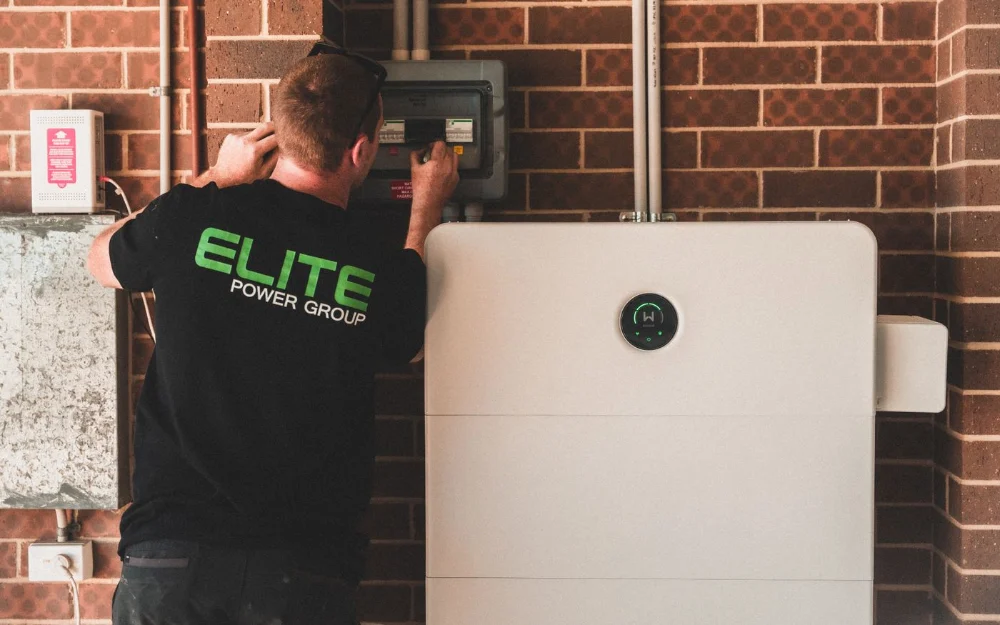
Batteries are typically wall-mounted in a garage, utility room or exterior wall. They need to be in a ventilated, temperature-controlled space, not in a loft (too hot in summer) or an uninsulated outhouse (too cold in winter). Most units are about the size of a small boiler.
Grants and VAT
Battery storage qualifies for 0% VAT until 31 March 2027, this applies whether you’re installing it alongside solar panels or adding it to an existing system. After that date, VAT reverts to 5%.
The Warm Homes Local Grant can cover battery storage as part of a wider energy efficiency package for eligible low-income households. The ECO4 scheme (running until December 2026) may also cover batteries in certain circumstances. See our Solar Panel Grants UK 2026 guide for full details on eligibility.
Our Honest Assessment
Best case for a battery: You have solar panels, an EV (or plan to get one), and you’re willing to switch to a time-of-use tariff. Payback is 5–8 years and you’ll save significantly over the battery’s lifetime.
Decent case: You have solar panels and switch to a time-of-use tariff. Payback is 7–10 years. Worth doing, especially if you can get a good price on a GivEnergy or BYD system.
Weak case: You have solar panels on a flat-rate tariff and no EV. The payback stretches to 12–15 years. Consider switching tariff first, it’s free and makes the battery worth installing.
Don’t bother: No solar, no EV, flat-rate tariff. Install solar panels first. The panels alone have a faster payback and the battery can always be added later.
Whatever you decide, get at least three quotes from MCS-certified installers. Battery prices vary widely between installers, and the cheapest quote isn’t always the best, check what brand they’re installing, what warranty is included, and whether they’ll handle the DNO notification (your local electricity network needs to know about battery installations over 3.68 kW).
How We Researched This Guide
We compared pricing data from multiple UK installer networks, checked battery specifications against manufacturer datasheets, and verified grant eligibility against current government guidance. All costs are based on installed prices including 0% VAT as of April 2026. Battery technology and pricing change rapidly, so always get current quotes before making a decision.