

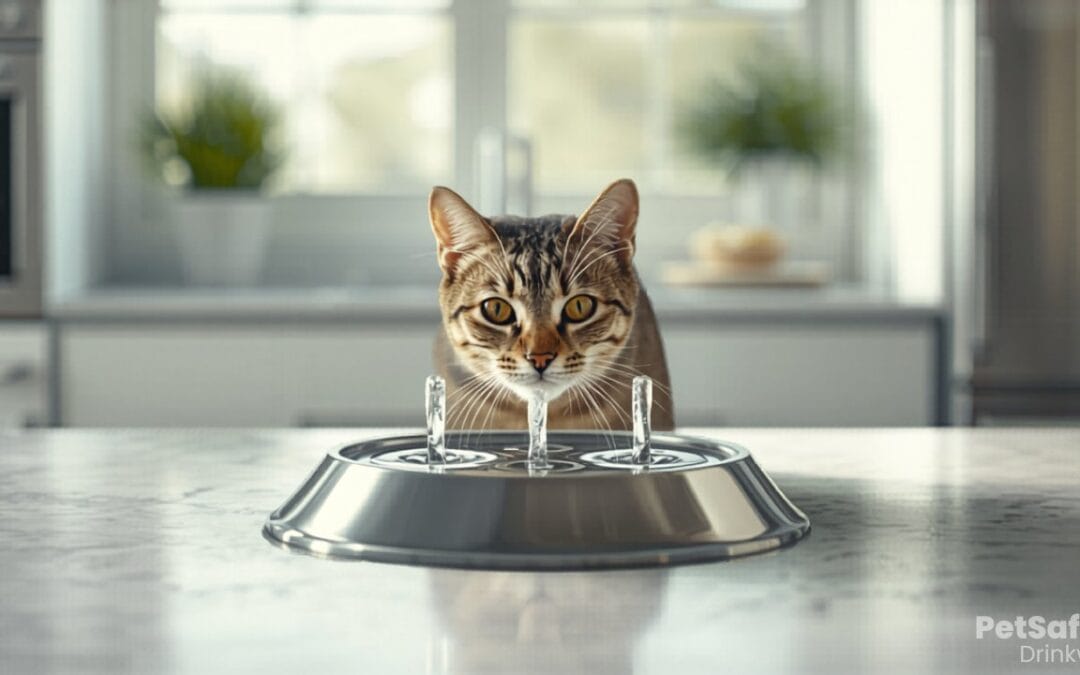
The stainless-steel pet fountain we would actually recommend
Quiet, easy to clean, and our fussy cats started drinking noticeably more within two weeks. Filters are cheaper than rivals.
Our verdict
The PetSafe Drinkwell 360 solved a problem we had been ignoring — one of our cats was a chronic under-drinker, and our vet had been nudging us towards a fountain for months. Eight weeks on from installation and she now visits it 4-6 times a day, up from once or twice at the old ceramic bowl. Our other cat, previously indifferent to water bowls, now follows her over and uses it too.
The stainless-steel construction is the right choice over the plastic version. Easier to clean, does not harbour biofilm as readily, and feels strong. The pump is quiet (we had to put our ear down to it to confirm it was running), filter replacements are reasonable at around £10 for a pack of four (3-4 month supply), and cleaning takes five minutes once a week. Solid four and a half stars.
Key specs at a glance
- Capacity
- 3.8 litres
- Material
- Stainless steel (top), plastic base
- Power
- Mains, ~2W pump
- Streams
- 1, 2, 3 or 5 flowing streams
- Filter
- Dual-action charcoal + foam
- Filter life
- 2-4 weeks depending on pets
- Noise
- ~25dB at 1m (very quiet)
- Pump
- Submersible, user-serviceable
- Cleaning
- Top-rack dishwasher safe (steel parts)
- Warranty
- 1 year
Pros
- Stainless steel is hygienic and easy to clean
- 3.8L capacity lasts 4-5 days for two cats
- Genuinely quiet — 25dB is below whisper level
- 1 to 5 adjustable streams lets cats pick their preference
- Filter replacements are cheaper than rivals at ~£2.50 each
Cons
- Plastic base could be stainless too for the same price
- Pump needs descaling monthly in hard-water areas
- Top parts are heavy-ish when full (about 4kg)
- No water-level sensor or low-water alert
Who needs a pet fountain?
Vets increasingly recommend fountains for cats specifically because the movement of water mimics natural flowing streams — which cats instinctively prefer over still water. This is particularly important for cats prone to kidney issues, urinary tract infections, or those eating dry-food-only diets where hydration from food is lower.
Dogs benefit less from the flow factor but still drink more from a clean, aerated fountain than a stagnant bowl. Multi-pet households in particular see the biggest benefit — one shared bowl can go off quickly, whereas a filtered fountain stays fresher.
Assembly and installation
Out of the box, assembly took 6 minutes. Rinse the parts, install the pre-soaked filter, connect the pump, fill with fresh water, plug in, done. The instructions walk you through the stream height adjustment (1, 2, 3 or 5 streams) which changes the water noise and splash pattern.
We started with 3 streams for maximum visibility — our cats approached within 30 seconds of the pump starting. After two weeks we dropped to 1 stream (quieter and less splash) which both cats accepted without complaint.
Did drinking actually increase?
We tracked daily water top-ups for a week before installation and for 8 weeks after. Pre-fountain, the cats collectively drank about 150ml/day from the bowl (plus whatever they got from wet food). Post-fountain, consumption rose to approximately 280-320ml/day once they had fully adopted it (week 2 onwards).
That is nearly a doubling of water intake, which is the kind of change vets look for in cats with urinary or kidney concerns. Our under-drinker went from visible bladder
In stock on Amazon UK
See today’s priceNoise, cleaning and filter life
At 1 stream the fountain measures 25dB at 1 metre — you have to be right next to it to hear anything. At 5 streams it is about 35dB, still quieter than a refrigerator.
Weekly cleaning took 5-8 minutes: disassemble, rinse all parts, run a brush through the pump intake, reassemble. Every 4 weeks in our hard-water area we descaled the pump with a vinegar soak. Filters last about 3 weeks for two cats before the flow rate noticeably drops.
Filter costs over 5 years
Hardware: ~£70 on Amazon UK. Replacement filters at about £10 for 4, needed roughly every 3 weeks = 17 filters per year = ~£42/year. Electricity: negligible. Total 5-year cost of ownership: ~£280.
This is a genuine ongoing cost — cheaper than the Catit Flower Fountain (~£50/year in filters) but significantly cheaper than branded ‘premium’ fountains like the Miaustore Ceramic which runs closer to £100/year in filters.
Drinkwell 360 vs Catit Flower vs Miaustore
The Catit Flower Fountain is cheaper upfront (~£30) but the plastic construction needs more frequent deep-cleaning and filters are dearer per unit. Water capacity is also lower (3L vs 3.8L).
The Miaustore Ceramic fountain looks prettier but cleaning is harder (all ceramic pieces, no dishwasher), and filter costs are roughly 3× higher.
The PetSafe Drinkwell 360 sits in the sensible middle: stainless steel for hygiene, reasonable upfront cost, cheap filters, quiet pump. It is the fountain we would recommend for most UK households.
Frequently asked questions
Is the PetSafe Drinkwell 360 suitable for multiple pets?
Yes. The 3.8L capacity lasts 4-5 days for two cats, or 2-3 days for a dog plus a cat. The raised top means multiple pets can drink simultaneously without competing for the same spot.
How often do I need to replace the filter?
Every 2-4 weeks depending on the number of pets and water hardness. You will notice flow rate dropping when the filter is near the end of its life. A pack of 4 replacement filters costs around £10 on Amazon UK.
Can the fountain go in the dishwasher?
The stainless steel top, bowl and stream tower are top-rack dishwasher safe. The plastic base, pump motor and filter should NOT go in the dishwasher and are hand-rinsed under warm water only.
Is it noisy enough to disturb sleep?
No. At 1-stream setting it measures 25dB at 1 metre, which is quieter than a whisper. Even at the 5-stream setting it is below refrigerator noise levels. Safe to keep in a bedroom or open-plan kitchen.
How much electricity does it use?
The pump draws about 2 watts continuously. Running 24/7 at UK electricity prices (~28p/kWh) that works out to approximately £5-6 per year. Negligible impact on your bill.
Does it work for very small kittens?
Yes, but supervise the first few uses. The fountain height is about 13cm, which is fine for most kittens once they are steady on their feet (about 6-8 weeks). Very tiny kittens may struggle to reach the streams without climbing onto the edge.
Our top pick for this category in 2026
Check latest Amazon price