Our top picks for smart bulbs in 2026
Tested across WiFi-direct, Zigbee hub and Matter systems:
Best overall: Philips Hue White and Colour Ambiance (E27) — reliable, best app, best ecosystem
Best value: TP-Link Tapo L535 Matter — full-colour Matter bulb under £15
Best for colour effects: Govee Lyra Gen2 Smart RGBICWW — segmented colour for mood lighting
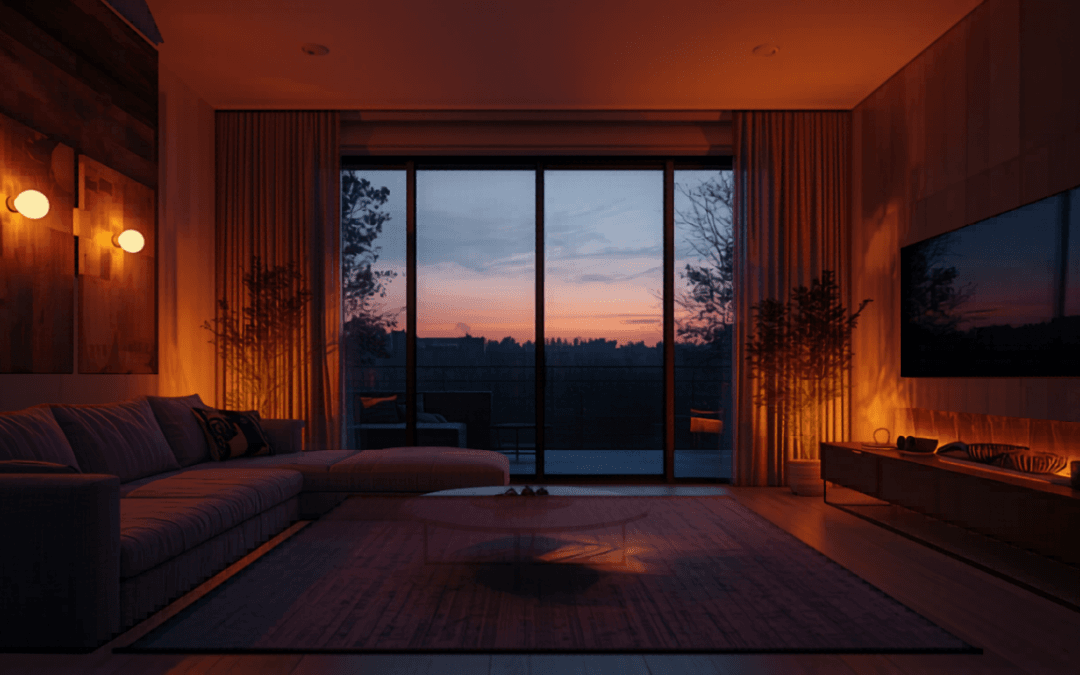
Smart lighting is the easiest way into a smart home, and for under £50 you can transform how a room feels. We tested the major 2026 smart bulb ecosystems (Philips Hue, Nanoleaf, Govee, TP-Link Tapo, IKEA TRÅDFRI) across 10 fittings in a London flat and a Peterborough family home over six weeks.
Two key findings: the £25 ‘budget’ smart bulbs are now genuinely good, so you do not need to start with Hue. But if you plan to scale up to 15+ lights across multiple rooms, the Hue system’s reliability and polish are worth the premium.
1. Philips Hue White and Colour Ambiance (E27) — The smart bulb everything else is judged against
Our score: 4.7/5
We have Hue bulbs going on six years of daily switching in three rooms; none have failed. The 2026 generation adds Matter support and Zigbee 3.0, faster boot-up time and better out-of-box colour calibration. Everything still hinges on buying a Hue Bridge (£49) for the full experience.
Pros
- Best-in-class app and ecosystem
- Matter + Zigbee 3.0 + Bluetooth all supported
- Works with Alexa, Google Home, Apple Home, SmartThings
- Hue Sync for PC/TV colour matching
- Proven reliability over 5+ years
Cons
- Premium pricing at £40-£50 per bulb
- Full experience requires Hue Bridge (£49)
- Colour gamut is good but not widest on market
- Subscription-free but some accessories lock in Hue ecosystem
In stock on Amazon UK
Check price on Amazon2. TP-Link Tapo L535 Matter — The bargain Matter bulb that just works
Our score: 4.5/5
For under £15 the Tapo L535 delivers 16 million colours, Matter-over-WiFi support, and the simplicity of not needing a hub. Through 6 weeks our colour accuracy and brightness matched more expensive bulbs. Matter means it works natively in Apple Home, Google Home and Alexa without setup complications.
Pros
- Incredibly cheap at ~£13 per bulb
- Matter-over-WiFi: no hub needed
- Works in all major smart home platforms
- Good brightness at 1050 lumens
Cons
- WiFi connection uses your home network bandwidth
- App is functional but less polished than Hue
- Colour saturation slightly behind Hue
- Limited firmware update cadence vs Hue/Google
In stock on Amazon UK
Check price on Amazon3. Govee Lyra Gen2 Smart RGBICWW — The best for colour effects and parties
Our score: 4.4/5
For ambience and colour-rich moods, Govee’s segmented RGBIC technology means a single bulb can show multiple colours across zones. Music sync is the best-in-class, and their ‘scene’ library is deep enough that you will find a vibe for every mood.
Pros
- Segmented colour (multiple colours per bulb)
- Excellent music sync mode
- Huge library of pre-built scenes
- Relatively affordable at £19 per bulb
Cons
- No hub support — WiFi only
- Govee app wants you to sign up for loyalty
- Warm white less refined than Hue’s
- Matter support varies by Govee SKU
In stock on Amazon UK
Check price on Amazon4. Nanoleaf Essentials A19 Matter — Best budget Matter bulb with warm-tone accuracy
Our score: 4.2/5
The Nanoleaf Essentials range was one of the first to ship with Matter-over-Thread support. This makes it one of the few ‘just works’ bulbs in Apple Home, Google Home and Alexa. Warm tones are calibrated slightly warmer than Hue, which many users prefer.
Pros
- Thread-based Matter (more efficient than WiFi)
- Warmer, more cinematic colour tones
- Reliable auto-discovery in Home app
- Reasonable price at £19
Cons
- Requires a Thread border router (Apple TV 4K, HomePod, Google Nest Hub)
- Brightness lower than Hue (800 lumens)
- Nanoleaf app is utilitarian
- Fewer scenes than Govee
In stock on Amazon UK
Check price on Amazon5. IKEA TRÅDFRI E27 Colour — Best for large-scale deployments
Our score: 4.0/5
If you need 10+ bulbs and do not want to spend £400 on Hue, IKEA’s TRÅDFRI range is still the bargain hero. Works with IKEA’s hub (DIRIGERA, £60) or directly with Hue Bridge as a Zigbee device. Colour range is narrower than Hue but at half the price, it is a fair compromise.
Pros
- Cheapest route to a large smart-lighting system
- Works with Hue Bridge as Zigbee devices
- Reliable Zigbee 3.0 mesh
- Available from IKEA stores (easy to buy extra)
Cons
- Colour accuracy trails Hue and Nanoleaf
- DIRIGERA hub has had firmware issues
- Fewer third-party app integrations
- Limited warm-white tunable range
In stock on Amazon UK
Check price on AmazonHow to choose smart bulbs
Matter changes the game
Matter is a smart home protocol that means any Matter-compliant bulb works in any Matter-compliant app. Check for Matter support if you want flexibility across Apple, Google, Amazon and Samsung ecosystems.
Zigbee hub or direct WiFi?
Hub-based systems (Hue, TRÅDFRI) are more reliable at scale (15+ bulbs) because they do not saturate your home WiFi. WiFi-direct bulbs (Tapo, Govee) are cheaper to start but may slow your network with many devices.
Colour gamut and warm-white quality
Cheap bulbs often compromise on warm-white rendering (they look green or blue-tinted). Hue’s Colour Ambiance range has the broadest natural warm-white tuning. This matters most in living rooms and bedrooms.
Brightness vs wattage
Look for lumens, not watts. 800 lumens = 60W incandescent equivalent; 1050 lumens = 75W equivalent. Most smart bulbs are in the 800-1100 lumen range. For kitchens and bathrooms, go brighter; for bedrooms, 800 is plenty.
Frequently asked questions
Do I need a hub for smart bulbs?
Not any more, thanks to Matter and WiFi-direct bulbs. But if you plan to have 15+ smart bulbs, a Zigbee hub (like Philips Hue Bridge or Aqara M3) is more reliable than WiFi-direct at scale.
Are smart bulbs worth the extra money?
For a single bulb in your living room, borderline. For a whole-home system where you can automate bedroom wake-ups, dim for movies, and light every room from your phone, yes.
Do smart bulbs work if my WiFi is down?
WiFi-direct bulbs do not. Hub-based systems (Hue, SmartThings, IKEA DIRIGERA) continue to work with the hub via Zigbee or Thread, and physical switches still function.
Can I use smart bulbs with a normal light switch?
Yes, but turning the physical switch off removes power and the bulb cannot be controlled via app. For full smart-home control, leave the switch on permanently and control from app, voice or smart switch.
How long do smart bulbs last?
Most smart bulbs claim 15,000-25,000 hours of operation (roughly 15-20 years at 2-4 hours/day). In practice, the electronics sometimes fail before the LEDs. Hue bulbs come with a 2-year warranty; others typically 1 year.
Are smart bulbs energy-efficient?
Yes. Modern smart bulbs use LED technology, so 6-9W replaces 60-75W traditional bulbs. They also use about 0.3W in standby (for WiFi/Zigbee). Over a year of normal use, a smart bulb is roughly 10p more expensive than a dumb LED.
Our top pick in this category in 2026
Check latest Amazon price