
Most guides to mobility aids start with what to buy. This one starts with what you may not have to buy, because the rule that decides that is written down and hardly anyone quotes it.
After a home assessment, the NHS social care guide states that if you need "a piece of equipment that costs less than £1,000, the council must provide it free of charge". It names handrails for the stairs, grab rails for the bathroom, ramps for wheelchair access, a walking frame and perching stools as examples. Nearly everything on this page falls under that £1,000 line. The assessment is free, and you get it by asking the adult social services department of your local council.
That does not make buying wrong. Waiting lists are real, and plenty of people would rather spend £12 on a stick today than wait for an appointment. It does mean you should know the free route exists before you spend, and that the more expensive an item is, the more worth waiting for the assessment it becomes.
What the council has to do, and where the limit sits
Two thresholds matter. Below £1,000, equipment and minor adaptations are the council's responsibility once an assessment says you need them. Above that, for work like a wet room or widening doorways, you are into the Disabled Facilities Grant, which is worth up to £30,000 in England, £36,000 in Wales and £25,000 in Northern Ireland. The grant is means tested on income and on savings above £6,000, though disabled children under 18 are assessed without their parents' income counting.
Equipment given to you by a hospital when you are discharged, a toilet surround frame for instance, should also be free.
Walking aids
These take weight off a leg or give you a third point of contact. A stick is the smallest intervention and the one most people try first. It only works if it is set to the right height, which is roughly the crease of your wrist when you stand with your arm hanging straight down. A stick that is too long is the reason a lot of people decide sticks do not suit them.
An adjustable folding stick was £11.99 on 30 August 2026. A frame or a rollator costs more because it carries more of you.
The catch: a stick helps with balance far more than it helps with weakness. If a leg genuinely will not hold you, a stick is the wrong tool and a frame is the right one.
Wheeled aids
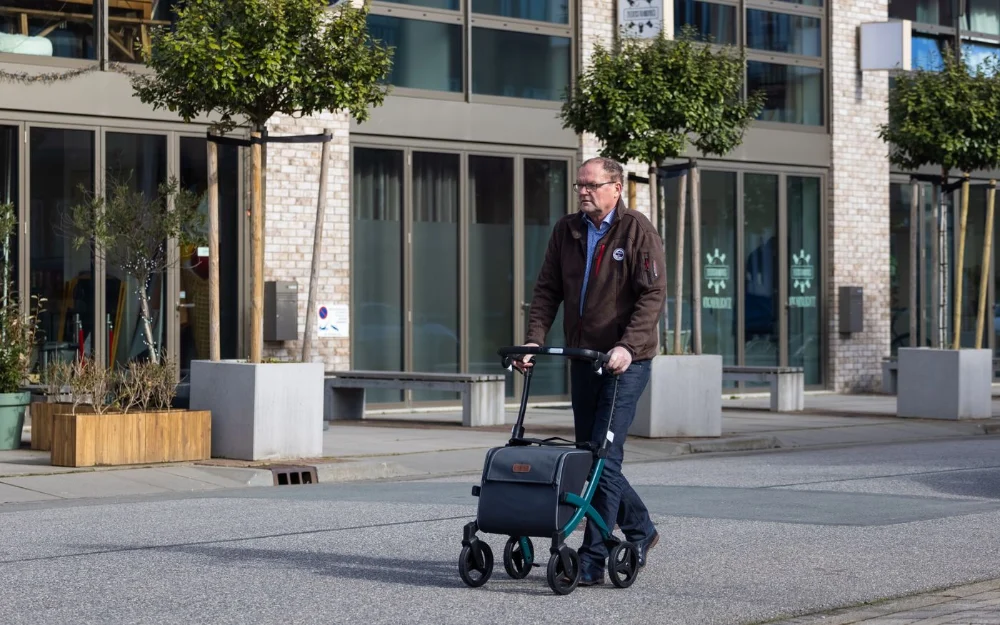
A rollator is a frame on wheels, usually four, normally with a seat and brakes. The seat is the part people underrate, because it turns a walk that was impossible into a walk with two sit-downs in it.
A folding four-wheel rollator with a seat was £59.99 on 30 August 2026. All-terrain models with bigger wheels run to about £199.
The catch: rollators need brakes you can actually operate. Weak hands and cable brakes are a bad combination, and it is the one thing worth checking in person rather than from a listing.
Motorised aids
Mobility scooters and powered wheelchairs are a different order of spending and a different decision, and they sit outside the £1,000 rule. They also need somewhere to charge and somewhere to store. We cover the buying side separately in our guide to buying a second-hand mobility scooter.
The small things that change a day
The items below are the ones occupational therapists tend to reach for, and none of them is expensive. Prices are the buy-box price on amazon.co.uk, read through Amazon's Creators API on 30 August 2026.
| Problem it solves | Item | Price | Buy |
|---|---|---|---|
| Balance when walking | Aidapt adjustable lightweight walking stick | £11.99 | Amazon → |
| Getting further, with a rest | Drive four-wheel folding rollator with seat | £59.99 | Amazon → |
| Something to hold in the bathroom | NRS Healthcare fluted grab rail | £7.93 | Amazon → |
| Standing at the sink or hob | Elite Care multi-use perching stool | £44.99 | Amazon → |
| Opening jars with weak grip | Otstar six-in-one jar and bottle opener | £9.99 | Amazon → |
Every one of those is under £60, and every one of them is inside the £1,000 bracket the council is obliged to cover if an assessment says you need it. That is the whole argument for asking first.
One thing to ask about rather than buy
Bed rails are the item where the advice changes. Fitted to the wrong bed or the wrong person, they carry a real entrapment risk, and this is exactly the decision an occupational therapist is there to make. We are not going to sell you one from a product listing. Raise it at the assessment.
Where to start
Ask your council for a home assessment. If the need is urgent and small, buy the £12 stick and ask anyway, because the assessment also catches the things you have not thought of. If the need is structural, go to the Disabled Facilities Grant rather than the shopping list.
We have not tested these products in a home, and we say so rather than implying otherwise. What this page gives you is the two thresholds that decide who pays, and the real price of each item on a stated date.
Questions people ask
What mobility aids can you get free in the UK?
After a home assessment by your council, any equipment or minor adaptation costing less than £1,000 must be provided free of charge. The NHS names stair handrails, bathroom grab rails, wheelchair ramps, walking frames and perching stools as examples. Equipment supplied by a hospital on discharge should also be free.
How do I get a mobility assessment?
Contact the adult social services department of your local council and ask for a home assessment. It can usually be done online or by phone. A council professional or an occupational therapist then visits your home to see what you need. There is no charge for the assessment.
What are the three types of mobility aid?
Walking aids such as sticks and frames, wheeled aids such as rollators and manual wheelchairs, and motorised aids such as powered wheelchairs and mobility scooters. The first two are usually inside the council's £1,000 obligation. The third is not.
What if the work costs more than £1,000?
That is what the Disabled Facilities Grant is for. It is worth up to £30,000 in England, £36,000 in Wales and £25,000 in Northern Ireland, and it is means tested on income and on savings above £6,000. Disabled children under 18 are assessed without their parents' income being counted.
Which mobility aid should I choose?
Match it to the problem rather than the price. A stick helps balance. A rollator helps distance and gives you somewhere to sit. A perching stool helps you stay upright at a worktop. If a leg will not take your weight at all, none of the small items is the answer and you need an assessment.
Sources
NHS, Care and support you can get for free, read 30 August 2026. NHS, Home adaptations, read 30 August 2026. GOV.UK, Disabled Facilities Grants: what you'll get, read 30 August 2026. Prices from Amazon's Creators API, 30 August 2026.
This page is part of Look Into's UK household cost research. For the costed figures behind it, with capture date, method and sources, see the Mobility Cost Index.