
Key takeaways
- The NHS says everyone in the UK should consider a daily 10 microgram vitamin D supplement during autumn and winter, because from October to early March British sunlight is too weak for the body to make enough.
- 10 micrograms is 400 IU. The conversion is fixed: 1 microgram equals 40 IU.
- The percentage on a UK supplement label is measured against a legal Nutrient Reference Value of 5 micrograms, which is half the amount the NHS actually recommends. That is why a perfectly ordinary 400 IU tablet is labelled 200% NRV.
- The NHS daily ceiling for adults is 100 micrograms, or 4,000 IU. The 4,000 IU tablet currently at number 15 in Amazon UK’s Health & Personal Care chart sits exactly on that ceiling, and the ceiling is lower for children: 50 micrograms up to age 10, and 25 micrograms under one year.
Britain starts buying vitamin D at the end of September, and this year is no different. Read the Amazon UK Health & Personal Care chart today and three of the top 30 are vitamin D or children’s vitamin drops: Vitabiotics Ultra Vitamin D3 1000IU at number 8, a 4,000 IU tablet with added K2 at number 15, and Natures Aid Mini Drops at number 21. The timing is not a coincidence. The NHS puts the sunlight cut-off at the end of September, which makes this week the start of the supplement season.
The awkward part is the labels. Vitamin D is sold in two units at once, and the big percentage on the front of the box is calculated against a number almost nobody knows. So we did the conversion properly, checked it against what the NHS actually tells you to take, and picked six products that cover the doses most people need.





As an Amazon Associate I earn from qualifying purchases. (paid link)
The label percentage is measured against half the NHS dose
Here is the bit that trips people up. The NHS recommends 10 micrograms of vitamin D a day for adults and children over one, throughout autumn and winter. It also gives the conversion: 1 microgram equals 40 IU, so 10 micrograms is 400 IU.
But the “% NRV” figure printed on the label is not measured against that 10 micrograms. It is measured against the Nutrient Reference Value set in Annex XIII of Regulation 1169/2011, retained in GB law, and for vitamin D that value is 5 micrograms. Half the NHS recommendation. Which means the percentage on every vitamin D box in Britain reads twice as alarming as the dose deserves.
Once you know the reference is 5 micrograms, the whole shelf becomes readable:
| On the label | Micrograms | % NRV printed | Versus NHS advice (10 micrograms) | Versus NHS adult ceiling (100 micrograms) |
|---|---|---|---|---|
| 400 IU | 10 | 200% | Exactly the advice | A tenth of it |
| 800 IU | 20 | 400% | Double | A fifth of it |
| 1,000 IU | 25 | 500% | Two and a half times | A quarter of it |
| 2,000 IU | 50 | 1,000% | Five times | Half of it |
| 3,000 IU | 75 | 1,500% | Seven and a half times | Three quarters of it |
| 4,000 IU | 100 | 2,000% | Ten times | Right on it |
| 10,000 IU | 250 | 5,000% | Twenty five times | Two and a half times over it |
A 500% NRV tablet sounds like a megadose. It is 25 micrograms, a quarter of the NHS ceiling, and the single most commonly sold strength in the country. Meanwhile 2,000% NRV, which sounds absurd, is 100 micrograms, and that is the exact figure the NHS names as the point where you should stop. Taking more than that for a long time can raise blood calcium enough to weaken bones and damage the kidneys and heart.
The ceiling is lower for children, and the shelf does not say so
The 100 microgram figure covers adults, including pregnant and breastfeeding women, and children aged 11 to 17. Below that age the NHS sets two lower ceilings, and neither appears anywhere on an adult vitamin D box:
- Children aged 1 to 10 should not have more than 50 micrograms a day, which is 2,000 IU.
- Infants under 12 months should not have more than 25 micrograms a day, which is 1,000 IU.
So a 1,000 IU adult tablet, cut in half or not, is already at the infant ceiling. That is the practical reason children under five are given drops rather than a share of whatever is in the kitchen cupboard. The NHS recommends 8.5 to 10 micrograms daily, all year round, for breastfed babies and for formula-fed babies taking less than 500ml a day, and 10 micrograms all year for children aged 1 to 4.
One more thing worth knowing before you spend anything. If you qualify for the Healthy Start scheme, the NHS says you can get supplements containing vitamin D free, so check that before you add a bottle to your basket.
How we picked these
We started from the Amazon UK Health & Personal Care chart on 28 September 2026 and read it top to bottom, then searched for the specific doses the NHS names rather than the doses that happen to be marketed hardest. Every product below was opened on its own Amazon page on the day of writing, so the title, the strength, the pack size and the price are what was actually showing, not what a feed said last month. We converted every strength to micrograms ourselves using the NHS figure of 40 IU per microgram, and worked out the cost per day from the price and the stated pack count.
We deliberately included the cheapest 400 IU tablet we could find as well as the chart favourites, because the dose the NHS names is the one hardest to actually buy. Most of the shelf starts at 1,000 IU. That is not dangerous, and for many people it is a sensible choice, but it is worth knowing you are buying two and a half times the recommendation by default.
We are not doctors and none of this is medical advice. If you have a condition affecting calcium, kidney function or parathyroid, or your GP has given you a different dose, follow that instead.
Vitamin D supplements at a glance
| Product | Strength | Micrograms | Pack | Price | Cost a day |
|---|---|---|---|---|---|
| Vitabiotics Ultra Vitamin D3 400IU | 400 IU | 10 | 96 tablets | £3.16 | 3.3p |
| Vitabiotics Ultra Vitamin D3 1000IU | 1,000 IU | 25 | 96 tablets | £4.08 | 4.3p |
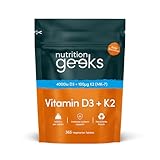
| Vitamin D 4000iu with K2 MK7 | 4,000 IU | 100 | 365 tablets | £9.99 | 2.7p |
| Natures Aid Mini Drops Vitamin D3 | 400 IU a dose | 10 | 50ml | £3.72 | See label |
| Vegan Vitamin D3 1000iu | 1,000 IU | 25 | 180 tablets | £7.99 | 4.4p |
| BetterYou Vitamin D 1000 IU Oral Spray | 1,000 IU a spray | 25 | 3 month supply | £5.52 | 6.1p |
The six we would actually buy
Vitabiotics Ultra Vitamin D3 400IU, 96 tablets
This is the one that matches the advice, and it is also the cheapest thing on the list. 400 IU is 10 micrograms, which is exactly what the NHS tells adults and children over one to take through autumn and winter. Ninety six tablets at £3.16 is about 3.3p a day, so a full October to March run costs well under £7. It is a small tablet, it is a UK brand with the review depth to match, and there is nothing else in it to think about.
The catch: if you have been told by a GP to take a higher dose, or you are in one of the groups the NHS flags for year-round supplementing, 400 IU may be less than you want and you will be buying two boxes where one of the 1,000 IU packs would do.
Vitabiotics Ultra Vitamin D3 1000IU, 96 tablets
Number 8 in Health & Personal Care on the day we looked, and the same brand and pack size as the 400 IU above for 92p more. 1,000 IU is 25 micrograms, a quarter of the NHS ceiling, and it is the strength most British shelves default to. At £4.08 for 96 tablets you are paying 4.3p a day. If you want a single bottle that covers a whole household of adults without anyone thinking about arithmetic, this is the sensible middle.
The catch: one of these is already at the NHS ceiling for an infant under 12 months, so it is not something to split with a baby. Buy the drops for that.
Vitamin D 4000iu with Vitamin K2 MK7 100 micrograms, 365 tablets
Number 15 on the chart, and the cheapest per day on this page at 2.7p. A year in one box for £9.99 is a genuinely good deal. It also sits exactly on the NHS adult ceiling of 100 micrograms, so it is the one product here where the strength is a decision rather than a detail. Plenty of people take 4,000 IU quite deliberately and the NHS names it as the limit rather than a warning line, but it leaves you no headroom if you are also taking a multivitamin or a cod liver oil capsule that contains vitamin D.
The catch: add up everything else you take before you start this one, because vitamin D hides in multivitamins, fish oils and fortified spreads, and the ceiling is a total rather than a per-product figure. Not one for children, and worth a word with your GP if you take blood thinners, because of the K2.
Natures Aid Mini Drops Vitamin D3, 50ml
Drops rather than tablets, which is the whole point for this age group. The label states 400 IU per dose, which is the 10 micrograms the NHS asks for in children aged 1 to 4 all year round, and within the 8.5 to 10 micrograms it names for babies up to one. It has no flavour and no sugar, so it goes into food or a drink without a fight, and at £3.72 a bottle it is cheap enough that you are not rationing it.
The catch: liquid means measuring, and measuring means getting the dose right every time rather than most of the time. Read the pipette instructions on the bottle you receive rather than working from anything you read online, including this page.
Vegan Vitamin D3 1000iu, 180 tablets
Most vitamin D3 on the shelf is cholecalciferol made from lanolin, which comes off sheep’s wool, so an ordinary D3 tablet is usually not vegan even when nothing on the front of the box mentions animals. This one is D3 derived from algae, so you get the same form of the vitamin without the lanolin. 180 tablets at £7.99 works out at 4.4p a day, near identical to the mainstream 1,000 IU option, which is not always the case with plant-based versions.
The catch: the review count is in the hundreds rather than the tens of thousands, so you have less of a crowd to lean on than with the Vitabiotics packs. If you want vegan and a long track record, a D2 supplement has both, though D2 is a different molecule and generally the less preferred of the two.
BetterYou Vitamin D 1000 IU Oral Spray
One peppermint spray into the mouth, 1,000 IU a dose, roughly three months to a bottle. It is the answer for anyone who struggles with pills, and it travels well, which matters more than it sounds when the whole benefit depends on taking it every day for six months. £5.52 puts it at about 6.1p a day, the dearest on this page, and still under £12 for the whole autumn and winter.
The catch: it is the most expensive way to buy the same 25 micrograms, and a spray is easy to under-deliver if you rush it. If swallowing a tablet is no trouble for you, there is no reason to pay the premium.
Questions people ask
When should I start taking vitamin D in the UK?
The NHS says that from about late March or early April to the end of September most people can make all the vitamin D they need from sunlight, and that between October and early March they cannot. So the end of September is the point to start, and early March is the point you can stop if you are not in one of the year-round groups.
How many micrograms is 1,000 IU of vitamin D?
25 micrograms. The NHS gives the conversion as 1 microgram equals 40 IU, so you divide the IU figure by 40. That makes 400 IU 10 micrograms, 2,000 IU 50 micrograms and 4,000 IU 100 micrograms.
Why does my vitamin D say 500% NRV when the NHS only recommends 10 micrograms?
Because the Nutrient Reference Value used for labelling is 5 micrograms, set in Annex XIII of Regulation 1169/2011 as retained in GB law, and it is half the amount the NHS recommends. A 1,000 IU tablet is 25 micrograms, which is five times 5 micrograms, hence 500%. The figure is doing what the law asks of it, it just is not measured against the advice most people have heard.
How much vitamin D is too much?
The NHS says do not take more than 100 micrograms, or 4,000 IU, a day. That applies to adults including pregnant and breastfeeding women and older people, and to children aged 11 to 17. Children aged 1 to 10 should stay under 50 micrograms, and infants under 12 months under 25 micrograms. Taking too much over a long period can build up calcium in the body, which can weaken bones and damage the kidneys and heart.
Do I need vitamin D all year round?
Some people do. The Department of Health and Social Care recommends 10 micrograms a day year-round for adults and children over four who are rarely outdoors, who live in a care home or similar setting, or who usually cover most of their skin outdoors. It gives the same year-round advice to people with African, African-Caribbean or south Asian backgrounds, who may make less vitamin D from British sunlight. All children aged 1 to 4 and babies under one should also take it all year.
Can I get vitamin D supplements free?
The NHS says women and children who qualify for the Healthy Start scheme can get supplements containing vitamin D free of charge, so it is worth checking your eligibility before buying.
Sources
- NHS, Vitamin D, for the 10 microgram recommendation, the autumn and winter window, the 40 IU per microgram conversion, the 100, 50 and 25 microgram ceilings by age, and the year-round groups. Read 28 September 2026.
- Regulation (EU) No 1169/2011, Annex XIII, Reference Intakes, as retained in GB law, for the 5 microgram Nutrient Reference Value used to calculate % NRV on labels. Read 28 September 2026.
- Amazon.co.uk Best Sellers, Health & Personal Care, for the chart positions quoted. Read 28 September 2026.
Prices and chart positions were read on 28 September 2026 and change constantly, so check the current figure before you buy. We earn a commission from qualifying purchases made through the Amazon links on this page, at no extra cost to you. This article is information, not medical advice.