The short answer (prices checked 11 October 2026)
- Best value: INIA Red Light, about 64p a session in its first year. It is the cheapest mask here that publishes both its wavelengths (630nm red, 850nm near-infrared) and a power figure.
- Cheapest per session: Revolution Pro Miracle, about 29p, but its listing gives no wavelength or power figure at all.
- Most transparent: WAVLO Apollo SG (£1.26 a session) is the only one that states its output at the skin: 60 to 72 mW/cm².
- Of the first 20 unsponsored Amazon UK results for "LED face mask", 6 state a wavelength in nm, 1 states a power density and none states a dose.
Cost per session assumes three sessions a week (156 a year), the same basis as Look Into's UK At-Home Beauty Device Cost Index.
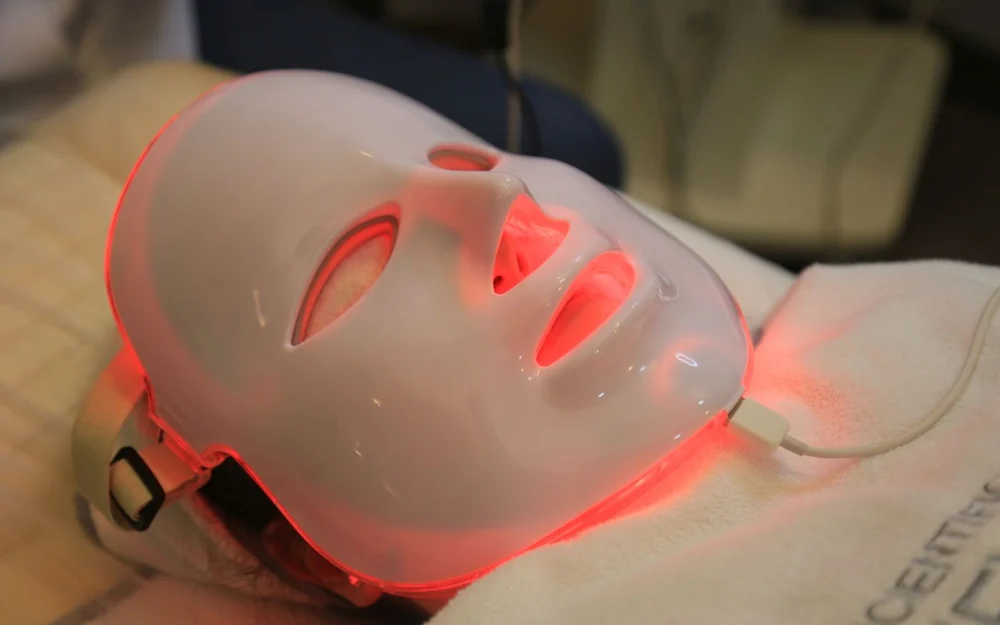
An LED face mask is sold on the light it gives off, yet most listings never say how much light that is. This guide prices six masks sold on Amazon UK per session, cheapest first, and checks each listing for the three numbers that describe the light: wavelength, power density and dose. Per session, the gap is 29p to £1.92.
We may earn a small commission from links on this page. It never changes what we recommend or the price you pay.
How Look Into made this guide: desk research, not a hands-on test. We shortlist on UK availability, compare published specifications and warranty terms, and read verified UK owner reviews, discounting incentivised ratings. Prices in the comparison table are pulled live from Amazon UK. Look Into has not handled these products: every figure comes from the maker, the listing or a named source, read on the date shown.
Prices in this table come from Amazon and are refreshed at least once a day, with the date of the last update under the table. The cost-per-use and running-cost figures on this page use prices Look Into read on 11 October 2026, so they can differ from today's price.




As an Amazon Associate, Look Into earns from qualifying purchases. Product prices and availability are accurate as of 25 October 2026 and are subject to change.
Prices and specs last checked by Look Into on 11 October 2026 · next check 6 December 2026 · how we picked
At a glance, cheapest per session first
| Mask | Best for | Per session, year 1 | Per session over 3 years | Wavelengths stated | Power figure stated |
|---|---|---|---|---|---|
| Revolution Pro Miracle | Cheapest per session | 29p | 10p | No | No |
| Nanoleaf LED Face Mask | Cheapest flexible fit | 61p | 20p | No | No |
| INIA Red Light | Best value | 64p | 21p | 630, 850nm | Up to 105 mW/cm² (where not stated) |
| WAVLO Apollo SG | Most transparent | £1.26 | 42p | 415, 520, 630, 850nm | 60–72 mW/cm² at the panel |
| Ulike ReGlow | Shortest daily routine | £1.28 | 43p | No | Relative only ("+77%") |
| Shark CryoGlow | Under-eye cooling | £1.92 | 64p | No | No |
Per session = price divided by 156 sessions in year one, or 468 over three years, at three sessions a week. Prices are as shown on each linked Amazon UK listing on 11 October 2026. "Stated" means stated in the listing title, bullet points, technical details or description, not in images.
The six masks, cheapest per session first
Revolution Pro Miracle LED Face Mask
Cheapest per sessionThis is the cheapest way to find out whether you will really keep up three sessions a week. It runs red and blue light and is wireless, and the listing suggests 10 to 30 minutes with a 15-minute automatic rotation.
The catch: the listing gives no wavelength and no power figure, so there is nothing to check its light against. You are paying to test the habit, not for a known amount of light.
Red and blue · live price on Amazon (checked 11 Oct 2026) · 29p a session in year one
As an Amazon Associate, Look Into earns from qualifying purchases. Product prices and availability are accurate as of 25 October 2026 and are subject to change.
Nanoleaf LED Face Mask
Cheapest flexible fitA flexible silicone mask with 432 LEDs and seven modes. Its listing is one of the few that sets out a routine: 5 to 10 minutes, three times a week, for 4 to 10 weeks.
The catch: no wavelength or power figure on the listing. The LED count is the headline spec, and an LED count does not tell you how much light reaches your skin.
7 modes, flexible silicone · live price on Amazon (checked 11 Oct 2026) · 61p a session in year one
As an Amazon Associate, Look Into earns from qualifying purchases. Product prices and availability are accurate as of 22 October 2026 and are subject to change.
INIA Red Light LED Face Mask
Best valueThe cheapest mask here that publishes the numbers that matter: 630nm red and 850nm near-infrared light from 220 LED chips, and output of "up to 105mW/cm²". The listing suggests 3 to 7 sessions a week of 10 to 30 minutes.
The catch: "up to" is a maximum, and the listing does not say where it was measured. Output at the LED is higher than output at the skin, which is the gap the WAVLO listing below makes visible.
630nm + 850nm, 3 modes · live price on Amazon (checked 11 Oct 2026) · 64p a session in year one
As an Amazon Associate, Look Into earns from qualifying purchases. Product prices and availability are accurate as of 25 October 2026 and are subject to change.
WAVLO Apollo SG LED Face Mask
Most transparentThe only listing in this guide that separates output at the LED (70 to 96 mW/cm²) from output at the panel your skin touches (60 to 72 mW/cm²). It names four wavelengths, 415, 520, 630 and 850nm, sets one 10-minute session 3 to 5 nights a week, and states UKCA and CE marking.
The catch: it has far less owner history than the INIA or Shark. An earlier version of this guide called it FDA-cleared and gave an out-of-date price. The product page we read on 11 October made no FDA claim in its title, bullet points or description, so both have been corrected. Some price feeds, including the live table above, may still show an older product title that mentions FDA clearance.
4 wavelengths, 7 modes · live price on Amazon (checked 11 Oct 2026) · £1.26 a session in year one
As an Amazon Associate, Look Into earns from qualifying purchases. Product prices and availability are accurate as of 25 October 2026 and are subject to change.
Ulike ReGlow LED Face Mask
Shortest daily routineBuilt around an 8-minute daily routine with four modes (Glow, Firm, Rejuvenate and Clear) using red, yellow, blue and infrared light. Used every day as the listing suggests, it works out at 55p a session in year one.
The catch: the listing says its optics raise irradiance by 77% but gives no absolute figure for that 77% to apply to, and no wavelengths in nanometres.
4 modes, 8 minutes · live price on Amazon (checked 11 Oct 2026) · £1.28 a session at three a week
See today's price on Amazon →Shark CryoGlow LED Face Mask
Best for under-eye coolingRed, blue and infrared light plus cooling pads under the eyes. The routines are short: 6 minutes for Better Ageing, 8 for Blemish Repair and 4 for Skin Sustain.
The catch: the dearest per session here, and the listing gives no wavelength or power figure. Price also varies by listing: this one was £299.99 on 11 October, while other CryoGlow listings in the same search showed £254.99, which is £1.63 a session.
Red, blue, infrared + cooling · live price on Amazon (checked 11 Oct 2026) · £1.92 a session in year one
As an Amazon Associate, Look Into earns from qualifying purchases. Product prices and availability are accurate as of 25 October 2026 and are subject to change.
What 20 Amazon listings tell you about the light
We read the first 20 unsponsored results for "LED face mask" on Amazon UK on 11 October 2026, checking each listing's title, bullet points, technical details and description. Three of the 20 were the same Shark mask and five were FOREO UFO devices, so this counts listings, not distinct products.
| What the listing states | Listings (of 20) |
|---|---|
| A wavelength in nanometres | 6 |
| A power density in mW/cm² | 1 |
| A dose in J/cm² | 0 |
| A session length | 15 |
| How many sessions a week | 7 |
The light a mask delivers is its power density multiplied by time. Without a power figure, one mask's ten minutes cannot be compared with another's, or with the dose used in a study. The LED count that most listings lead with is not a power figure.
Where a listing allows it, the sum is short. WAVLO's 60 to 72 mW/cm² at the panel over a 10-minute session works out at 36 to 43 J/cm² (mW/cm² × seconds ÷ 1,000). INIA's "up to 105 mW/cm²" gives up to 63 J/cm² in 10 minutes, but because the listing does not say where that was measured, it is a ceiling rather than a comparison. For the other four masks in this guide, no such sum is possible from the listing.
How to choose one
Start with whether you will keep it up
Cost per session only falls with use. A £299.99 mask used three times a week costs £1.92 a session in year one; used once a week for two months it costs about £37.50 a session. If you are not sure the habit will stick, the cheapest mask is a cheaper way to find out.
Pick the light for the job
Red and near-infrared are the colours aimed at fine lines and firmness. Blue is aimed at spot-prone skin. Several masks here run both, which suits you if you want to cover more than one thing.
Prefer a listing that publishes its numbers
A listing that gives wavelengths in nanometres and a power density, and says where the power was measured, lets you compare like with like. Of the six masks in this guide, two give both, and only one says where its figure applies.
Questions people ask about LED face masks
How much does an LED face mask cost per session?
At three sessions a week, the six masks here cost 29p to £1.92 a session in their first year and 10p to 64p over three years, using prices checked on 11 October 2026. How often you use the mask moves the cost more than its sticker price.
Do LED face masks actually work?
There is reasonable evidence that red and near-infrared light can help with fine lines and skin firmness, and that blue light can ease mild acne. The effects are gradual and fairly subtle, and home masks are weaker than the devices used in clinics, so expect a small improvement over weeks rather than overnight change.
How often should I use one?
The listings in this guide range from three sessions a week to every day, mostly 4 to 10 minutes each, and some allow up to 30. More is not better: follow the mask's own guidance and give your skin a break if it feels irritated.
What should an LED mask listing tell you?
The wavelengths in nanometres, the power density in mW/cm² and where it was measured, the session length and how many sessions a week. Of the 20 Amazon UK listings we read on 11 October 2026, 6 gave wavelengths and 1 gave a power figure, without saying where it was measured.
Are they safe for your eyes?
The light is bright, so use the eye protection the mask comes with or keep your eyes closed. Skip LED therapy if you have a light-triggered skin condition or take medication that makes you sensitive to light, and check with a GP or dermatologist if you are unsure.
Red or blue light, which do I need?
Go for red and near-infrared if your focus is ageing, fine lines and firmness. Blue light is the one for spot-prone skin, since it targets acne bacteria. Plenty of masks run both, which is handy if you want to cover more than one thing.
Sources
- DermNet: light-emitting diode (LED) phototherapy
- British Skin Foundation
- Amazon UK Best Sellers: Beauty
- Amazon UK: the first 20 unsponsored results for "LED face mask" and the six product listings linked above, read 11 October 2026
For IPL hair removal devices priced on the same per-session basis, see Look Into's UK At-Home Beauty Device Cost Index.