
Key takeaways
- The Drinking Water Inspectorate classes water under 100 mg/l calcium carbonate as soft, and cites the WHO figure that scale forms at 200 mg/l or above. Below 200 you are buying a descaler for a problem your tap water is not causing.
- We costed the empty service cycle the packs tell you to run. At the capped electricity rate of 26.32p per kWh from 1 October 2026, a 90°C empty wash costs about 45p in electricity. That is more than four of the six products here cost per dose.
- Dr. Beckmann Service-it sat at number one in the whole Amazon UK Home & Kitchen chart when we read it on 19 September 2026, at £1.90 for a single 250g dose.
- "Kills 99.9% of bacteria" is a biocidal claim with legal force behind it. In England, Scotland and Wales it falls under the GB Biocidal Products Regulation. Northern Ireland uses the EU version.
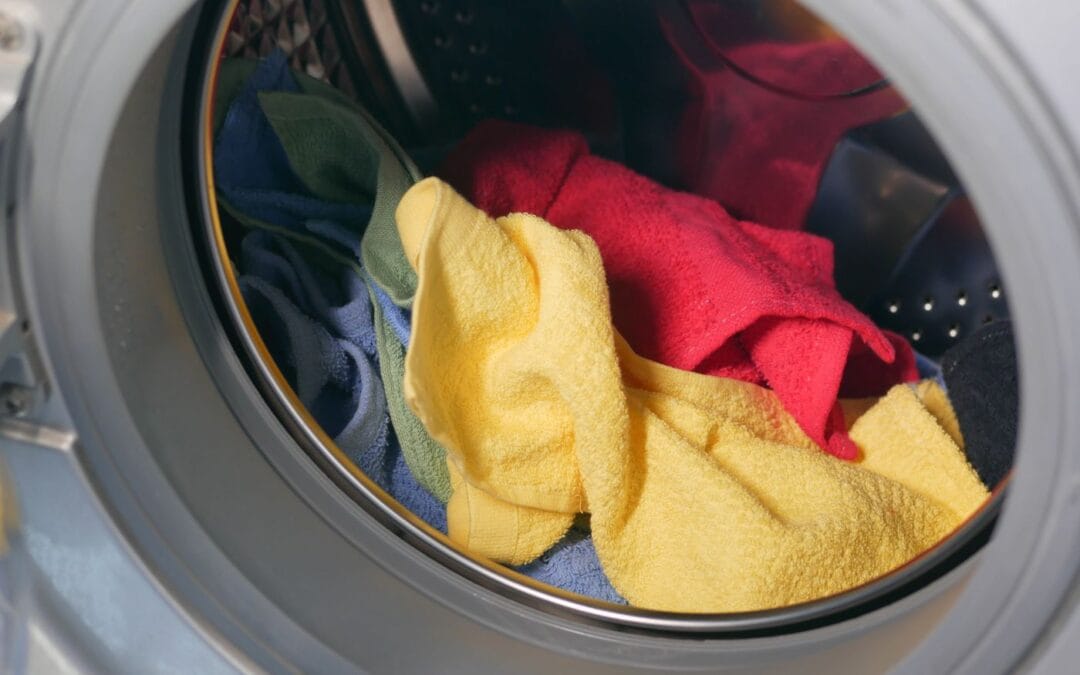
Washing machine cleaner is having a moment. When we read the Amazon UK Home & Kitchen bestseller chart on 19 September 2026, the top item in the entire category was not an appliance or a set of bed sheets. It was Dr. Beckmann Service-it, a 250g sachet of washing machine cleaner at £1.90. Three more limescale and moisture products sat inside the top 20 alongside it.
The timing is not a mystery. Doors and windows shut in September, the machine stops airing out between washes, and the smell that was tolerable in July becomes the thing you notice when you open the door. So people buy a sachet.
What nobody selling you the sachet mentions is that the sachet is the cheap half of the job, and that half of what it promises to do may not apply where you live. Both of those are checkable, so we checked them.
Prices in this table come live from Amazon and can change through the day. Prices quoted in the text were checked by Look Into on 19 September 2026, so the two can differ.





As an Amazon Associate I earn from qualifying purchases. (paid link)
Prices and specs last checked by Look Into on 19 September 2026 · how we picked
200 mg/l is the number that decides whether you need a descaler
Almost every product in this category sells itself on limescale. The Drinking Water Inspectorate, the regulator for drinking water in England and Wales, publishes the bands that make the claim testable. Hardness is measured in milligrams per litre of calcium carbonate, and the DWI splits it five ways.
| DWI band | Hardness (mg/l CaCO3) | What a descaler is doing |
|---|---|---|
| Soft | Up to 100 | Very little. The DWI notes water at or below 100 is more corrosive to pipework |
| Slightly hard | 100 to 150 | Little |
| Moderately hard | 150 to 200 | Some, but below the WHO scale threshold |
| Hard | 200 to 300 | Real work. This is where the WHO says scale forms |
| Very hard | More than 300 | Real work, and the element is the thing at risk |
The DWI is blunt about a couple of points worth carrying into a purchase. There are no health based standards for hardness at all, so nothing here is a safety question. And the hardness map on its site shows typical values for England and Wales only, with local variation it does not capture, so the accurate figure for your street comes from your water company rather than a map.
Look your postcode up before you buy. If the answer is under 200, the limescale half of a "descaler and deodoriser" is not the part earning its keep. Your problem is detergent residue and the biofilm growing in it, which is a heat and chemistry job. If the answer is over 300, the descaling is the point and the fragrance is the afterthought.
What the empty cycle costs to run
Every one of these products works the same way. You put it in an empty machine and run a hot cycle. The product is priced on the shelf. The cycle is not priced anywhere, so we priced it.
Ofgem set the price cap for 1 October to 31 December 2026 at £1,723 a year, with electricity at 26.32p per kWh on Direct Debit and no VAT on electricity between 1 October 2026 and 31 March 2027. We read those figures at Ofgem on 19 September 2026. Almost all the energy in an empty wash goes into heating the water, so the sum is a heat capacity calculation.
| Empty cycle | Heat into the water | Total electricity | Cost at 26.32p per kWh |
|---|---|---|---|
| 40°C | 0.49 kWh | 0.61 kWh | 16p |
| 60°C | 0.84 kWh | 1.05 kWh | 28p |
| 90°C | 1.36 kWh | 1.70 kWh | 45p |
How we got to 45p
We assumed a main wash fill of 15 litres, which is in the normal range for a domestic drum, and a mains inlet temperature of 12°C. Raising 15 litres from 12°C to 90°C takes 15 × 4.186 × 78 kilojoules, which is 4,898 kJ or 1.36 kWh. We added 25 per cent for the motor, the pump, and the heat absorbed by the drum and cabinet, giving 1.70 kWh. At 26.32p that is 44.7p, which we round to 45p.
We left the daily standing charge out because you pay it whether the machine runs or not. Your own figure moves with your fill volume, your inlet temperature and your tariff. A colder inlet in January pushes it up.
So the 45p cycle costs more than four of the six products on this page cost per dose. If you are running a service wash monthly at 90°C, the electricity comes to about £5.40 a year before you have bought anything to put in the drum. Twice a month doubles it. That is not a reason to skip the service wash, but it does change which pack is good value: a 42p tablet and a 79p sachet are much closer in real cost than the shelf price suggests, because both carry the same 45p of electricity behind them.
"Antibacterial" is a legal claim with a border running through it
Dr. Beckmann's listing says it removes 99.99 per cent of bacteria, viruses and fungi. Dettol's says it kills 99.9 per cent of bacteria. Both sit inside a legal definition. The Health and Safety Executive treats a product that controls harmful organisms by chemical or biological action as a biocidal product, and a biocidal product has to be authorised before it goes on sale.
Here is the part worth knowing. The HSE states that biocidal products are controlled in Great Britain, meaning England, Scotland and Wales, under the GB Biocidal Products Regulation, and in Northern Ireland under the EU Biocidal Products Regulation. Two regimes, one country, same bottle on the shelf. The HSE also publishes a GB list of authorised biocidal products, so the claim on the box is checkable against a register.
What this means when you are standing in front of six listings: an antibacterial claim costs the manufacturer something to make lawfully, which is a small signal in its favour. It tells you nothing about whether the product clears limescale, and it is the reason the products carrying that claim are the pricier ones per dose.
How we picked these
We do not test. This is desk research. We read the Amazon UK Home & Kitchen bestseller chart and the washing machine cleaner search results on 19 September 2026, opened every product page, and read the title, the buy box price and the stock status off each one. Six products were chosen to cover distinct jobs instead of ranking interchangeable powders, since the useful question here is which job you have.
Cost per dose is the pack price divided by the number of treatments the listing states. Where a product goes into every wash instead of a service cycle, we say so, because the annual cost is an order of magnitude different.
How they compare
| Product | Best for | Price | Doses | Per dose |
|---|---|---|---|---|
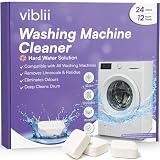
| Dr. Beckmann Service-it 250g | A one off service | £1.90 | 1 | £1.90 |
| iO CLEAN tablets, 24 pack | Lowest cost per dose | £9.99 | 24 | 42p |
| Enzyme cleaner and deodoriser, 24 pack | Soft water homes where the smell is not scale | £11.86 | 24 | 49p |
| Care+Protect 3 in 1, 24 sachets | Treating the dishwasher as well | £18.89 | 24 | 79p |
| Dettol Washing Machine Cleaner, 3 x 250ml | An authorisable antibacterial claim | £12.99 | 3 | £4.33 |
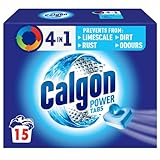
| Calgon 4 in 1, 15 tablets | Prevention in hard water areas | £5.00 | 15 washes | 33p per wash |
The six we would consider
Dr. Beckmann Service-it Deep Clean Washing Machine Cleaner, 250g
£1.90 · one 250g dose · £1.90 per service
This is the one at the top of the chart, and the reason is the price. Under two pounds buys a single deep clean, which is the right purchase if the smell has appeared once and you want it gone without committing to a year of tablets. The listing claims removal of 99.99 per cent of bacteria, viruses and fungi, and says the activated carbon absorbs the residue build up that causes the odour in the first place.
The catch: one sachet is one wash. Buy it monthly and you are placing twelve orders a year at the highest cost per dose of any powder here, plus £1.90 of postage exposure each time if you are not adding it to a bigger basket.
Check price on Amazon →iO CLEAN Washing Machine Cleaner Tablets, 24 pack
£9.99 · 24 tablets · 42p per service
Twenty four tablets is two years of monthly servicing, or one year if you run it fortnightly, and 42p a dose is the cheapest way to keep the habit going. The pack is sold as a descaler, so it is aimed at the hard water half of the country. If your water company puts you above 200 mg/l, this is the sensible default.
The catch: at 42p a tablet, the electricity for the cycle costs more than the tablet does. The product is no longer the expensive part of the routine, which makes cycle temperature the decision worth thinking about, ahead of which tablet you buy.
Check price on Amazon →Washing Machine Cleaner, Descaler & Deodoriser, Enzyme Deep Clean, 24 pack
£11.86 · 24 tablets · 49p per service
If your postcode comes back under 200 mg/l, scale is not what is making the machine smell. What is left is detergent residue and the greasy film that grows in it, and an enzyme formulation is aimed at that, not at calcium carbonate. This is the pick for Scotland, Wales, the north west, Cornwall and everywhere else the geology gives you soft water.
The catch: the listing carries no brand name and does not say which enzymes are in it or what temperature they want, so you are trusting the pack insert once it arrives. Enzyme products and a boil wash are not obviously a good match, and the listing does not resolve that for you.
Check price on Amazon →Care+Protect 3 in 1 Washing Machine and Dishwasher Cleaner, 24 sachets
£18.89 · 24 powder sachets · 79p per service
One powder for both machines, which saves a second product sitting under the sink. Care+Protect is the appliance care line from the Candy and Hoover group, so it is the closest thing here to a manufacturer branded product. The sachets are sold as descaling, degreasing and sanitising in one dose.
The catch: the pack is marketed as 24 months of protection, which only holds if you treat one machine a month. Run both the washing machine and the dishwasher monthly, the way the product invites you to, and 24 sachets is twelve months. It is also the most expensive pack on this page by some distance.
Check price on Amazon →Dettol Washing Machine Cleaner, Pomegranate, 750ml (3 x 250ml)
£12.99 · 3 x 250ml doses · £4.33 per service
A liquid instead of a powder, from the one brand in this group most people already trust with a disinfection claim. The listing says it kills 99.9 per cent of bacteria and covers odours, limescale and hidden dirt. If the antibacterial part is what you actually want, buying it from a company whose entire business rests on that claim being defensible is a reasonable move.
The catch: £4.33 a dose is more than ten times the cheapest tablet here, and you cannot verify the 99.9 per cent figure from the listing. The HSE publishes a GB register of authorised biocidal products if you want to check.
Check price on Amazon →Calgon 4 in 1 Washing Machine Cleaner and Water Softener Tablets, 15 tablets
£5.00 · 15 tablets · 33p per wash
Calgon is a different product from everything above it. It goes into every wash with the detergent, softening the water so scale never forms on the element. It does not remove scale that already has. In a genuinely hard water area, protecting the heating element is the argument, and the DWI does confirm that scaling shortens element life and makes appliances less efficient.
The catch: every wash, forever. At four washes a week that is about £69 a year, which is the most expensive line on this page by a long way. And if your water company puts you under 200 mg/l, you are paying it to prevent scale the WHO threshold says would not be forming.
Check price on Amazon →Questions people ask
How do I find out how hard my water is?
Ask your water company. The Drinking Water Inspectorate publishes a map of typical hardness for England and Wales but says directly that there are areas of local variation the map does not represent, and that an accurate measurement comes from the company supplying you. Most publish a postcode lookup and will send a water quality report free on request.
Does a hot empty cycle on its own do the job?
Partly. Heat deals with the biological side of the problem and costs about 45p at 90°C on the October 2026 capped rate. It does not dissolve limescale, which is what the acid in a descaling tablet is for. In a soft water area a hot cycle plus leaving the door ajar between washes gets you most of the way.
Is Calgon worth it?
It depends entirely on one number. Above 200 mg/l calcium carbonate you are preventing scale that the WHO guideline says would otherwise form on your heating element. Below that, you are spending roughly £69 a year on prevention with much less to prevent. Look the figure up first, then decide.
What does "kills 99.9% of bacteria" actually mean on a cleaning product?
It means the maker is claiming biocidal action, which brings the product under the GB Biocidal Products Regulation in England, Scotland and Wales, and under the EU version in Northern Ireland. The Health and Safety Executive requires biocidal products to be authorised before sale and maintains a GB list of authorised products.
How often should the machine be cleaned?
The packs here are sold on a monthly cycle, and the 24 tablet packs are priced as two years of that. If you mostly wash at 30°C or 40°C, residue builds faster, so monthly is reasonable. If you regularly run hot washes anyway, you are already doing some of the work.
What this guide could not check
We did not test these products and we did not meter a washing machine. The 45p figure comes from the stated assumptions and a heat capacity sum. Nobody here put a plug monitor on a washing machine, and a real machine with a different fill volume or a colder inlet will land somewhere else. We could not verify any of the bacteria kill percentages, which are manufacturer claims. We did not check whether each specific product appears on the HSE register of authorised biocidal products, only that the register exists and that the claims put the products in scope.
Sources
- Drinking Water Inspectorate, Water Hardness / Hard Water. Hardness bands, the WHO 200 mg/l scale threshold, and the England and Wales coverage of the map. Read 19 September 2026.
- Drinking Water Inspectorate, Domestic water filters and softeners. No health based guidelines for hardness, and the advice to get a water quality report from your supplier. Read 19 September 2026.
- Ofgem, Energy price cap unit rates and standing charges. Electricity at 26.32p per kWh and a 54.83p daily standing charge on Direct Debit, 1 October to 31 December 2026. Read 19 September 2026.
- Health and Safety Executive, Check your product is regulated as a biocidal product. GB Biocidal Products Regulation in England, Scotland and Wales, EU Biocidal Products Regulation in Northern Ireland. Read 19 September 2026.
- Amazon.co.uk Best Sellers, Home & Kitchen, and product pages for each of the six items above. Chart position, titles, buy box prices and stock status read 19 September 2026.
Prices were read at amazon.co.uk on 19 September 2026 and change without notice. Look Into is published by Whito Ltd and earns commission on qualifying purchases through the Amazon links above, which never changes what we recommend or the order we list it in. This page gives general product information, not plumbing, electrical or appliance repair advice.
Skip this
Who should not buy a washing machine cleaner
If your water is soft, this is not a product you need. The Drinking Water Inspectorate classes water under 100 mg/l calcium carbonate as soft, and scale forms at 200 mg/l and above, so below that threshold a descaler is treating a problem your tap water is not causing. Your water company publishes the hardness figure for your postcode, free, and it takes a minute to look up. Do that before you buy anything on this page.
The running cost is worth knowing too. The empty service cycle these packs tell you to run costs about 45p in electricity at the capped rate of 26.32p per kWh from 1 October 2026, which is more than four of the six products here cost to buy. Run it monthly and the electricity is the bill, not the cleaner.
If the complaint is smell and not scale, a hot wash with the drum empty and the door left open afterwards deals with it.