
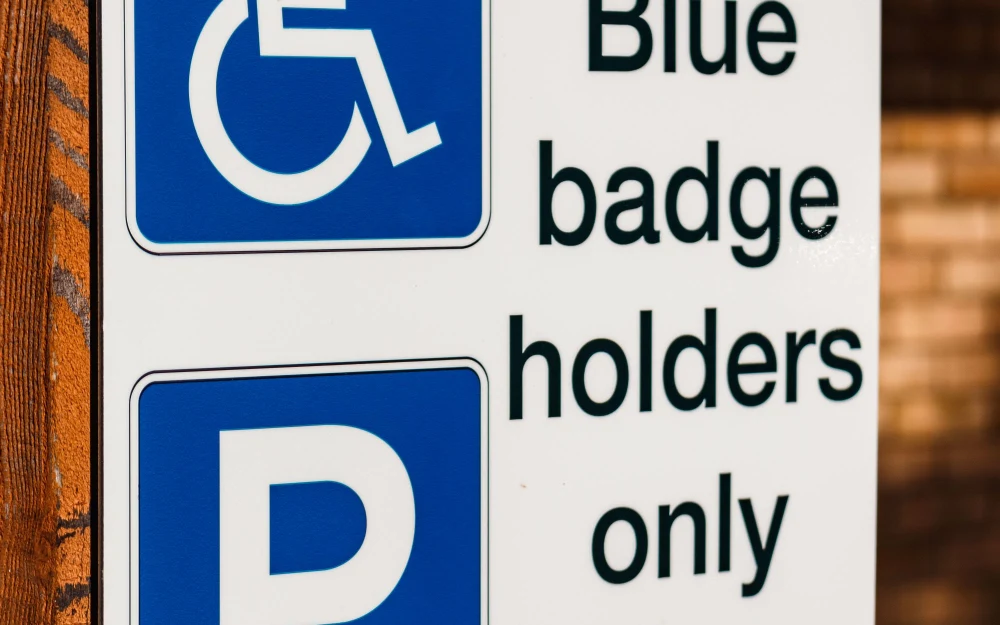
By lookinto.co.uk Research. Published 20 August 2026. All figures are from the Department for Transport's Blue Badge statistics for the year to 31 March 2025, published 19 March 2026, unless stated otherwise.
More than 3 million people in England now hold a Blue Badge, 1 in every 19, and issues rose 12.3% last year. We break the full numbers down in The UK Blue Badge Report. This companion guide covers the practical side: who qualifies, exactly which benefit awards get you a badge automatically, what it costs in each UK nation, how to apply, and the places where a Blue Badge will not help you.
Who qualifies automatically
In England you get a Blue Badge without a mobility assessment if any of these apply:
- You receive the higher rate mobility component of Disability Living Allowance (DLA)
- You receive Personal Independence Payment (PIP) and scored 8 points or more in the "moving around" part of the mobility assessment (in practice, you cannot walk more than 50 metres)
- You receive PIP and scored exactly 10 points under descriptor E of "planning and following journeys", meaning you cannot undertake any journey because it would cause overwhelming psychological distress
- You are registered blind (severely sight impaired)
- You receive the War Pensioners' Mobility Supplement
- You received an Armed Forces Compensation Scheme lump sum in tariffs 1 to 8 and are certified as having a permanent and substantial disability that makes walking very difficult
Among people who hold a badge through this automatic route, 94.8% qualified through DLA or PIP, 4.7% through blind registration and 0.5% through the War Pensioners' supplement.
The 10-point quirk. The PIP "planning and following journeys" rule is stricter than it looks. Only a score of exactly 10 points under descriptor E qualifies automatically. If you scored 12 points on that activity, you do not qualify automatically, even though 12 is a higher score. You can still apply and be assessed, and many people in that position do get a badge, but councils will treat it as a discretionary application. It catches people out every year.
Who can qualify after an assessment
You may still get a badge if a council assessment agrees that any of these apply:
- You cannot walk at all, or cannot walk without help from someone else or a mobility aid
- Walking causes you severe pain or breathlessness, or takes an excessive amount of time
- Walking puts your health or safety at risk
- You have a terminal illness and an SR1 form from a medical professional
- You have a severe disability in both arms, drive regularly, and cannot operate parking machines
- Your child is under 3 and needs bulky medical equipment, or needs to be near a vehicle in case emergency treatment is required
- You have a non-visible condition that means journeys cause you very considerable psychological distress, or you are a significant risk to yourself or others near vehicles and traffic
The non-visible route has existed in England since 2019 and covers conditions such as autism, dementia and severe anxiety. It is still a small share of the scheme: 55,000 of the 1.27 million badges issued last year, or 4.3%. For these applications councils commonly ask for supporting evidence such as diagnosis letters, prescriptions or letters from professionals involved in your care, so gather that before you apply.
What it costs and how long it takes
| Nation | Fee |
|---|---|
| England | Up to £10 (set by your council) |
| Scotland | £20 |
| Wales | Free |
| Northern Ireland | £10 |
Fees correct as of August 2026. A badge usually lasts up to 3 years, and you must reapply before it expires; renewal is not automatic, even if you qualified through the automatic route.
You apply through gov.uk, which routes the application to your local council (in Northern Ireland the Department for Infrastructure runs it centrally). You will need a recent digital photo, proof of identity, proof of address, your National Insurance number and proof of benefits if you are applying through the automatic route.
How long it takes. The official guidance is that councils usually decide within 12 weeks. In practice this varies a lot between councils, and discretionary applications that need a mobility assessment sit at the slower end. If you are renewing, apply around 12 weeks before your badge expires, because there is no grace period: an expired badge is no badge at all as far as a parking warden is concerned.
Where a Blue Badge works, and where it does not
In England a Blue Badge lets you park free in on-street disabled bays, park free and usually without time limit at on-street pay-and-display, and park on single or double yellow lines for up to 3 hours as long as loading is not banned and you display the parking clock showing your arrival time.
It also gets you a 100% discount on the London Congestion Charge, but only after you register with Transport for London, which charges a £10 administration fee and takes up to 10 working days.
The catch: the badge is not valid everywhere, and the gaps are exactly where you would want it most.
- Central London. Westminster, the City of London, Kensington and Chelsea, and part of Camden do not fully operate the scheme. Each runs its own local disabled parking scheme with its own bays and permits. A Blue Badge on the dashboard in central Westminster can still mean a penalty charge.
- Private car parks. Supermarkets and shopping centres set their own rules. Most offer disabled bays, but the badge gives you no legal right to free parking there. NHS hospitals in England have been expected to offer free parking to disabled patients and visitors with a Blue Badge since January 2021, but how each trust applies it varies, so check the hospital's own parking page before you travel.
- Red routes in London and some other cities, bus stops, pedestrian crossings and anywhere a loading ban applies.
Always read the local signs. The badge follows the person, not the vehicle, so you can use it in any car you are driving or travelling in, including taxis and hire cars.
Misuse is a criminal offence
Using someone else's badge, using a badge after the holder has died, or using a copied or altered badge is a criminal offence carrying a fine of up to £1,000 plus confiscation of the badge. That includes family members using a relative's badge to park while running errands without the holder in the car. Councils run enforcement operations, and around 6,600 badges were reported lost or stolen last year (our Blue Badge Report covers theft and enforcement in detail). Report a missing badge to your council straight away.
If you are refused
There is no formal right of appeal, but you can ask the council to reconsider, and you should if you think evidence was missed. You can also reapply at any time if your mobility gets worse. Include specific medical evidence about walking distance, pain and speed rather than general statements: assessments turn on the detail.
Related reading
- The UK Blue Badge Report: our full data analysis of the scheme, updated for the latest DfT figures
- UK mobility statistics: our wider data page on disability and mobility in the UK
- The Disabled Facilities Grant: up to £30,000 towards home adaptations
- UK home adaptation costs: what ramps, stairlifts and wet rooms actually cost
- UK stairlift price index: real installed prices, tracked
Frequently asked questions
Does PIP automatically entitle me to a Blue Badge?
Only certain scores. You qualify automatically with 8 or more points in "moving around", or exactly 10 points under descriptor E of "planning and following journeys". Other PIP awards do not qualify automatically, but you can still apply through the assessed route.
Can I get a Blue Badge for a non-visible condition like autism or dementia?
Yes, since 2019 in England. You will usually need supporting evidence from professionals involved in your care, and the application is assessed rather than automatic. About 55,000 badges were issued this way last year.
How much does a Blue Badge cost?
Up to £10 in England, £20 in Scotland, free in Wales and £10 in Northern Ireland, as of August 2026. Anyone charging more, such as third-party websites offering to "handle" your application, is adding a fee for something you can do yourself on gov.uk.
Can I use my Blue Badge in any car?
Yes. The badge belongs to you, not a vehicle, so it works in any car you are driving or riding in, including taxis. What you cannot do is let someone else use it when you are not in the car.
Does a Blue Badge work in supermarket and hospital car parks?
Not automatically. Private and off-street car parks set their own rules and can charge badge holders. NHS hospitals in England have been expected to give disabled badge holders free parking since 2021, but each trust applies the rules its own way, so check before you travel.
How long does a Blue Badge application take?
Councils usually decide within 12 weeks. Renewals are not automatic, so apply about 12 weeks before your current badge expires.
Sources and methodology
Badge numbers, eligibility route shares, regional rates and lost or stolen figures are from the Department for Transport, Blue Badge scheme statistics: April 2024 to March 2025, published 19 March 2026. Eligibility criteria and parking rules are from the Department for Transport's guidance Can I get a Blue Badge? and The Blue Badge scheme: rights and responsibilities in England. Fees are from gov.uk and nidirect, checked 20 August 2026. Contains public sector information licensed under the Open Government Licence v3.0. This article is general information, not legal or benefits advice; eligibility decisions rest with your local council.