
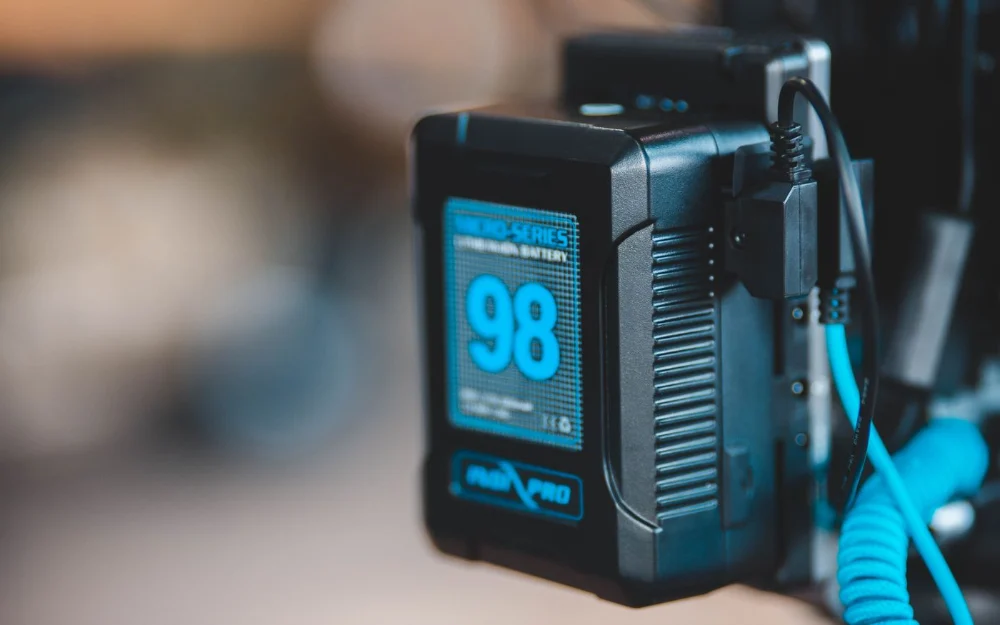
The short version
- Glastonbury is fallow in 2026, so around 200,000 ticket-holders have spread across other UK festivals. Camping power is in unusually high demand this summer.
- For a weekend festival, 250Wh to 300Wh is the sweet spot. It charges phones, lights and a speaker for three days and still fits in a rucksack.
- For a campervan or a family tent with a coolbox, you want 1000Wh or more, and at least 1000W of AC output if you want to boil a kettle.
- Look for LiFePO4 (LFP) cells. They cost a little more up front and last several times longer than the older lithium-ion packs.
Portable power stations used to be a niche thing for van-lifers. They are now one of the fastest-growing categories in UK outdoor retail, and this summer has given them an extra shove. Glastonbury is taking a fallow year, which has pushed a lot of people towards festivals that are less generously equipped with charging tents. Add a run of hot, dry weekends and the rise of the coolbox that plugs in, and a lot of people are looking at a box of battery for the first time.
The trouble is the specs are confusing and the pricing is all over the place. Below are six that make sense on Amazon UK right now, from an £80 unit that fits in hand luggage to a 1kWh box that will keep your fridge running through a power cut. Prices move, so treat ours as a guide.
How this guide was made: desk research, not a hands-on test. We shortlist on UK availability, compare published specifications and warranty terms, and read verified UK owner reviews, discounting incentivised ratings. Prices in the comparison table are pulled live from Amazon UK. Where we have tested something ourselves, we say so on the page.




As an Amazon Associate I earn from qualifying purchases. (paid link)
Prices and specs last checked 12 July 2026 · how we picked
How we picked these
We started from what people actually plug in at a UK campsite, not from a spec sheet. Three things decide whether a power station is right for you:
- Capacity (Wh) is how much energy is stored. A phone is roughly 15Wh, a laptop 60Wh, a 12V coolbox around 40Wh to 60Wh a day once it has cooled down.
- Output (W) is what you can plug in at once. Anything with a heating element (kettle, toaster, hair dryer) needs 1000W or more, which is why the small units cannot run them at any capacity.
- Cell chemistry. LiFePO4 packs are typically rated for 3,000 or more cycles to 80% capacity, against a few hundred for older lithium-ion. Every unit here except the budget pick uses LFP.
We also weighted safety guidance from the fire services, who now see a steady stream of incidents involving cheap lithium batteries. The Electrical Safety First advice is the short version: buy a named brand, use the charger it came with, and do not charge it while you sleep next to it. Every unit below is from a brand with a UK presence, sold by Amazon UK rather than a marketplace unknown.
At a glance
| Power station | Best for | Capacity | Price |
|---|---|---|---|
| EcoFlow River 3 | a first power station | 245Wh | £159 |
| Anker SOLIX C300 | all-rounder for camping | 288Wh | £189 |
| VTOMAN FlashSpeed 600 | capacity for the money | 499Wh | £225 |
| Jackery Explorer 1000 v2 | family camping and campervans | 1070Wh | £379 |
| EcoFlow Delta 3 Classic | power cuts at home | 1024Wh | £399 |
| Powkey 99Wh Power Station | cheap option and hand luggage friendly | 99Wh | £80 |
The six worth looking at
EcoFlow River 3
Best for a first power stationThe one most people should start with. It is light enough to carry across a campsite in one hand, charges to full from the mains in about an hour, and the LFP cells are rated for thousands of cycles rather than a few hundred. Runs a phone, a laptop, camp lights and a small fridge without complaint.
The catch: 245Wh is a weekend, not a week. If you want to run a kettle or a hair dryer, this is not the one.
245Wh, 600W output, 3.4kg
As an Amazon Associate I earn from qualifying purchases. (paid link)
Anker SOLIX C300
Best all-rounder for campingA tidy middle ground on size and price, with a retractable handle and a fold-flat design that packs into a car boot properly. Anker has a longer track record on batteries than most of the newer brands, and the app-free simplicity suits people who just want a box that works.
The catch: 300W continuous rules out most heating appliances. It is a charging hub, not a mains substitute.
288Wh, 300W (600W surge), LiFePO4

As an Amazon Associate I earn from qualifying purchases. (paid link)
VTOMAN FlashSpeed 600
Best capacity for the moneyClose to twice the stored energy of the entry-level units for not much more money, and it takes an expansion battery later if your needs grow. A sensible pick for campervan owners who want a bit of headroom.
The catch: The brand is less established here and reviews are more mixed than Anker or EcoFlow. Support can be slow if something goes wrong.
499Wh, 600W (1200W peak), expandable
As an Amazon Associate I earn from qualifying purchases. (paid link)
Jackery Explorer 1000 v2
Best for family camping and campervansThe step up that changes what you can actually plug in. 1500W covers a small kettle, a coffee machine or a heated blanket, and 1070Wh will keep a coolbox running for a long weekend with phones on top. Jackery is the brand most UK campsites have already seen.
The catch: It weighs about 10.8kg. That is fine in a van, less fine if you are walking it from a festival car park.
1070Wh, 1500W AC, 100W USB-C
As an Amazon Associate I earn from qualifying purchases. (paid link)
EcoFlow Delta 3 Classic
Best for power cuts at homeEnough output to run a fridge freezer, a router and a few lights through a winter outage, and it recharges from empty in under an hour on the mains. The UPS function switches over fast enough that a desktop computer will not drop out.
The catch: It will not run electric heating or an immersion heater, which is what most people picture when they think of home backup.
1024Wh, 1800W AC (3600W surge)
As an Amazon Associate I earn from qualifying purchases. (paid link)
Powkey 99Wh Power Station
Best cheap option and hand luggage friendlyUnder the 100Wh airline limit, so it can go in hand luggage. Cheap enough to buy for one festival and not worry about it, and it will still get a couple of phones and a speaker through a weekend.
The catch: 99Wh is genuinely small, the build is basic, and the review scores are the weakest here. Buy it knowing what it is.
99Wh, 100W output, 1.2kg
As an Amazon Associate I earn from qualifying purchases. (paid link)
Frequently asked questions
What size power station do I need for a festival?
For a three-day festival with two phones, a speaker and some lights, 250Wh to 300Wh is plenty. That is the EcoFlow River 3 or the Anker C300. If you are only charging phones, a 99Wh unit or a large power bank will do and weighs far less.
Can a portable power station run a kettle?
Only the bigger ones. A standard UK kettle draws about 2,000W to 3,000W, which is beyond everything on this page. A small 1,000W travel kettle will work on the Jackery Explorer 1000 v2 or the EcoFlow Delta 3 Classic, and on nothing else here.
Can I take one on a plane?
Airlines cap lithium batteries in the cabin at 100Wh without prior approval, and they cannot go in the hold. That rules out every unit here apart from the 99Wh Powkey, which sneaks under the limit. Check with your airline first.
Are they worth it for power cuts?
For keeping a fridge, a router and some lights going for a few hours, yes. A 1kWh unit will manage that comfortably. They will not run electric heating or an electric shower, so they are a stopgap rather than a generator replacement.
How long do they last?
With LiFePO4 cells and normal weekend use, a decade is realistic. The manufacturer cycle ratings assume you drain and refill it fully, which almost nobody does.
Sources
- Electrical Safety First, guidance on lithium battery safety and charging.
- UK Civil Aviation Authority, restrictions on lithium batteries in baggage.
- Amazon UK Best Sellers, product availability and pricing checked 12 July 2026.