
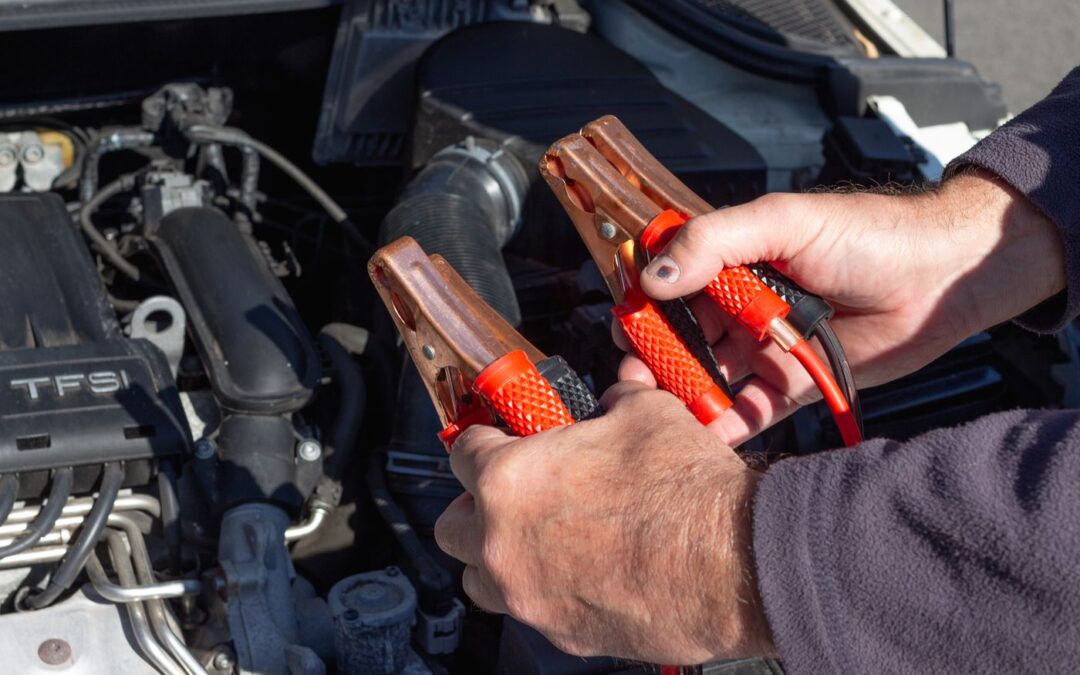
A flat battery is the most ordinary way a car lets you down in a cold snap, and Amazon's own charts say Britain is already kitting up: on 16 October 2026 a tyre inflator sat at number one across the entire Automotive department, winter screen wash was at twelve, and the AstroAI B8 jump starter at twenty-five. A lithium jump starter is a one-box answer — if the one you buy can actually turn your engine over.
That is harder to tell than it should be. We read the top twenty listings in Amazon UK's Car Battery Jump Starters chart on 16 October 2026, title and feature bullets only, and counted what they state. Nineteen of twenty lead with a peak-amps figure, running from 500A to 9,000A — an eighteen-fold spread. Not one of the twenty states a cranking-amps figure or names any test standard behind its headline number. The amp number on the box is unregulated copy, and the pricing proves it: a £21.98 pack claims 5,000A while the £91.99 NOCO benchmark claims 1,000A, and the chart's number-one seller doesn't put an amp figure in its title at all.
The short answer
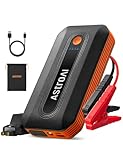
- Best for most drivers: AstroAI B8 (£29.95) — the chart's number one, rated by its maker for 7.0L petrol / 5.5L diesel, and the only top pick that sells on its engine rating rather than an amp number.
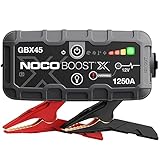
- If you want the established name: NOCO Boost GB40 (£91.99) — the smallest amp claim on the page (1,000A) from the brand that least needs to inflate it; rated 6.0L petrol / 3.0L diesel, up to 20 starts per charge by its own listing.
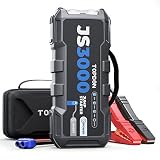
- Bigger engines: NOCO GBX45 (£117.00) or TOPDON JS3000 (£119.99) — the TOPDON is one of only five listings in the top twenty that states its battery capacity.
- Winter kit in one box: the unbranded 5,000A pack with a 150 PSI tyre inflator built in (£29.46) — treat its amp and 9L-diesel ratings as marketing.
- If you fly with it: Povasee 6000A (£39.86) — the only pick that prints its watt-hours (59.2Wh, inside the usual 100Wh cabin limit). Its amp claim is also six times the £92 benchmark's, which tells you what amp claims are worth.
Prices are the Amazon buy box on 16 October 2026 and will move. No lab, no test rig: every figure below comes from the maker, the listing or a named source, read on the date shown.
Prices and specs last checked by Look Into on 16 October 2026 · next check 11 December 2026 · how we picked
The number on the box: what twenty bestselling listings actually state
We read the top twenty products in Amazon UK's Car Battery Jump Starters bestseller chart on 16 October 2026 — the product title and feature bullets of each listing, nothing else, so every count below is about what the seller chose to tell you at the point of sale.
- 19 of 20 lead with a peak-amps figure. The claims run from 500A (NOCO's smallest) to 9,000A, on packs that mostly cost between £22 and £40.
- 12 of 20 claim 5,000A or more. The £91.99 NOCO GB40 — the category's reference product — claims 1,000A. Every pack claiming five to nine times that figure costs a quarter to half as much.
- 0 of 20 state a cranking-amps figure, and 0 of 20 name any test standard for the amp claim. Peak amps has no agreed measurement in these listings: no duration, no temperature, no method. A number with no stated test behind it can be as large as the seller likes.
- 1 of 20 mentions any certification mark in its bullets (a UKCA line on one Povasee pack). None ties it to the amp figure.
- Only 5 of 20 state battery capacity in mAh, and only 2 of 20 in watt-hours — the figure airlines actually use. Thirteen listings quote an engine-size rating ("starts up to 9.0L diesel") while stating no battery capacity at all: a performance promise with no stated hardware behind it.
- 10 of 20 claim a number of starts per charge, from 8 to 50. The claims are not standardised and behave accordingly: by the makers' own numbers the £39.86 Povasee delivers 40 starts and the £117 NOCO GBX45 delivers 8. Either the claims mean little, or the market is upside down. We think it is the former.
The pattern is the same one we found in our electric heaters audit: the less verifiable the number, the bigger it gets, and the biggest numbers cluster on the cheapest, least supported products. The one place it breaks is instructive — the chart's number-one seller, the AstroAI B8, puts its engine rating in the title and no amp figure at all.
How we chose
Desk research, not a hands-on test. We ranked on what can be checked from the listing and the maker: a stated engine-size rating, whether capacity is printed (mAh or Wh), whether a starts-per-charge figure is claimed, price against those stated figures, and whether the brand maintains UK support pages. We treated every peak-amps figure as advertising, because nothing in any listing lets anyone treat it as a measurement. Where a pick's own numbers look implausible, the card says so.
The six picks
1. AstroAI B8 — best for most drivers
£29.95 on 16 Oct 2026 · rated by the listing for 7.0L petrol / 5.5L diesel
Number one in the Jump Starters chart and twenty-fifth across the whole Automotive department on the day we checked — and the only pick on this page whose title sells the engine rating rather than an amp figure. That is the honest way round: the engine rating is a claim the maker has to stand behind in returns, the amp number is not.
The catch: the listing states no battery capacity and no starts-per-charge figure, so you are taking the rating on brand trust, not printed numbers.
2. NOCO Boost GB40 — the benchmark
£91.99 on 16 Oct 2026 · 1,000A claimed · 6.0L petrol / 3.0L diesel · up to 20 starts per charge, by its own listing
The GB40 is the category's reference product, and it carries the smallest amp claim on this page. That is the tell worth paying for: the brand with the most to lose states the least inflated number. The listing's spark-proof connection and reverse-polarity protection claims are the safety lines the cheap packs copy word for word.
The catch: by its own claims you are paying £4.60 per start on a charge against the Povasee's £1.00, and its 3.0L diesel rating is the lowest here. You are buying the brand's restraint, at triple the budget price.
3. NOCO Boost X GBX45 — bigger petrol engines
£117.00 on 16 Oct 2026 · 1,250A claimed · 6.5L petrol / 4.0L diesel · up to 8 starts per charge claimed
The step-up NOCO for larger petrol engines and 4.0L diesels, with the same protection feature set as the GB40.
The catch: eight claimed starts per charge is the lowest on the page, which at £117 makes it the worst per-claimed-start value here (£14.63). NOCO's starts claims are plainly more conservative than the no-name packs' — but that is our inference, not a printed spec.
4. TOPDON JS3000 — the one that prints its capacity
£119.99 on 16 Oct 2026 · 3,000A claimed · 24,000mAh stated · 9L petrol / 7L diesel
One of only five listings in the top twenty that states its battery capacity. 24,000mAh at the usual 3.7V nominal is about 88.8Wh — a real, large cell, and still inside the 100Wh figure airlines use for cabin batteries. A maker that prints capacity is giving you a number it can be caught out on, which is the behaviour this page exists to reward.
The catch: no starts-per-charge claim, and the 3,000A figure carries no more stated proof than anyone else's.
5. 5,000A pack with 150 PSI air compressor — winter kit in one box
£29.46 on 16 Oct 2026 · 5,000A claimed · 150 PSI tyre inflator built in · rated to 9L diesel by the listing
A tyre inflator was the number-one product in the whole Automotive department on the day we checked, and this unbranded pack bolts one onto a jump starter for under £30. As a glovebox winter kit, one box doing both jobs is a genuinely useful shape.
The catch: an unbranded £29 pack claiming 5,000A and a 9L-diesel rating — beyond what NOCO claims for its £300 flagship — is the amp inflation problem in one listing. Buy it as a cheap combo tool, not for the numbers on the box.
6. Povasee 6000A — the only pick that prints its watt-hours
£39.86 on 16 Oct 2026 · 6,000A claimed · 59.2Wh stated · up to 40 starts per charge claimed · rated to 10L petrol / 8L diesel by the listing
One of just two listings in the top twenty that states watt-hours — the figure that decides whether a battery flies. At 59.2Wh it sits inside the usual 100Wh cabin allowance; our power banks guide covers how that limit works. A full recharge of a 59.2Wh cell is about 1.6p at the October cap's 26.32p/kWh unit rate, before charger losses.
The catch: it claims 6,000A — six times the £92 GB40's figure — from a cell smaller than the TOPDON's. Those two printed numbers sitting side by side are the clearest evidence on this page that peak-amps claims are advertising. We picked it for the watt-hours line and the price, not the 6,000.
Compare the picks
The live table below pulls prices from Amazon's product feed, which can sit slightly off the buy-box price you pay, and very occasionally returns no price for a product that is in stock. The prices in the cards above are the buy box as read on 16 October 2026.
Prices in this table come live from Amazon and can change through the day. Prices quoted in the text were checked by Look Into on 16 October 2026, so the two can differ.




As an Amazon Associate I earn from qualifying purchases. (paid link)
What a claimed start costs
Ten of the twenty listings claim a number of starts per charge. The claims are not standardised — no listing states the engine size, temperature or battery state behind its figure — but they are the makers' own numbers, so here is what they imply. Divide the 16 October price by the claimed starts on one charge:
| Pack | Price (16 Oct 2026) | Claimed starts per charge | Price per claimed start |
|---|---|---|---|
| Povasee 6000A | £39.86 | 40 | £1.00 |
| NOCO Boost GB40 | £91.99 | 20 | £4.60 |
| NOCO GBX45 | £117.00 | 8 | £14.63 |
| AstroAI B8 | £29.95 | not claimed | — |
| TOPDON JS3000 | £119.99 | not claimed | — |
| 5,000A + compressor | £29.46 | not claimed | — |
Read that table as a measure of the claims, not the hardware: it says a £40 pack out-promises a £117 one by a factor of fourteen, which mostly tells you who is promising carefully. Electricity is a rounding error either way — recharging the two packs that state capacity costs roughly 1.6p (59.2Wh) and 2.3p (88.8Wh, from the stated 24,000mAh at 3.7V nominal) at the October cap's 26.32p/kWh.
Who should skip a jump starter
- If your breakdown cover includes home start, you may be paying twice for the most common rescue. Check what your policy already covers before adding a box that does the same job.
- If your battery keeps going flat, a jump starter is a ferry, not a fix. It gets you to the garage; the battery that stranded you is still in the car.
- If it will live uncharged in the boot, it will not be there when you need it. Lithium packs self-discharge over months, and most listings do not print a recharge interval. A jump starter you never top up is the one product on this page that fails precisely when it is needed.
For the other side of a winter battery — what the AAs and coin cells around the house actually cost — see our batteries guide.