
The short answer (prices checked 12 November 2026)
- Lagging a 15mm pipe costs between 76p and £4.29 a metre on Amazon UK today, a spread of five and a half times for the same job.
- Our pick is the Climaflex 10 metre pack for 15mm pipe with a 13mm wall at £10.84, which works out at £1.08 a metre.
- The cheapest per metre is the 20 metre Climaflex roll at £15.19, or 76p a metre, though its wall is 9mm rather than 13mm.
- Of the first 20 unsponsored Amazon UK listings for "pipe insulation", 12 state a wall thickness and only 1 names an insulation standard.
Pipe lagging is one of those things nobody buys until the forecast turns. It is turning now, and the charts show it: the K-Flex self-seal lagging in this guide sits at number 1 in Amazon UK's Pipes category, and the search results for "pipe insulation" are deep enough to fill four screens with foam tubes, foil wraps and felt rolls.
It is also one of the few winter jobs where the product is cheap and the failure is expensive. So the question worth answering is not which brand, but how thick, and whether the listing tells you enough to judge.
Also awarded in this guide

Climaflex 20 metre roll
Twenty metres for the price of two short packs, and the lowest cost per metre of anything in the first twenty results. If you are lagging long runs where heat loss is the point rather than frost, this is the sensible way to buy it.
£15.19
Check price on Amazon
Climaflex 22mm pack
The same 13mm wall as the main pick, sized for the 22mm feeds that usually run between the tank, the cylinder and the boiler. Those are the pipes that tend to sit highest and coldest in a loft.
£11.05
Check price on Amazon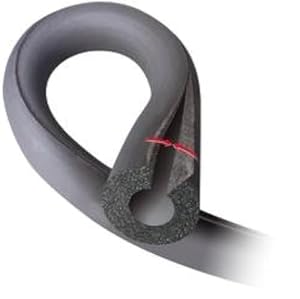
K-Flex self-seal
This was the only listing of the twenty we read that published an insulation standard and a full conductivity table, with figures at four temperatures and a fire classification.
£9.25
Check price on AmazonAffiliate links: as an Amazon Associate, Look Into earns from qualifying purchases. Prices change. These labels are Look Into editorial picks from desk research, not test results and not awards from Amazon or any third party. How we pick · See every LookInto Winner.
How this page was made
Prices and specs last checked by Look Into on 12 November 2026 · next check 7 January 2027 · how we picked
Prices in this table come from Amazon and are refreshed at least once a day, with the date of the last update under the table. The cost-per-use and running-cost figures on this page use prices Look Into read on 12 November 2026, so they can differ from today's price.
Compare live prices for every pick



As an Amazon Associate, Look Into earns from qualifying purchases. Product prices and availability are accurate as of 12 November 2026 4:05 pm and are subject to change.
The thickness nobody puts in the title
There is a legal requirement behind this, and it is short. Schedule 2 of the Water Supply (Water Fittings) Regulations 1999 says at paragraph 4(b)(ii) that every water fitting shall be installed so as to "inhibit damage by freezing or any other cause". That is the whole duty. It names no thickness, no material and no standard, which is why the trade falls back on BS 5422 for the numbers.
Those numbers are bigger than most people expect. The indicative table published by pipe insulation supplier Pipelagging.com, read on 12 November 2026, gives 25mm of elastomeric foam for a 15mm nominal pipe on a low temperature hot water circuit, working from a conductivity of about 0.040 W/m·K with the water at 75°C and the air around it at 20°C. The same page is careful to call that indicative and to say the current BS 5422 tables and the maker's own conductivity data should be checked.
Now look at what Amazon actually sells. The foam tubes in this guide come in 9mm and 13mm walls. Nothing in the first 20 unsponsored results came close to 25mm. That gap is not a scandal, because a loft pipe carrying cold water in winter is a different calculation from a hot circuit losing heat all year. It does mean the thickness on the pack is a floor rather than a target, and that going from 9mm to 13mm costs a few pence a metre.
How we picked these
We read the first 20 unsponsored results for "pipe insulation" on amazon.co.uk on 12 November 2026, then opened each listing and pulled the bore, the wall thickness, the length in the pack and the price. Cost per metre is the pack price divided by the metres the listing says are in it, worked out on that date. Picks had to cover a different job from each other, carry a verifiable ASIN and be in stock when we looked.
Look Into has not handled these products: every figure comes from the maker, the listing or a named source, read on the date shown.
At a glance
| Pick | Fits | Wall | In the pack | Price on 12 Nov 2026 | Cost per metre |
|---|---|---|---|---|---|
| Climaflex 10m, 15mm pipe | 15mm | 13mm | 10 metres | £10.84 | £1.08 |
| Climaflex 20m roll, 15mm pipe | 15mm | 9mm | 20 metres | £15.19 | 76p |
| Climaflex 10m, 22mm pipe | 22mm | 13mm | 10 metres | £11.05 | £1.11 |
| K-Flex self-seal, 15mm bore | 15mm | 9mm | 2 metres | £8.57 | £4.29 |
| Foil pipe wrap, 80mm wide | Any | Not stated | 7.5 metres | £7.89 | £1.05 |
| Sheep wool lagging roll | 15mm and 22mm | Not stated | 7.2 metres | £6.30 | 88p |
The six we would buy
Climaflex 10 metre pack, 15mm pipe, 13mm wall
This is the thicker of the two walls Amazon sells in volume, on the pipe size most British houses have most of, in a length that covers a loft run and the airing cupboard with some left over. Climaflex is the name that comes up again and again across the unsponsored results, and the self-seal slit means you are pressing it shut rather than taping every joint.
The catch: It only fits 15mm pipe, so a house with 22mm feeds as well needs a second pack.
Check the price on Amazon →Climaflex 20 metre roll, 15mm pipe, 9mm wall
Twenty metres for the price of two short packs, and the lowest cost per metre of anything in the first twenty results. If you are lagging long runs where heat loss is the point rather than frost, this is the sensible way to buy it.
The catch: The wall is 9mm, the thinner of the two common sizes, so it is the weaker choice for an exposed loft run.
Check the price on Amazon →Climaflex 10 metre pack, 22mm pipe, 13mm wall
The same 13mm wall as our main pick, sized for the 22mm feeds that usually run between the tank, the cylinder and the boiler. Those are the pipes that tend to sit highest and coldest in a loft, and they are the ones people forget.
The catch: Most houses have far less 22mm than 15mm, so ten metres may be more than you need.
Check the price on Amazon →K-Flex self-seal, 15mm bore, 9mm wall, 2 metres
This was the only listing of the twenty we read that published an insulation standard and a full conductivity table, with figures at four temperatures and a fire classification. If you need to show a landlord, a building inspector or a surveyor what went on the pipe, this is the one that can answer.
The catch: It works out at more than five times the cost per metre of the cheapest here, and it comes as a single two metre length.
Check the price on Amazon →Foil pipe wrap, 80mm wide, 7.5 metres
Foam tubes are fine on straight pipe and useless round a stop tap. This is an 80mm wide wrap you spiral over the awkward bits, so the valves and elbows that foam leaves bare end up covered too. Think of it as the thing you buy alongside the tubes rather than instead of them.
The catch: The listing gives a width and a length and no wall thickness or conductivity, so there is nothing to compare it against.
Check the price on Amazon →Sheep wool lagging roll, 7.2 metres
Wool squashes into gaps that a rigid foam tube will not go near, which is what you want where a pipe runs tight to a joist or through a wall plate. It is also the second cheapest per metre here and it covers both common pipe sizes from one roll.
The catch: The listing states three facts in total and no thickness, so you are buying on the material name.
Check the price on Amazon →What the listings actually tell you
We read the first 20 unsponsored results for "pipe insulation" on amazon.co.uk on 12 November 2026 and counted what each one states, looking only at the product title, the bullet points, the technical specification tables and the product description. Nothing from reviews, images or the Q and A.
- 12 of the 20 state a wall thickness in millimetres anywhere in that scope.
- 1 of the 20 names an insulation standard, British or European.
- 6 of the 20 publish a thermal conductivity figure.
So on a good day you can find out how thick the foam is. On most days you cannot find out how well it insulates, and on almost every listing you cannot find out what the maker thinks it conforms to. Eight of the twenty give you no thickness at all, which on a frost job is the one number that matters.
That is the reason our picks lean on the ones that publish a bore and a wall. It is a low bar. Most of the market does not clear it.
Questions people ask
What thickness of pipe insulation do I need?
The law does not set one. Schedule 2 of the Water Supply (Water Fittings) Regulations 1999 only requires that a fitting is installed so as to inhibit damage by freezing. For a number, the trade uses BS 5422, and the indicative figures published by Pipelagging.com put 25mm of elastomeric foam on a 15mm nominal hot water pipe. Amazon's foam tubes come in 9mm and 13mm walls, so if you are choosing between them for a cold loft run, 13mm is the one closer to what the tables ask for.
Does pipe lagging stop pipes freezing?
It slows the pipe down rather than heating it. Insulation delays the point at which the water inside reaches freezing, which is usually enough in a British cold snap, and it does nothing at all for a pipe left unheated for a fortnight in January. In an empty house, leaving some heating on does more than any thickness of foam.
Is it cheaper to buy a long roll?
Clearly yes, on the prices we read. The 20 metre Climaflex roll works out at 76p a metre and the two metre K-Flex length at £4.29. The catch is that the long roll in that comparison has a 9mm wall and the short length has the standards data, so you are not buying quite the same thing.
Which pipes should I do first?
Anything in the loft, the garage or against an outside wall, starting with the runs furthest from the heated part of the house. Water pipes above the loft insulation sit in the coldest air in the building, because the insulation under them is doing its job.
Sources
- The Water Supply (Water Fittings) Regulations 1999, Schedule 2, legislation.gov.uk, read 12 November 2026.
- BS5422 explained: pipe insulation thickness tables and guide, Pipelagging.com, read 12 November 2026.
- Amazon.co.uk search results for "pipe insulation", the 20 unsponsored listings read 12 November 2026.
Prices were read on amazon.co.uk on 12 November 2026 and change without notice. Look Into is a participant in the Amazon EU Associates Programme and earns from qualifying purchases. That does not change which products we pick or what we say about them.
 Buying DeskBest de-icer UK 2026: costed by the litre
 Home & GardenThe Replacement Parts Database: what fits, how often and what it costs a year
 Household SavingsFreezer running costs UK: 20 best-sellers checked, £41 to £66 a year
 Household SavingsDishwasher running costs UK: 20 best-sellers checked, 14.5p to 24.7p a cycle
New on other desks
- Home LiftsHome lift spec sheets compared: what four UK makers publish, and what they leave out
- Home LiftsHome Lift Deposits and Cancellation: What Sellers' Own Terms Say
- StairliftsCan You Cancel a Stairlift Order? What Four Sellers' Terms Say About Curved Stairlifts