
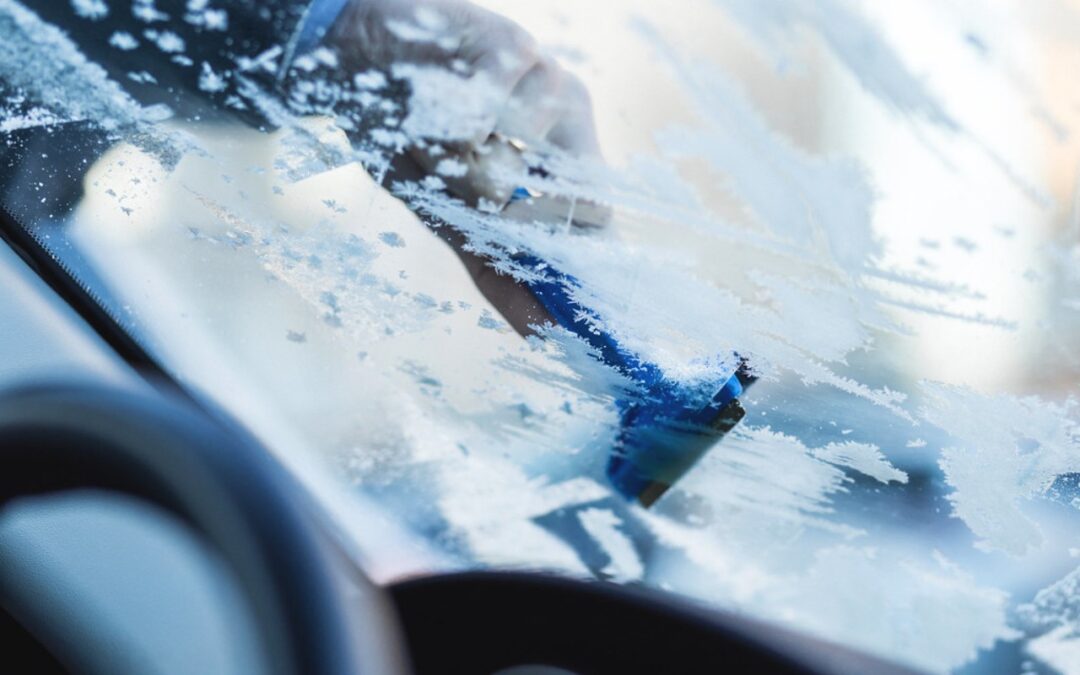
The short answer (prices checked 10 November 2026)
- Cheapest per litre is CarPlan Demon Ice, a 1 litre trigger bottle at £4.45, which is £4.45 a litre.
- The chart pick is the CarPlan Blue Star 600ml aerosol at £2.70, number 7 in Amazon UK's whole Automotive chart this morning and £4.50 a litre.
- Dearest per litre is Autoglym De-Icer, £6.60 for 500ml, or £13.20 a litre. That's just under three times the Demon Ice for a job that takes the same two minutes.
- Audit finding: 18 of the first 20 unsponsored listings state a minimum working temperature, and six of them claim a figure colder than −27.2°C, which is the lowest air temperature ever recorded anywhere in the UK.
Four of the seven best selling products in Amazon UK's entire Automotive department this morning are things you spray on glass. Screenwash sits at numbers 4 and 5, and de-icer takes 6 and 7: Prestone's 600ml aerosol, then CarPlan's Blue Star can at £2.70. Frost season has arrived and the buying has followed it within days.
So we costed them. Every de-icer in this guide is priced by the litre, using the buy-box price and the volume the listing itself states, because that's the only number that makes a 500ml trigger bottle and a 600ml aerosol comparable. Then we read what the cans claim, and found a temperature race that has run a long way past anything Britain's weather has ever done.
How this page was made
Prices and specs last checked by Look Into on 10 November 2026 · next check 5 January 2027 · how we picked
Prices in this table come from Amazon and are refreshed at least once a day, with the date of the last update under the table. The cost-per-use and running-cost figures on this page use prices Look Into read on 10 November 2026, so they can differ from today's price.
Compare live prices for every pick



As an Amazon Associate, Look Into earns from qualifying purchases. Product prices and availability are accurate as of 10 November 2026 10:37 am and are subject to change.
The cold Britain has never been
The Met Office keeps the national record book. The lowest air temperature ever measured anywhere in the United Kingdom is −27.2°C, set at Braemar in Aberdeenshire on 11 February 1895 and again on 10 January 1982, and matched at Altnaharra in the Highlands on 30 December 1995. England's own record is −26.1°C at Newport in Shropshire, on that same January night in 1982.
Now look at what the bottles promise. Across the first 20 unsponsored results for "de-icer spray for car", read on 10 November 2026, the stated minimum working temperatures run from −10 to −50°C. Six of those listings claim a figure colder than the UK has ever been. Autoglym's 500ml bottle says it works "all the way down to −50°C", which is 22.8 degrees below the national record. Prestone's two listings say −40°C, 12.8 degrees below it.
That doesn't make any of them bad. It makes the number close to useless as a way of choosing between them. A minimum working temperature describes the point at which the fluid itself stops behaving, which is a property of the alcohol in the bottle. It says nothing about how quickly the stuff clears two millimetres of frost at −2°C, which is the morning you'll actually have. If the rating were the thing that mattered, the cheapest can in the chart would be the worst buy here, and it isn't.
Here's the weather you're buying for. The Met Office's HadUK-Grid series for days of air frost, which counts every day the UK's minimum temperature falls below zero, gives an average of 47.5 such days a year across 2016 to 2025. The 1991 to 2020 average was 53.4. Last year came in at 44.6 and 2024 at 36.0. Call it somewhere near 48 frosty mornings in a UK year, and not one of them is going to be colder than Braemar in 1895.
What the law actually asks of you
De-icer is one of the few products the Highway Code names outright. Rule 228 tells you to carry an emergency kit in winter, and the first two items on its list are de-icer and an ice scraper, ahead of the torch, the jump leads and the shovel.
Rule 229 is the one with teeth. Before you set off you MUST be able to see, so you clear snow and ice from all your windows, not a letterbox slot in front of the steering wheel. The capitalised MUST in the Highway Code signals a legal requirement rather than advice, and the law behind this one is regulation 30 of the Road Vehicles (Construction and Use) Regulations 1986. Its third paragraph requires that all glass fitted to a vehicle is kept in a condition that doesn't obscure the driver's vision while the vehicle is being driven on a road.
One thing worth correcting, because it gets repeated every winter. People say that leaving the engine running on the drive to defrost the car is illegal under the Construction and Use regulations. Regulation 98 does require a driver to stop the vehicle's machinery when stationary, but read it and you'll see what it's for: the duty applies so far as may be necessary for the prevention of noise, and it carves out vehicles held up by traffic and machinery being run for a purpose other than driving. It's a noise rule. If you want the reason not to sit there with the engine idling, it's the fuel you're burning and the fact that a thief can drive an unattended running car away, not that particular regulation.
How we picked these
Look Into has not handled these products: every figure comes from the maker, the listing or a named source, read on the date shown. What we did was read Amazon UK's Automotive chart and the first 20 unsponsored search results for "de-icer spray for car" on 10 November 2026, then open each shortlisted product's own page to confirm its price, its stock and every claim we repeat here.
Six made the cut, chosen for six different jobs rather than six versions of the same job. Each one is costed at its buy-box price on 10 November 2026 divided by the volume its own listing states. Where a listing doesn't state a volume, we say so rather than guessing, and that turned out to matter for one of them.
| De-icer | Price | Volume | Cost per litre | Claimed minimum |
|---|---|---|---|---|
| CarPlan Demon Ice 1L | £4.45 | 1 litre | £4.45 | −20°C |
| CarPlan Blue Star aerosol 600ml | £2.70 | 600ml | £4.50 | −15°C |
| Prestone De-Icer 600ml | £2.79 | 600ml | £4.65 | −40°C |
| Bluecol De-Icer Trigger 500ml | £3.60 | 500ml | £7.20 | −36°C |
| Autoglym De-Icer 500ml | £6.60 | 500ml | £13.20 | −50°C |
| Holts Di-Icer | £4.92 | not stated | cannot be worked out | −10, no unit given |
CarPlan Demon Ice, 1 litre
Price: check the live price on Amazon · 1 litre trigger bottle · £4.45 a litre on 10 November 2026 · claims −20°C
A litre for the price of a pint, and the cheapest way to buy de-icing fluid on this list. CarPlan sells it as a two in one, so the same bottle is meant to be sprayed on the night before to stop ice forming as well as on the morning after to clear what did. The trigger gives you a wide wet fan rather than an aerosol mist, which suits a windscreen better than it suits a door lock.
The catch: that two in one job description is also the reason you'll get through it faster, because the pre-ice application is an extra use on every frosty evening. A litre bottle is a boot item, not something that fits a door bin, so it won't be with you when you park somewhere cold at work.
CarPlan Blue Star aerosol de-icer, 600ml
Price: check the live price on Amazon · 600ml aerosol · £4.50 a litre on 10 November 2026 · claims −15°C · number 7 in Automotive, 10 November 2026
The one Britain is actually buying. At £2.70 it's the cheapest single can here, it sits seventh in the whole Automotive chart, and five pence a litre separates it from the Demon Ice bottle that tops our costing. An aerosol is the easier format in the dark: one hand, no pumping, and it reaches the top corners of a windscreen without you leaning over the bonnet.
The catch: part of what you're paying for in any aerosol is propellant rather than de-icer, and a cold can delivers a weaker spray than a warm one, which is precisely the morning you want it. CarPlan's own numbers also wobble here. This listing says the formula works down to −15°C, while the four pack and one of the twelve packs of the same can say −20°C.
Prestone De-Icer, 600ml
Price: check the live price on Amazon · 600ml aerosol · £4.65 a litre on 10 November 2026 · claims −40°C · number 6 in Automotive, 10 November 2026
A place above the CarPlan can in the chart, and the only pick here whose listing also promises to stop the glass refreezing after you've cleared it. That second claim is the one worth having in November, when a cleared screen can glaze over again before you've reached the end of the road. Fifteen pence a litre buys it, which is a rounding error on a winter.
The catch: the headline on the can is −40°C, which is 12.8 degrees below any temperature ever recorded in the UK, so the number you're being sold on is one you cannot use. Treat it as a tie-breaker between this and the CarPlan can rather than a reason to pay more elsewhere.
Bluecol De-Icer Trigger, 500ml
Price: check the live price on Amazon · 500ml trigger spray · £7.20 a litre on 10 November 2026 · claims −36°C
A pump trigger with no propellant in it, which means nothing to lose pressure in the cold and nothing to go flat if the can has sat in a boot since March. The 500ml bottle is small enough to live in a door pocket, so it travels with the car rather than waiting at home for the morning you needed it.
The catch: £7.20 a litre is 62 per cent more than the Demon Ice bottle for fluid doing the same job, and a trigger wants a free hand and a good deal more pumping than a button does when it's dark and you're late. Its −36°C claim is another one that sits below the national record.
Autoglym De-Icer, 500ml
Price: check the live price on Amazon · 500ml trigger spray · £13.20 a litre on 10 November 2026 · claims −50°C
The one for people who already buy Autoglym for everything else. Its listing is the most careful of the six about where you can put it, naming windows, mirrors, wipers, door seals and locks, and stating plainly that it's harmless to paintwork, rubber, plastics and glass. If you've a car you fuss over, that reassurance is the thing you're buying.
The catch: £13.20 a litre is just under three times the Demon Ice. The word "concentrated" on the front suggests you'd dilute it and win that back, but the listing's own instructions say to apply it generously and let the ice thaw, with no dilution anywhere, so the price per litre is the price per litre you'll use. Its −50°C figure is 22.8 degrees colder than anything the UK has recorded.
Holts Di-Icer Spray
Price: check the live price on Amazon · volume not stated · cost per litre cannot be worked out · claims −10, no unit given
Holts is a long-standing British car care name and this listing makes three short promises: it clears frost and ice quickly, it melts ice down to −10, and it prevents refreeze. It's in stock, it's a real product, and at £4.92 it sits in the middle of the pack on sticker price.
The catch: nowhere on the listing does Holts say how much is in the bottle. There's a 550g item weight and a package size, and that's it, so there's no honest way to put it on a cost per litre table. The temperature claim has the same problem in miniature: "melts ice down to −10" is printed with no unit after it, so the one number it does give you isn't finished either. We've included it because the gap is the point.
What the first 20 listings claim
We read the first 20 unsponsored results for "de-icer spray for car" on amazon.co.uk on 10 November 2026, counting only what appears in the product title, the feature bullets, the technical specification tables and the product description. Here's what that found.
- 18 of the 20 state a minimum working temperature. The two that don't are both the CarPlan Blue Star trigger spray, sold as a two pack and a four pack, while the twelve pack of the same trigger does carry a figure.
- The figures given are −10 once, −15 four times, −20 six times, −25 once, −36 once, −40 four times and −50 once. That's a 40 degree spread across one shelf of one product.
- Six of those 18 claim a working temperature colder than −27.2°C, the lowest the UK has ever been.
- Two print the figure with no unit at all. Holts says ice melts "down to −10", and CarPlan's twelve pack of trigger bottles writes −15 with a masculine ordinal indicator in place of the degree sign.
- CarPlan contradicts itself on the same product. The identical sentence about working reliably in low temperatures appears with −15°C on the single Blue Star aerosol, its six pack and one twelve pack, and with −20°C on the four pack and another twelve pack.
- Only 8 of the 20 make any claim about preventing refreeze, which is the behaviour most likely to matter on a November commute.
- 19 of the 20 state a volume. The one that doesn't is the Holts bottle, which is why it has no cost per litre in our table.
What a frost season costs
No listing in the 20 states how much fluid one windscreen takes, so a true cost per morning can't be calculated from published figures. What we can do is give the band. Assume somewhere between 20ml and 50ml for a car windscreen, and treat that as our assumption rather than anyone's measurement.
At £4.45 a litre, the Demon Ice bottle works out at 9p to 22p a windscreen. At £13.20 a litre, the Autoglym bottle is 26p to 66p. Run that across the 48 or so days of air frost a UK year averages and the cheap bottle costs £4.23 to £10.57 a winter, against £12.54 to £31.35 for the expensive one. Even at the top of the band, the whole thing is small money, which is the honest conclusion: buy on format and on whether it stops refreeze, and let the cost per litre break the tie.
If you want the same treatment applied to the other bottle in your boot, our screenwash guide costs the ready-mixed and concentrate options by the litre of usable fluid. The wider method behind both lives in the Product Ownership Cost Index.
Questions people ask
Does a colder temperature rating mean a better de-icer?
Not for a British winter. The rating describes the point at which the fluid itself stops working, and six of the 20 listings we read claim a figure colder than any temperature ever recorded in the UK. What separates one de-icer from another on a normal frosty morning is how fast it melts a thin layer at a degree or two below zero, and whether it stops the screen glazing over again. Neither of those is the number on the front.
Do I have to clear the whole windscreen?
Yes. Rule 229 of the Highway Code says that before you set off you MUST be able to see, and that you clear snow and ice from all your windows. The capitalised MUST marks a legal requirement, and the law behind it is regulation 30 of the Road Vehicles (Construction and Use) Regulations 1986, which requires all glass on the vehicle to be kept in a condition that doesn't obscure the driver's vision on a road.
Is it illegal to leave the engine running to defrost the car?
The regulation people point at, regulation 98 of the same 1986 rules, is narrower than its reputation. It requires a stationary driver to stop the vehicle's machinery so far as may be necessary for the prevention of noise, and it excepts vehicles held up by traffic and machinery being worked for a purpose other than driving. It's a noise provision. The better arguments against idling on the drive are the fuel you're burning and the fact that an unattended running car is an easy one to steal.
Can I pour warm water on the windscreen instead?
It's a bad idea even when it works. A sudden temperature change across cold glass can turn a small chip into a crack, and the water that runs off refreezes on the wipers, the door seals and the ground you're standing on. At the prices on this page, a can of de-icer is cheaper than one windscreen repair by a very wide margin.
Aerosol or trigger spray?
An aerosol is quicker one-handed and reaches the far corners of a screen without leaning across the bonnet, and the two cheapest options per litre on this page include one of each. A trigger bottle has no propellant to lose pressure in the cold, refills a smaller container easily and tends to come in sizes that fit a door pocket. Format is the choice that will actually change your mornings, which is why we'd let it outrank a 30 degree difference in a claimed minimum.
Sources
- The Highway Code, driving in adverse weather conditions, rules 226 to 237, for rules 228 and 229.
- Road Vehicles (Construction and Use) Regulations 1986, regulation 30, for the requirement that glass is kept clear of anything obscuring the driver's vision.
- Road Vehicles (Construction and Use) Regulations 1986, regulation 98, for the stopping of engines when stationary and its exceptions.
- Met Office, UK climate extremes, for the −27.2°C UK record and the −26.1°C England record.
- Met Office HadUK-Grid, UK days of air frost series, updated 1 November 2026, for the annual frost day averages.
- Amazon.co.uk Best Sellers in Automotive, read 10 November 2026, for the chart positions.
Prices, volumes, temperature claims and chart positions were read on Amazon UK on 10 November 2026 and change often. Look Into is an Amazon Associate and earns from qualifying purchases; the links above are affiliate links and the price you pay is the same either way.
 Home & GardenThe Replacement Parts Database: what fits, how often and what it costs a year
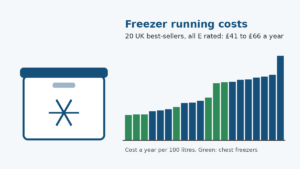 Household SavingsFreezer running costs UK: 20 best-sellers checked, £41 to £66 a year
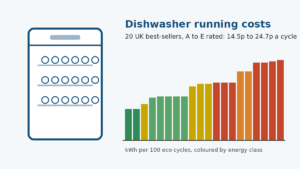 Household SavingsDishwasher running costs UK: 20 best-sellers checked, 14.5p to 24.7p a cycle
 Household SavingsWashing machine running costs UK: 20 best-sellers checked, 8.7p to 13.4p a wash
New on other desks
- Home LiftsHome lift spec sheets compared: what four UK makers publish, and what they leave out
- Home LiftsHome Lift Deposits and Cancellation: What Sellers' Own Terms Say
- StairliftsCan You Cancel a Stairlift Order? What Four Sellers' Terms Say About Curved Stairlifts