
Key takeaways
- The clocks go back at 2am on 25 October 2026, so the dark walk home starts this month, not next.
- Under the ANSI/NEMA FL1 standard, runtime is counted from 30 seconds after switch-on until the light drops to 10 per cent of that first reading. An eight-hour torch can spend most of those eight hours at a tenth of its headline brightness.
- Petzl rates its £31.99 Tikka at 350 lumens. Two of the torches below cost under £14 and claim 2,000 and 3,000.
- A head torch is not a legal bike light. The Road Vehicles Lighting Regulations 1989 put the front lamp on the cycle's centre-line or off-side, no higher than 1,500mm, and cycles first used from 1 October 1990 need an approval mark or a British Standard mark.
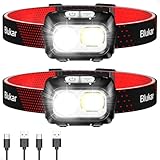
Head torch season arrives in Britain on a fixed date. The clocks go back at 2am on Sunday 25 October 2026, and the school run, the dog walk and the commute home all move into the dark on the same weekend. The buying starts earlier than that, which is why a two-pack of Blukar rechargeable head torches was sitting at number 2 in Amazon UK's Sports & Outdoors chart when we read it on 27 September 2026, with a second Blukar torch at 27 in DIY and a pair of camping lanterns at 24 in Sports.
What the chart does not tell you is that the number printed on the front of most of these boxes is close to meaningless, and that the most useful thing a head torch can do for you on a British lane in November is something most of them do not do at all.
Prices in this table come live from Amazon and can change through the day. Prices quoted in the text were checked by Look Into on 27 September 2026, so the two can differ.



As an Amazon Associate I earn from qualifying purchases. (paid link)
Prices and specs last checked by Look Into on 27 September 2026 · next check 25 October 2026 · how we picked
A head torch helps you see. It does not make you seen
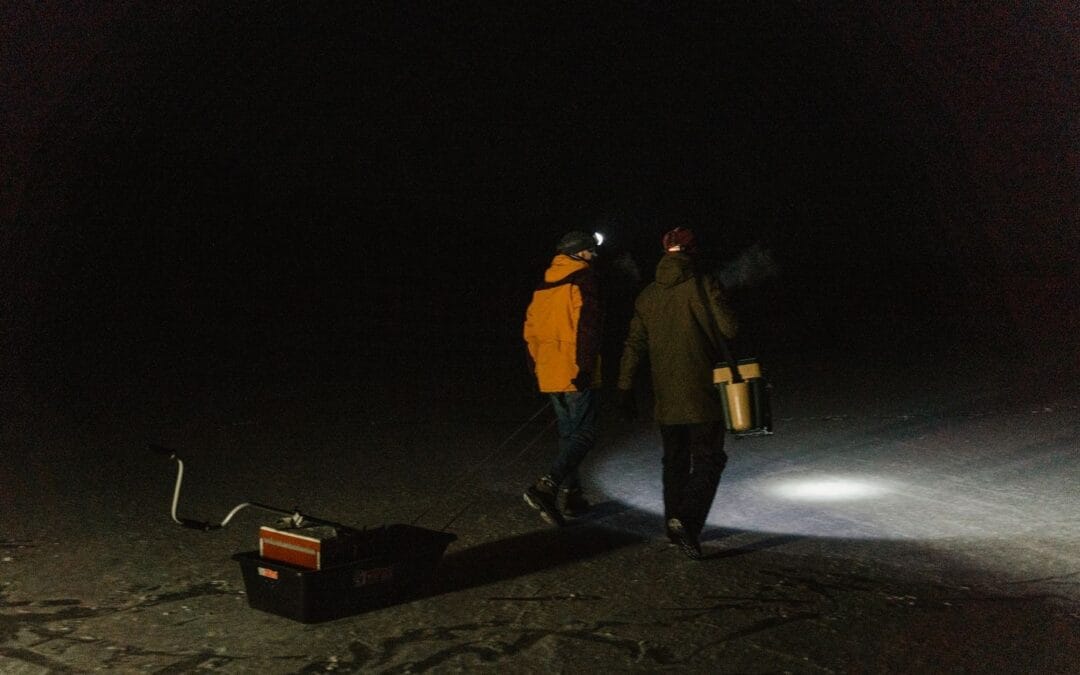
This is the part that gets left out of every head torch roundup we read while writing this one. A head torch throws a white beam roughly where you are looking. That solves the problem of not being able to see the potholes. It does very little about the driver coming up behind you.
The Highway Code is direct about what does work. Rule 3 tells pedestrians to use reflective materials when it is dark, and gives the reason in numbers: reflective armbands, sashes, waistcoats, jackets and footwear "can be seen by drivers using headlights up to three times as far away as non-reflective materials". A head torch is not reflective. It is a light source pointing away from the traffic.
Rule 2 matters just as much and is widely ignored. Where there is no pavement, the Code says to keep to the right-hand side of the road so you can see oncoming traffic, walk in single file on narrow roads or in poor light, and keep close to the side. Walk that way and your head torch is aimed at the windscreens of the cars approaching you, which is useful for being spotted and unhelpful for the driver if you leave it on high. Tilt it down at the verge and dip it when a car comes, the same courtesy you would want back.
So the honest shortlist for a dark British lane is a head torch for the ground, something reflective on your body, and a red light showing behind you. Two of the six below have a red mode built in, which is the cheapest way to cover the third of those.
And it will not make your bike legal
Plenty of riders strap a head torch to a helmet and call it done. It does not satisfy the law. Schedule 2 of the Road Vehicles Lighting Regulations 1989 sets out what a pedal cycle's front position lamp has to be: one lamp, on the centre-line or off-side of the vehicle, at a maximum height of 1,500mm from the ground, or 2,100mm where the structure of the bike makes that impracticable. It has to show white. For cycles manufactured or first used on or after 1 October 1990 it also needs an approval mark or a British Standard mark. Schedule 1 adds the rear position lamp and the rear retro reflector.
A lamp on your head is not fitted to the cycle, sits well above 1,500mm on most adults, swings wherever you look and carries no BS mark. Use a head torch as a second light for reading a signpost or fixing a puncture, and put proper lamps on the bike. We went through what those need to do in our bike lights guide.
What "2,000 lumens" is actually measuring
There is a standard for this. ANSI/NEMA FL1 is the flashlight performance standard that the serious torch brands publish against, and it defines the awkward bits. Runtime under FL1 runs from 30 seconds after the light is turned on until output reaches 10 per cent of that initial measurement. Beam distance is quoted to the point where the beam delivers 0.25 lux, which the standard's own explainer describes as roughly moonlight in an open field.
Read those two definitions again and the marketing stops making sense. A torch advertised as "8 hours" is allowed to be producing a tenth of its opening brightness for most of that window and still hit the number. A torch advertised as reaching 140 metres is reaching 140 metres in the sense that you could just about tell a fence post from a sheep there on a clear night.
Nothing obliges an Amazon seller to declare against FL1 at all, and most do not. The figure a cheap listing quotes is usually the raw output of the LED emitter on a bench, before the reflector, the lens and the heat have taken their cut. What reaches the path in front of you is a smaller number that nobody prints. The pattern is easy to spot once you know it: the brands that do publish to the standard quote figures that look disappointing next to the ones that do not. Petzl puts 350 lumens on the Tikka. Ledlenser puts 600 lumens and 140 metres on the HF4R Signature. The two-pack in the chart puts 2,000 on a torch that costs seven pounds a head.
That does not make the cheap ones useless. For finding the bin store, walking a dog round a lit estate or looking under the sink, 200 honest lumens is plenty and the price is the point. It does mean you should ignore the headline number when comparing two cheap torches against each other, because neither figure was measured the same way, and buy on runtime, beam shape, weight and whether the battery is replaceable.
How we picked these
We do not test head torches. This is desk research: the Amazon UK Sports & Outdoors, DIY and Electronics best seller charts read on 27 September 2026, manufacturer specifications, and prices read from each product page on the same day. Every price below was on the buy box when we looked and will have moved by the time you read it.
We picked six with genuinely different jobs rather than six variations on the same torch, and we have said in each case what the catch is. Where a maker publishes to FL1 we have used their figure. Where a listing quotes a number with no method behind it we have said so instead of repeating it as fact.
The six at a glance
| Head torch | Price | Output claimed | Power | Best for |
|---|---|---|---|---|
| Blukar Head Torch 2-pack | £13.97 | 2,000L, no method stated | Built-in, USB | One in every coat |
| Petzl Tikka | £31.99 | 350 lumens, maker published | Built-in or AAA | A number you can hold them to |
| Ledlenser HF4R Signature | £49.95 | 600 lumens, 140m beam | Built-in, USB | Reach on an unlit lane |
| Energizer Vision HD+ | £11.99 | 260 lumens, 80m beam | AAA | The drawer torch for power cuts |
| BORUIT H09 | £11.99 | Not stated in lumens | 3x AAA | Showing a red light behind you |
| Demlaies COB 2-pack | £13.99 | 3,000L, no method stated | Built-in, USB | Close work under a car or sink |
The six head torches
Blukar Head Torch Rechargeable, 2 Pack
£13.97 for two · 4.7 stars from 13,679 ratings
This is the one the chart is actually reacting to, sitting at number 2 in Sports & Outdoors on the day we looked. Two torches for fourteen pounds means one can live in the car and one by the back door, which is worth more in practice than a single better lamp you can never find. It runs a COB strip alongside a spot LED, so you get a wide close-up wash and a narrow beam from the same unit, and the brightness dims steadily on a long press rather than cycling through fixed steps. There is a motion sensor mode that switches it on with a wave, which is either a party trick or the reason you can open a gate with both hands full.
The catch: the 2,000L on the box has no measurement method behind it, and the battery is sealed into each unit, so when the cell stops holding charge in a couple of years the whole torch goes in the bin. At seven pounds a head that may be a trade you are happy with. It is still a trade.
Check price on Amazon →Petzl Tikka
£31.99 · 350 lumens · 94g
Petzl publishes its figures against the standard, and the honesty shows in how modest they look. Three hundred and fifty lumens sounds feeble next to a fourteen-pound two-pack claiming 2,000, and in the hand it is the brighter, more usable light of the two, because the number refers to what leaves the lamp rather than what leaves the diode. Ninety-four grams is light enough that you forget it is on your head over an hour, which is the difference between a torch you wear and a torch you carry in a pocket and never use.
The catch: thirty-two pounds buys a great deal of cheap torch, and for pottering round a lit street you will not notice what you paid for. This earns its money on unlit ground, over long sessions, and over years rather than months.
Check price on Amazon →Ledlenser HF4R Signature
£49.95 · 600 lumens · 140m beam · 72g · 4.4 stars from 142 ratings
The specification here is the one worth paying for: 600 lumens and a stated 140-metre beam in a 72-gram body, with a focusing system that lets you pull the light from a wide flood to a tight spot. On a lane with no street lighting, reach is what stops you walking into a gate you had not seen, and it is the spec cheap torches are worst at, because a wide COB panel by design throws light everywhere except far away. If you walk a dog across fields in winter, this is the category that fits.
The catch: fifty pounds, and the 140 metres is a standards figure quoted to 0.25 lux, which is moonlight. At 140 metres you will see that something is there, not what it is.
Check price on Amazon →Energizer Vision HD+ 260 Lumen Head Torch
£11.99 · 260 lumens · 80m beam · IPX4 · 4.7 stars from 905 ratings
Rechargeable torches have one failure mode that AAA torches do not: they go flat in a drawer over six months and are useless on the night you need them. This one takes AAAs, so a fresh set brings it back in twenty seconds. Energizer quotes 260 lumens and an 80-metre beam, survives a one-metre drop and carries an IPX4 rating, meaning splashes from any direction rather than immersion. Seven modes including a wide setting cover most of what a household torch is asked to do. If you keep a stash of AAAs anyway, and our batteries guide argues you should, this is the sensible one for the emergency box.
The catch: IPX4 is splash resistance, not weatherproofing, so a long walk in driving rain is pushing it. And you are buying batteries forever, which over several years costs more than the torch did.
Check price on Amazon →BORUIT H09 LED Head Torch with Red Light
£11.99 · runs on 3x AAA · 4.3 stars from 120 ratings
This is the cheapest way to deal with the Highway Code problem at the top of this page. It has a red mode as well as white, and worn on the back of the head strap or clipped to a rucksack it gives a driver approaching from behind something to see, which a white forward beam never will. Red also keeps your night vision, so it is the mode for checking a map, sorting a tent or looking in on a horse without blinding yourself. It runs on three AAAs, so it shares the drawer-torch advantage above.
The catch: the listing never states an output figure in lumens at all, which is more honest than inventing one but leaves you guessing. A hundred and twenty ratings is a thin evidence base next to the 13,679 on the Blukar, so treat the quality as less proven.
Check price on Amazon →Demlaies Head Torch Rechargeable, 2 Pack, COB Wide Beam
£13.99 for two · 2000mAh cell · 4.4 stars from 79 ratings
Three COB strips instead of a reflector give a broad even wash with no hot spot, which is the wrong tool for seeing down a field and the right one for anything happening at arm's length. Under a bonnet, behind a boiler, in the loft, a spot beam lights a coin-sized circle and leaves the rest black, while a wide COB fills the whole space. Two units for fourteen pounds again, and a 2,000mAh cell that the seller says recharges in two to three hours.
The catch: the 3,000-lumen claim on a fourteen-pound two-pack is the least believable number on this page, and COB strips give up quickly with distance, so do not buy this one for walking. Seventy-nine ratings, and a sealed battery again.
Check price on Amazon →What this guide could not check
We did not measure any of these torches. Nobody here put a lumen figure on an integrating sphere or timed a runtime curve, so where a maker publishes against ANSI/NEMA FL1 we have repeated their figure and where a seller quotes a bare number we have labelled it as unverified rather than corrected it. We also could not check how long the sealed batteries in the rechargeable units last in real use, because that takes years rather than an afternoon. Prices move daily and were read on 27 September 2026.
Questions people ask
How many lumens do I actually need for walking the dog?
For a lit street, 100 honestly measured lumens is enough. For an unlit lane or a field, 200 to 400 with some reach is comfortable. Beyond that you are mostly buying dazzle for whoever you meet, and shorter runtime for yourself. The headline number on a cheap listing is not a measured figure, so compare runtime, beam shape and weight instead.
Can I use a head torch instead of a bike light?
No. The Road Vehicles Lighting Regulations 1989 require the front position lamp to be on the cycle's centre-line or off-side at no more than 1,500mm from the ground, showing white, and cycles first used on or after 1 October 1990 need an approval mark or a British Standard mark. A lamp on your head meets none of that. A head torch is fine as an extra, alongside proper lamps fitted to the bike.
When do the clocks go back in 2026?
At 2am on Sunday 25 October 2026. From that morning the evening commute, the school pick-up and the last dog walk all happen in the dark, which is why head torch prices and stock get tighter through October.
Is rechargeable or AAA better?
Rechargeable is cheaper to run and brighter for the money, but the cell is usually sealed in, so the torch has a lifespan of a few years and goes flat in a drawer between uses. AAA torches cost more to feed and are dimmer, but a fresh set of cells revives one instantly, which is what you want from the torch in the emergency box. Owning one of each is not extravagant at these prices.
What does IPX4 mean on a head torch?
It is the water rating from the IP scale: protection against splashing water from any direction. That covers rain on a walk home. It does not cover dropping the torch in a stream or wearing it in a downpour for an hour. If you want that, look for IPX7 or higher and expect to pay more.
Does a red light really help drivers see me?
A red rear light gives a driver behind you a light source to react to, which a forward-facing white beam does not. The Highway Code's own advice is to use reflective materials, which it says can be seen by drivers using headlights up to three times as far away as non-reflective materials. A red mode on a head torch is a useful addition to that, not a substitute for it.
Sources
- GOV.UK, The Highway Code, rules for pedestrians 1 to 35, rules 2 and 3. Read 27 September 2026.
- The Road Vehicles Lighting Regulations 1989, Schedule 2, front position lamp position, height, colour and marking. Read 27 September 2026.
- The Road Vehicles Lighting Regulations 1989, Schedule 1, lamps and reflectors required on a pedal cycle. Read 27 September 2026.
- GOV.UK, When do the clocks change, 2026 dates. Read 27 September 2026.
- Understanding the ANSI/NEMA FL1 Standard, definitions of runtime and beam distance. Read 27 September 2026.
- Amazon.co.uk Best Sellers, Sports & Outdoors, chart positions read 27 September 2026.
If the coat you wear behind that beam has started wetting out, we also priced six reproofers and worked out the cost of reproofing a jacket, dryer run included.
Prices were read from Amazon UK product pages on 27 September 2026 and change often; check the current price before buying. Look Into is published by Whito Ltd and earns a commission from qualifying purchases made through Amazon links on this page, at no extra cost to you. Commission never changes which products we pick or how we rank them. Nothing here is legal advice; the road traffic rules quoted are summarised from the sources above and the originals govern.