
Key takeaways
- A smart meter comes with a free in-home display that already shows your whole-home electricity and gas use in pounds and pence, in near-real time.
- What that free display cannot do is price a single appliance. A plug-in monitor is the only easy way to see what one thing costs at the socket.
- At the October 2026 price cap, electricity is 26.32p per kWh. A 100W device costs about 2.6p an hour; a 10W standby load left on all year adds about £23.
- The best-selling energy plug on Amazon UK is a smart plug at number one in its category with more than 53,000 reviews; the top plain socket meter is number one in Power Monitors.
Energy bills tick up again on 1 October 2026, when the price cap sets electricity at 26.32p a unit. So it is no surprise that plug-in energy monitors are selling well this autumn. On Amazon UK the best-selling energy plug sits at number one in its whole category, with more than 53,000 reviews behind it. Before you add one to the basket, there is a question worth asking first: what does the gadget actually tell you that you cannot already see for free?



As an Amazon Associate I earn from qualifying purchases. (paid link)
Prices and specs last checked 10 September 2026 · how we picked
The whole-home blind spot
If you have a smart meter, you were offered a small display to go with it at no extra cost. Smart Energy GB calls it the in-home display, or IHD. It talks to your meter wirelessly and shows your whole-home electricity and gas use in near-real time, in pounds and pence. Plenty of people leave it in a drawer, but it already does the job most energy-monitor articles are trying to sell you.
What the in-home display cannot do is tell you what one appliance costs. It shows the total for the whole house. If you want to know whether it is the old chest freezer, the tumble dryer or the router-and-console corner quietly running up the bill, the display can only hint at it by the number jumping when you switch something on.
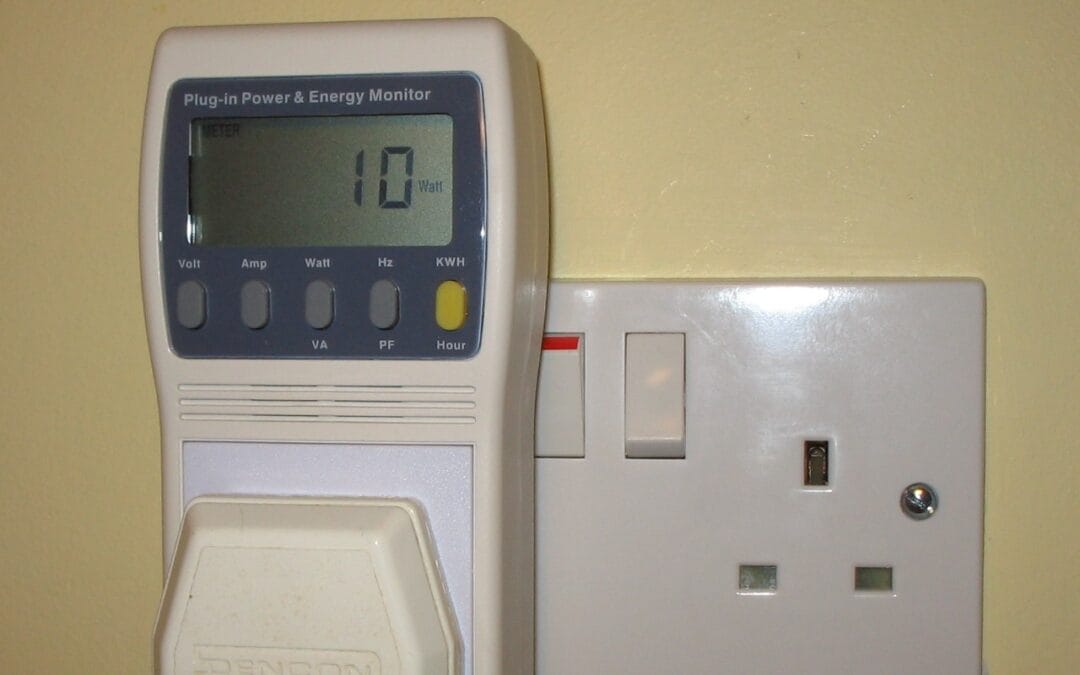
That gap is what a plug-in monitor fills. You put it between the socket and the appliance, and it reads the power going through that one plug. It is the only easy way to price a single thing. A steady 100W draw costs about 2.6p an hour at the October cap. A 10W standby load left on all year adds about £23. Those are the numbers a plug-in monitor turns from a guess into a figure you can act on.
So the honest way to shop this category is to check what you already have. If you have a working in-home display, buy a monitor for the appliance-level question, not the whole-home one. If you do not have a smart meter, a plug-in meter is a cheap way to start seeing where the money goes.
How we picked these
We split the shortlist by the job you are actually doing. Plain plug-in meters are the cheapest way to price one appliance and need no phone or account. Smart plugs take the same reading but send it to an app and let you switch the appliance off remotely. A whole-circuit meter is a different tool again, for people who want to measure a ring main rather than a single plug. Prices and category ranks were read on Amazon UK on 10 September 2026 and move around, so treat them as a guide rather than a fixed figure.
At a glance
| Monitor | Best for | Type | Price |
|---|---|---|---|
| Power Meter 8 Modes (LCD backlight) | Overall plug-in monitor | Plug-in meter | £12.88 |
| Electricity Usage Monitor Power Meter Plug | Budget pick | Plug-in meter | £11.99 |
| Tapsin Power Meter (backlit LCD) | A clear, readable display | Plug-in meter | £13.99 |
| TP-Link Tapo P110 (2-pack) | Smart plug with monitoring | Smart plug | £20.60 |
| NOUS A10 smart plug | Budget smart plug | Smart plug | £14.49 |
| SONOFF MINI PM (Zigbee) | Whole-circuit monitoring | In-line meter | £13.63 |
The six we would look at
Power Meter Electricity Usage Monitor (8 modes, backlit LCD)
Around £12.88 · Amazon’s Choice · number one in Power Monitors · 4.3 stars from 2,129 ratings
The one to buy if you just want to know what something costs. You set your unit rate, plug an appliance in through it, and read watts, kWh and running cost straight off the screen. The backlight helps when the socket is behind furniture.
The catch: It only reads the one socket it is plugged into, so you move it from appliance to appliance. There is no app and no history, so you note the figures yourself.
Check price on Amazon →Electricity Usage Monitor Power Meter Plug
Around £11.99 · plug-in socket meter
The cheapest way to start pricing appliances. It does the core job of any socket meter: shows the power a plugged-in device is drawing and what that adds up to over time.
The catch: A plainer display than the pricier meters and fiddlier menus. Fine for a one-off audit of the house, less pleasant if you plan to use it every week.
Check price on Amazon →Tapsin Power Meter Energy Monitor Plug (backlit LCD)
Around £13.99 · plug-in socket meter
Worth the small premium if eyesight or a dim cupboard is the problem. The backlit screen is easy to read where standby gear often hides, behind the TV or under the desk.
The catch: Still a single-socket meter with no phone app, so it does the same core job as the cheaper plugs rather than anything extra.
Check price on Amazon →TP-Link Tapo P110 Smart Plug, 2-pack
Around £20.60 for two · number one in Smart and Remote Controlled Plugs · 4.6 stars from more than 53,000 ratings
The best-selling energy plug on Amazon UK, and a sensible pick if you want the reading on your phone. It logs usage over days and weeks, estimates the cost, and lets you switch the appliance off from the app, which is handy for anything you keep forgetting to turn off.
The catch: It needs 2.4GHz WiFi and a Tapo account, so it is a device you set up rather than a meter you simply read. The energy figures live in the app, not on the plug.
Check price on Amazon →NOUS A10 Smart WiFi Plug with Energy Monitoring
Around £14.49 · dual-band 2.4/5GHz WiFi · works with Alexa and Google
A cheaper route into app-based monitoring for a single appliance. Dual-band WiFi makes it more forgiving about where your router is, and it does the same real-time and historic tracking as pricier smart plugs.
The catch: It leans on the Tuya or Smart Life app and its cloud account, so your data and remote control depend on that service staying up.
Check price on Amazon →SONOFF MINI PM Smart Energy Meter (Zigbee)
Around £13.63 · Zigbee hub and neutral wire required
A different tool for a different question. Rather than one plug, it wires in to meter a whole circuit, so you can watch a lighting ring or the kitchen sockets as a group. Useful for keen DIY-smart-home setups.
The catch: It needs a Zigbee hub, a neutral wire and an electrician to fit it into the consumer unit. For most people the free in-home display already covers whole-home use, so this is overkill unless you want circuit-level data.
Check price on Amazon →Frequently asked questions
Do I need an energy monitor if I already have a smart meter?
Not for whole-home use. Your free in-home display already shows that in pounds and pence. A plug-in monitor earns its place when you want to price a single appliance, which the in-home display cannot do on its own.
How much does it cost to run a 100W appliance?
At the October 2026 cap of 26.32p per kWh, 100W drawn steadily costs about 2.6p an hour, or roughly 63p over a full day if it never switched off.
Will a plug-in monitor cut my bill on its own?
No. It only measures. The saving comes from what you change once you can see the figures, such as turning off standby loads or replacing an inefficient old appliance.
What is the difference between a plug-in meter and a smart plug?
A plain meter shows the reading on its own screen and needs no setup. A smart plug sends the reading to your phone, keeps a history and can switch the appliance on or off remotely, but needs WiFi and an app account.
Are cheap plug-in monitors accurate?
Socket meters measure the power passing through the plug directly, so they are reasonable for everyday use. Whole-home clamp monitors estimate instead, so they can drift. For pricing one appliance, a plug-in meter is the more dependable of the two.
Sources
- Smart Energy GB, About the smart meter in-home display (what the free IHD shows, page last updated 1 April 2026).
- Ofgem, Energy price cap unit rates and standing charges (26.32p per kWh electricity, 1 October to 31 December 2026).
Look Into is reader-supported. If you buy through the Amazon links on this page we may earn a small commission, at no extra cost to you. Prices and category ranks were correct on 10 September 2026 and can change.