
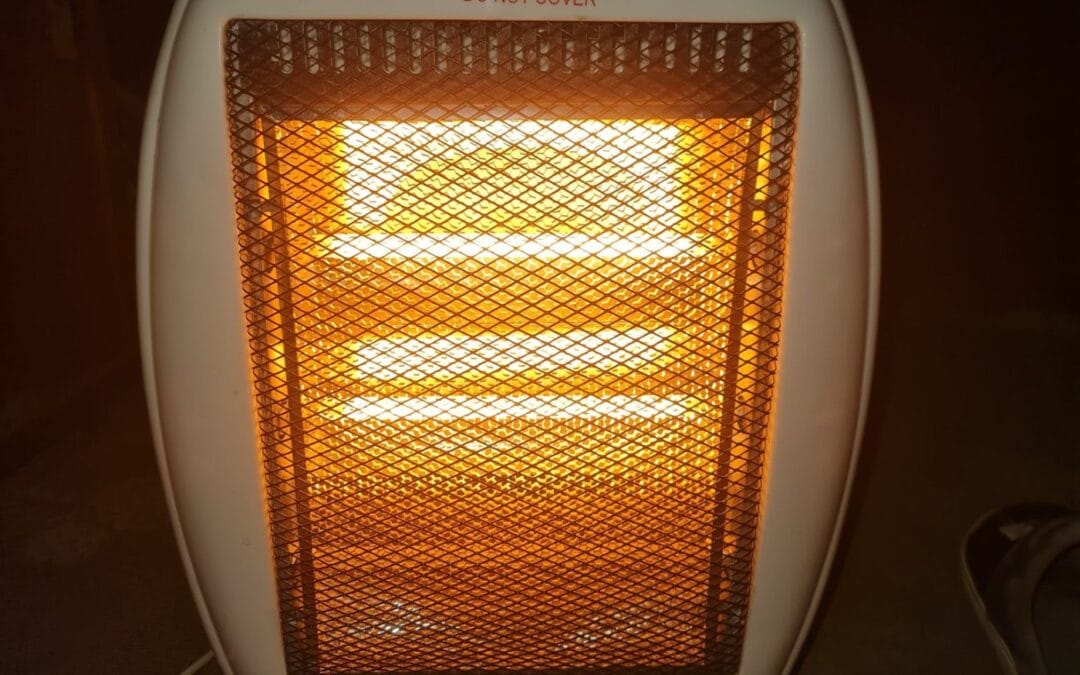
The short answer. The cheapest way to stay warm in one room is to heat yourself, not the room. A 70W electric foot warmer or under-blanket costs 1.8p an hour at the current price cap. A 2kW fan heater costs 52.6p. That is about 29 times as much for the same hour.
If the whole room has to be warm, a small oil-filled radiator or a ceramic plug heater is the cheapest electric way to do it. All ten methods below are priced at the Ofgem cap for 1 October to 31 December 2026 and were checked on 30 October 2026.
Most advice on heating one room compares heaters with other heaters. That misses the cheapest options, because the biggest saving comes from asking a different question. Do you need the air in the room to be warm, or do you need to be warm?
Look Into has already priced each of these methods in its own guide, using wattages from manufacturer pages and listings. This page puts all of them on one scale, ranked by what a four-hour evening costs at full power.
Prices and specs last checked by Look Into on 30 October 2026 · next check 2 January 2027 · how we picked
The ten methods at a glance
| Rank | Method | Power | Per hour | Four-hour evening | Heats |
|---|---|---|---|---|---|
| 1 | Rechargeable hand warmers (a pair) | Not stated by most makers | n/a | About 1p a charge | Hands |
| 2 | Hot water bottle, one fill | 0.139 kWh per fill | n/a | 3.7p a fill | You |
| 3 | Electric foot warmer | 70W | 1.8p | 7.4p | Feet |
| 4 | Electric under-blanket | 70W | 1.8p | 7.4p | Your bed |
| 5 | Heated throw | 120W | 3.2p | 12.6p | You |
| 6 | Under-desk panel heater | 180W | 4.7p | 19.0p | Your legs |
| 7 | Ceramic plug-in heater | 500W | 13.2p | 52.6p | A small room |
| 8 | Small oil-filled radiator | 650W | 17.1p | 68.4p | A small room |
| 9 | 1.5kW heater or radiator | 1,500W | 39.5p | £1.58 | A medium room |
| 10 | 2kW fan or convector heater | 2,000W | 52.6p | £2.11 | A large room |
Per-hour costs are at full rated power. A heater with a thermostat cycles off once the room is warm, so its real cost is lower. See how we ranked them.
Heating the person against heating the room
Every electric heater on this list converts electricity into heat at the same rate, so 1 kWh in gives about 1 kWh of heat out. Oil-filled and fan heaters of the same wattage cost exactly the same per hour. Our oil-filled radiator vs fan heater head-to-head works through this.
Efficiency doesn't separate these methods. What separates them is how much heat each one has to make. A room heater warms the air, the walls and whatever leaks out through the windows. A foot warmer or blanket puts its heat where your body touches it. That is why the top six methods all run under 200W and the bottom four run from 500W to 2,000W.
The cut-off sits between ranks 6 and 7. Above it you stay warm in a cold room. Below it the room itself gets warm, and you pay for that.
How we ranked them
The ranking uses one number: the cost of a four-hour evening at full rated power, at the Ofgem cap unit rate of 26.32p per kWh for 1 October to 31 December 2026. Standing charges are left out, because you pay them whether or not anything is switched on.
The sum is watts ÷ 1,000 × hours × the unit rate. The pence figures on this page come from a shortcode that reads the current cap, so they update when the cap changes.
Each wattage comes from a Look Into guide that sourced it from a maker's page, a spec sheet or a listing, with the date checked. The hot water bottle figure is physics, not a listing. Heating 1.33 litres of water from 10°C to 100°C takes at least 0.139 kWh, because water needs 4.186 kJ per kg for each degree. A real kettle uses a little more than that minimum. Ranking ignores purchase price, comfort and safety, which are covered under each entry.
For the two methods with no per-hour figure, we assumed one charge or one fill per evening. How long a bottle or a hand warmer stays warm was not checked. That is stated in what this guide could not check.
The ten methods, ranked
1. Rechargeable hand warmers: about 1p a charge
Refilling a pair of rechargeable hand warmers costs about 1p at the current cap, against about 80p for a pair of disposable sachets. They only warm your hands, so they suit sitting still with a book or a laptop more than warming a whole body.
For: the cheapest heat on this list, and it works outdoors too. Against: hands only, and run times are hard to check. When we read 100 Amazon UK listings, 92 gave a run time in hours and just one gave a power figure in watts. Best for: cold hands at a desk or on a walk. Evidence: our rechargeable hand warmers guide, checked 30 September 2026.
2. Hot water bottle: 3.7p a fill
Two-thirds filling a 2-litre bottle uses 1.33 litres of water. Boiling it from cold takes at least 0.139 kWh. No electricity is used after that, and the bottle gives its heat back as it cools.
For: almost free, with no running cost after the kettle. Against: the heat fades over the evening, and bottles perish and need replacing. Our guide covers the safety rule most guides skip. Best for: warming a bed, or a lap on the sofa. Evidence: best hot water bottles and electric blanket vs hot water bottle.
3. Electric foot warmer: 1.8p an hour
The cheapest foot warmer we priced, the Russell Hobbs RHHSL1001, is rated at 70W on Currys' spec sheet. Warm feet make a cold room feel much less cold, and the warmer runs all evening for under 10p.
For: very low cost per hour, and most models shut off on their own. Against: it only heats your feet, and most makers don't publish a wattage you can check. Only two of the picks in our guide did. Best for: desk workers and anyone sitting for long spells. Evidence: best foot warmers, checked 17 October 2026.
4. Electric under-blanket: 1.8p an hour
A 70W double under-blanket costs the same per hour as the foot warmer. Most people only need it to warm the bed for half an hour before getting in, and half an hour costs less than boiling a kettle for a hot water bottle.
For: cheap, and you can turn the bedroom heating down. Against: only useful in bed, and left on for four hours or more a night it costs more than a hot water bottle. Best for: a cold bedroom. Evidence: best electric blankets and electric blanket vs heater.
5. Heated throw: 3.2p an hour
A 120W heated throw covers more of you than a foot warmer, so it is the closest thing on the list to sitting next to a heater. Some throws are 60W, and those cost about half as much.
For: warms the whole body on a sofa for a few pence an evening. Against: you are tied to the sofa and the socket. Some listings publish no wattage at all, so you can't price them. Best for: evenings in front of the TV. Evidence: best electric blankets and heated throws, checked 23 October 2026.
6. Under-desk panel heater: 4.7p an hour
A 180W panel sits under a desk and warms the space around your legs. It is the cheapest fixed heater we have priced.
For: hands-free, and you can move about at the desk. Against: it does nothing for the rest of the room, and it costs more than a foot warmer for a similar result. Best for: working from home in a cold spare room. Evidence: electric radiators and infrared panels, checked 28 October 2026.
7. Ceramic plug-in heater: 13.2p an hour
The Russell Hobbs RHPH2001 is a 500W ceramic heater that plugs straight into the wall. This is the first method on the list that warms the air rather than you.
For: takes the chill off a small room, and has a thermostat and timer. Against: 500W won't heat a large or draughty room. Best for: a box room, a small office or a bathroom where the maker allows it. Evidence: best electric heaters.
8. Small oil-filled radiator: 17.1p an hour
Russell Hobbs' 5-fin oil-filled radiator runs at 650W and is the cheapest whole-room heater in our heater guide. Oil-filled radiators keep giving off heat after the thermostat cuts out, so they feel gentler than a fan heater, but they cost the same per watt.
For: quiet, steady heat for a small room. Against: slow to warm up, and heavy to move. Best for: a small bedroom or study used for hours at a time. Evidence: best electric heaters and oil-filled radiator vs fan heater.
9. 1.5kW heater or radiator: 39.5p an hour
Mid-size heaters such as the Dreo 1500W are where most people end up when one room has to be properly warm. At full power, four hours costs more than a pound.
For: enough heat for a typical living room, and many have smart controls. Against: running costs add up quickly over a winter. Best for: heating a medium room without running the boiler for the whole house. Evidence: best electric heaters.
10. 2kW fan or convector heater: 52.6p an hour
A 2kW heater warms a large room fast. It is also the most expensive way to stay warm on this list, and the usual reason electric heating bills come as a shock.
For: fast to warm a room, and cheap to buy. Against: at full power, four hours a night for a month costs more than £60. Some 2kW models are sold as "low energy" heaters, which they are not. Best for: warming a room quickly before switching to something smaller. Evidence: best electric heaters and electric radiators and the "cheapest to run" claims checked.
Where gas central heating fits
Gas is not on the ranked list, because a boiler heats the radiators it is plumbed to, not one room. You can't give it a fair cost per hour for a single room. What we can compare is the price of a unit of heat.
At the cap gas rate of 7.97p per kWh and the 85% boiler efficiency our Heating Cost Index uses, a kWh of heat from gas costs about 9.4p. A kWh of heat from any plug-in electric heater costs 26.32p, so electric heat costs about 2.8 times as much per unit. A room heater only saves money if switching the boiler off for the rest of the house saves more than that gap. The low-wattage methods at the top of this list are cheap whichever way you heat your home.
What to check before you buy
- A wattage you can find. Many listings give a run time or a heat setting and no power figure. Without the wattage you can't work out the cost.
- A thermostat. On a room heater it is the feature that cuts the real cost below the full-power figures above.
- Draughts first. Every heater on this list costs less to run in a room that holds its heat. Draught-proofing pays back faster than most heaters.
- Safety marks and shut-offs. Look for overheat and tip-over protection on room heaters, and an auto shut-off timer on blankets and foot warmers.
The verdict
If you are sitting still, heat yourself. A foot warmer or heated throw gives a warm evening for a few pence, and a hot water bottle costs less than that. If the room itself has to be warm, the smallest heater that does the job wins, and a 500W or 650W heater with a thermostat is the place to start. Keep 2kW heaters for short bursts.
Frequently asked questions
What is the cheapest way to heat a room?
The cheapest electric way to warm the room itself is the smallest heater that copes, such as a 500W ceramic heater at 13.2p an hour at the current cap. The cheapest way to stay warm in the room is to heat yourself, with a 70W foot warmer or under-blanket at 1.8p an hour.
Is an oil-filled radiator cheaper to run than a fan heater?
Not watt for watt. Both turn 1 kWh of electricity into about 1 kWh of heat, so a 2kW oil-filled radiator and a 2kW fan heater cost the same per hour at full power. The difference is how they deliver the heat, and how often the thermostat lets them run.
How much does a 2kW heater cost to run per hour?
52.6p an hour at full power, at the Ofgem cap rate of 26.32p per kWh for 1 October to 31 December 2026.
Is it cheaper to use an electric heater than central heating?
Per unit of heat, no. Gas heat costs about 9.4p per kWh at the cap with an 85% efficient boiler, against 26.32p for electric heat. A heater in one room can still cut the total bill if it lets you leave the boiler off, but that depends on your home and was not something this page could check.
Is a hot water bottle cheaper than an electric blanket?
For a short warm-up, an electric blanket can cost less. Half an hour of a 70W blanket costs less than boiling a kettle for a bottle. Left on for four hours or more, the blanket costs more.
What this guide could not check
- How long a hot water bottle or a pair of hand warmers stays warm. Each is counted as one fill or one charge per evening.
- How far a thermostat cuts each room heater's real cost below its full-power figure. That depends on your room.
- Whether heating one room and leaving the boiler off saves money in your home.
- The purchase price of each method. Prices sit in the linked guides, each with its own date.
Sources
- Ofgem, energy price cap for 1 October to 31 December 2026: electricity 26.32p per kWh, gas 7.97p per kWh.
- Wattages and listing audits: the Look Into guides linked under each entry, each with its own checked date and sources.
- Specific heat of water, 4.186 kJ per kg per °C, for the hot water bottle figure.
- Boiler efficiency of 85%, as used in the Look Into Heating Cost Index.
This page carries no affiliate links. The guides it links to may.