
A full 8kg load costs 54.7p in the Candy GDL 8N1-80 and 37.1p in the Hisense DH3S802BW3 at the October 2026 price cap of 26.32p per kWh. The Hisense saves 17.6p every full load, but on 8 November 2026 it cost £110 more at AO, £429 against £319. It earns that back after about 624 full loads: two and a half years if you dry five full loads a week, five years at the 160 cycles the energy label assumes.
Before you compare these two anywhere else, check which energy figure the shop is quoting. We found three different ones for the Candy across three UK retailers. Currys lists it at 812 kWh a year, more than three times the 252 kWh on Candy's own product fiche.
The verdict, 8 November 2026
- Per full load at 26.32p per kWh: Candy 54.7p, Hisense 37.1p. A year on each fiche's 160-cycle pattern: £66.33 and £45.27.
- Price at AO on 8 November 2026: Candy £319, Hisense £429. The Hisense's pence-back point is about 624 full loads.
- Dry five or more full loads a week and the Hisense is the cheaper dryer to own within three years, by £27.55 at five a week. Dry less and the Candy stays cheaper.
- The Hisense is faster, at 188 minutes for a full load against 220. The Candy comes with 10 years on parts, against two years on the Hisense.
| Candy GDL 8N1-80 | Hisense DH3S802BW3 | |
|---|---|---|
| Energy, full 8kg load | 2.08 kWh | 1.41 kWh |
| Cost, full load | 54.7p | 37.1p |
| Cost, half load | 30.5p | 20.5p |
| Cost per kg, full load | 6.8p | 4.6p |
| Fiche annual energy, 160 cycles | 252 kWh | 172 kWh |
| A year at the cap | £66.33 | £45.27 |
| Programme time, full load | 220 minutes | 188 minutes |
| Price at AO | £319 | £429 |
| Guarantee | 1 year labour, 10 years parts (Amazon and Currys listings); AO lists 1 year | 2 years (AO and Amazon listings) |
| Class on the current A to G label | E | C |
| Class the retailer headline uses | "A+" (old scale) | "A+++" (old scale) |
Prices and specs last checked by Look Into on 8 November 2026 · next check 1 January 2027 · how we picked
When the Hisense pays for itself
Each full load in the Hisense uses 0.67 kWh less than the Candy: 2.08 minus 1.41. At 26.32p a unit that is 17.6p a load. Divide the £110 price gap by 17.6p and you get about 624 full loads before the dearer machine has paid back its premium. That is the pence-back point.
| How much you dry | Candy, 3 years | Hisense, 3 years | Cheaper to own | Hisense pays back in |
|---|---|---|---|---|
| 160 full loads a year (about 3 a week) | £581.78 | £607.13 | Candy by £25.35 | 3.9 years |
| 260 full loads a year (5 a week) | £746.02 | £718.47 | Hisense by £27.55 | 2.4 years |
| The fiche's own 160-cycle mix of full and half loads | £517.98 | £564.81 | Candy by £46.83 | 5.2 years |
If the January cap raises the unit rate, the Hisense pays back sooner. If you find the Candy cheaper than £319 or the Hisense dearer than £429, it takes longer. The arithmetic is the same: the price gap in pence divided by 17.6.
The 812 kWh dryer
Candy's product fiche for the GDL 8N1-80, under Regulation (EU) 392/2012, gives a weighted annual consumption of 252 kWh, 2.08 kWh for a full load and 1.16 kWh for a half load. Currys' specification table for the same model, read on 8 November 2026, gives 812 kWh a year, 2.52 kWh for a full load and 2 kWh for a half load.
Priced at the cap, Currys' annual figure is £213.72 a year. The fiche's is £66.33. Anyone comparing on Currys' numbers would think this dryer costs more than three times what its maker declares, and would conclude it is barely better than the vented and condenser machines it replaces. One detail suggests how it happened: 2.52, Currys' full-load figure, is the fiche's annual 252 with a decimal point added.
AO quotes a third figure, 138 kWh per 100 cycles. That one is legitimate. It comes from the newer energy label, which measures a different programme and a different mix of loads, so it cannot be set beside the older fiche's 252 kWh a year. AO shows it next to an "A+" rating, which belongs to the older label.
Two labels, two sets of letters
Every retailer headline we read uses the older letters: "A+" for the Candy and "A+++" for the Hisense. On the current A to G label the Candy is an E and the Hisense a C. The Candy's own Amazon listing carries both: "A+ Class" in its title and "NEL Class E" in its bullet points.
Neither letter is false. They come from two different labelling regulations, and the A to G scale was reset so that few dryers reach the top. The gap between the two machines is the same on either scale: both put the Hisense ahead. What you should not do is compare an "A+++" on one listing with an "E" on another.
What the guarantees cover
The Candy's Amazon and Currys listings both give one year of labour and ten years of parts. AO's listing for the same machine gives one year. The Hisense listings at AO and Amazon give two years. A ten-year parts guarantee only pays out if the part fails and you pay someone to fit it after the first year, so treat it as cover against the cost of a heat pump or motor rather than against a call-out fee.
Which one to buy
Buy the Hisense DH3S802BW3 if you dry five or more full loads most weeks, or if a shorter cycle matters. On those numbers it is the cheaper dryer to own inside three years, and every load after the 624th is 17.6p in your pocket.
Buy the Candy GDL 8N1-80 if you dry less than that, or if you want the longer parts guarantee. It is £110 cheaper to buy and still costs less than half as much per kilo as a condenser or vented dryer. At three loads a week it stays the cheaper machine for nearly four years.
How we worked it out
| Item | What we did |
|---|---|
| Electricity rate | 26.32p per kWh, the Ofgem cap for 1 October to 31 December 2026, direct debit, Great Britain average, no VAT on electricity this quarter. |
| Energy per load | E dry (full load) and E dry½ (half load) from each model's 392/2012 product fiche: Candy's fiche hosted by the maker group, Hisense's as published on Argos. Both are declared figures for the standard cotton programme, not measured by us. |
| Annual cost | Each fiche's weighted annual consumption, which assumes 160 cycles, times the cap rate. |
| Prices | AO for both, so the comparison is like for like: Candy £319 (RRP £349), Hisense £429 (RRP £499). Amazon had the Hisense at £429 the same day and showed no buy box for the Candy. |
| Label classes | Candy class E from its Amazon listing; Hisense class C and EEI 60 from the 2023/2534 fiche read for our tumble dryer guide on 6 October 2026. |
| Rounding | Pence rounded once, at the end of each sum. |
What this comparison could not check
- We have not used either dryer. The energy figures are the makers' declared test results for the standard cotton programme; quick and synthetic programmes will differ.
- Why Currys shows 812 kWh. We have reported the figure and the fiche side by side rather than guessed at the cause.
- How long either heat pump lasts. A guarantee is the period the maker promises to fix, not a lifespan.
Today's Amazon prices
These boxes pull Amazon's live price when you load the page, so they can differ from the AO prices above. On 8 November 2026 Amazon had no buy box for the Candy. Look Into earns a commission if you buy through them; it does not change the verdict.
As an Amazon Associate, Look Into earns from qualifying purchases. Product prices and availability are accurate as of 8 November 2026 4:40 pm and are subject to change.
As an Amazon Associate, Look Into earns from qualifying purchases. Product prices and availability are accurate as of 8 November 2026 4:40 pm and are subject to change.
The two dryers
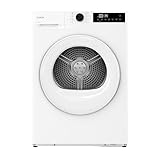
Candy GDL 8N1-80 Quick Pro heat pump, 8kg
54.7p for a full 8kg load at the October 2026 cap, on its fiche's 2.08 kWh. Seven quick programmes under an hour, and ten years on parts on the Amazon and Currys listings.
The catch: 220 minutes for a full cotton load, and class E on the current label.
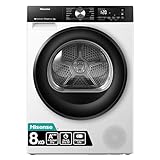
Hisense DH3S802BW3 heat pump, 8kg
37.1p for a full 8kg load at the October 2026 cap, on its fiche's 1.41 kWh. 188 minutes for a full load, against 220 for the Candy. Class C on the current label.
The catch: it needs about 624 full loads to earn back its higher price, and its guarantee is two years.
Look Into earns a commission on qualifying purchases made through the Amazon links above, at no extra cost to you. It never changes the arithmetic.
Common questions
Is the Hisense DH3S802BW3 cheaper to run than the Candy GDL 8N1-80?
Yes. A full 8kg load costs 37.1p in the Hisense and 54.7p in the Candy at the October 2026 cap of 26.32p per kWh, using each maker's fiche figure.
Is the Hisense worth the extra money over the Candy?
Only if you dry a lot. It cost £110 more at AO on 8 November 2026 and saves 17.6p a full load, so it pays back after about 624 full loads: about 2.4 years at five a week.
How much electricity does the Candy GDL 8N1-80 use a year?
252 kWh a year on Candy's 392/2012 product fiche, which assumes 160 cycles. That is £66.33 at the October 2026 cap. Currys lists 812 kWh, which does not match the fiche.
Is the Candy GDL 8N1-80 A+ or E rated?
Both, on different labels. A+ is its class on the older scale; E is its class on the current A to G label.
Compare more
- All our running-cost head-to-heads
- Best tumble dryers UK: nine best-sellers priced per load from their fiches
- Cheapest way to dry clothes: heat pump dryer against heated airer, dehumidifier and radiator
- Lakeland Dry:Soon vs Duronic CA30: two 300W heated airers that cost the same to run
Sources
- Ofgem, changes to the energy price cap between 1 October and 31 December 2026
- Candy, GDL 8N1-80 product fiche, Regulation (EU) 392/2012 (252 kWh a year, 2.08 and 1.16 kWh, 220 and 120 minutes)
- Hisense, DH3S802BW3 product fiche, Regulation (EU) 392/2012, via Argos (172 kWh a year, 1.41 and 0.78 kWh, 188 and 112 minutes)
- Currys, Candy Pro Dry GDL 8N1-80 (812 kWh a year, 2.52 and 2 kWh)
- AO, Candy Quick Pro GDL 8N1-80 (£319, 138 kWh per 100 cycles)
- AO, Hisense 3S Series DH3S802BW3 (£429, 2-year warranty)
- Amazon UK listings for the Candy GDL 8N1-80 (B0G6GDRNH2) and the Hisense DH3S802BW3 (B08DLKT5W3), read 8 November 2026
 Buying DeskBest robot vacuums UK 2026: ranked on what they cost to keep
 Household SavingsFridge freezer running costs UK: 20 best-sellers checked, £48 to £68 a year
 Product ComparisonsLevoit Core Mini vs Philips 600 Series: which air purifier costs less to own?
 Product ComparisonsSilentnight Dual Control vs Carmen Double: which electric blanket is better value?