
Prices checked 2 November 2026 by Jacob Whitmore. Desk research on published UK price guides, installer price pages and council records. We have not installed or used any of the products mentioned.
The short answer. Swapping a bath for a standard walk-in shower costs about £1,500 to £7,000 in the UK, typically around £4,500. A level-access shower, with no step at all, typically costs about £7,500, and a full wet room about £7,500, with most quotes between £6,000 and £10,000. If the person is disabled or has a long-term illness, the work should carry no VAT, and a Disabled Facilities Grant can pay for some or all of it after an occupational therapist's assessment.
| Job | Low | Typical | High | Suits |
|---|---|---|---|---|
| Bath out, walk-in shower in (low tray, screen) | £1,500 | £4,500 | £7,000 | Someone who can step over a low tray edge |
| Level-access shower (flush tray or formed floor) | £6,000 | £7,500 | £10,500 | Wheeled shower chairs, carers helping, high fall risk |
| Full wet room (whole floor tanked, drains to a gulley) | £6,000 | £7,500 | £10,000 | Wheelchair users, small rooms where a tray will not fit |
Installed prices for a typical UK bathroom. How we got each figure is in the method section below. Most published guides do not say whether their prices include VAT, so ask every installer to confirm.
Prices and specs last checked by Look Into on 2 November 2026 · next check 2 May 2027 · how we picked
Walk-in shower, level access or wet room?
These three get used as if they meant the same thing. They do not, and the difference drives the price.
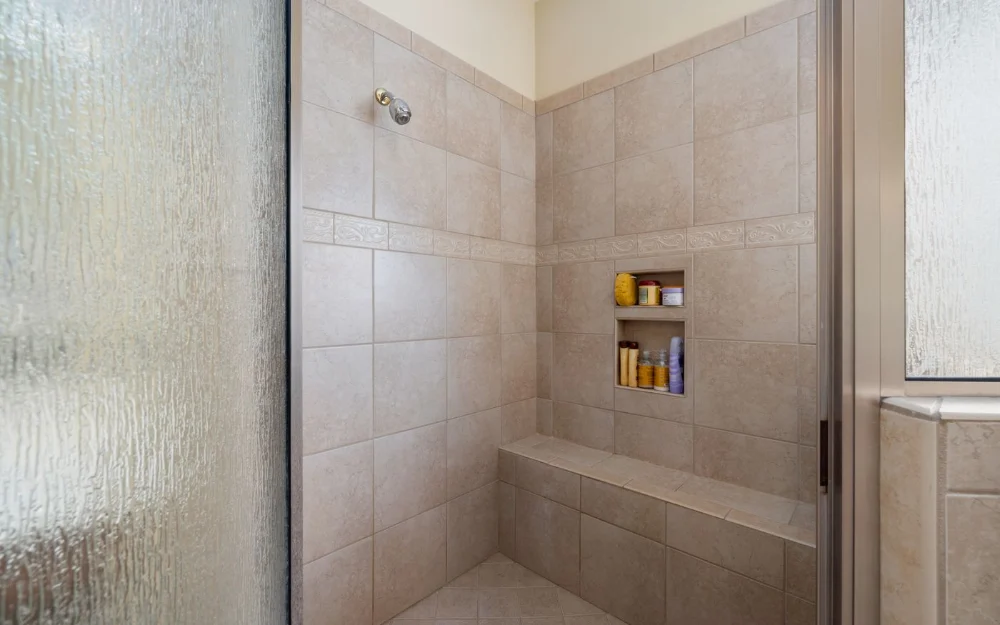
- Walk-in shower. A low tray, usually 25mm to 45mm high, with a fixed glass panel and no door. The bath comes out and the shower goes in its place. The floor is not touched, which is why it is the cheapest option.
- Level-access shower. No lip at all. The tray sits flush with the floor, or the floor itself is formed to fall to a drain. That means lifting floorboards or breaking out a screed, and usually waterproofing the area around the shower.
- Wet room. The whole room becomes the shower. The full floor and the lower walls are tanked, the floor falls to a drain, and there is no tray. It is the most flexible for a wheelchair, and in a small room it can be the only layout that works.
An occupational therapist will often specify level access rather than a full wet room. If a grant is paying, the council pays for what the assessment says is necessary, not for the option you would prefer. See what happens at an OT home assessment.
Where the money goes
A quote is mostly labour and the waterproofing you never see. These are the published line-item prices we found.
| Item | Published UK price | Source, date |
|---|---|---|
| Tanking (waterproofing) a wet room | £800 to £2,000 for the job; £300 to £800 per room on another guide | less.co.uk, 26 Oct 2026; MyJobQuote, 22 Sep 2026 |
| Gradient former (pre-formed sloping base) | £150 to £400 | less.co.uk, 26 Oct 2026 |
| Screeded floor with a fall to the drain | £300 to £600 | less.co.uk, 26 Oct 2026 |
| Linear stainless drain | £200 to £500 (a point drain £50 to £150) | less.co.uk, 26 Oct 2026 |
| Anti-slip floor tiling | £50 to £100 per square metre | less.co.uk, 26 Oct 2026 |
| New electric shower, fitted | £350 to £750, plus £100 to £300 if a dedicated circuit is needed | Mira Showers, 30 Apr 2026 |
| Bathroom fitter | £180 to £250 a day (London £250 to £350) | MyJobQuote, 22 Sep 2026 |
| Tiler | £200 to £350 a day | Checkatrade, June 2026 |
| Plumber | £300 to £400 a day | MyJobQuote, 12 Oct 2026 |
Three things push a quote towards the top of the range. Moving the drain, which one installer prices at £1,500 to £4,000 extra along with structural floor work. A concrete ground floor, which has to be broken out to get a fall. And timber joists that need strengthening before a wet room floor can be laid on them.
Two worked examples
These are illustrations built from the published figures above, not real customer quotes.
Example 1: bath to walk-in shower, upstairs, timber floor. Tray, glass panel and a new electric shower on an existing circuit. Two days for a fitter at £250 and a day of tiling at £300 comes to £800 in labour. Add the shower at about £550 fitted and labour plus the shower come to about £1,350 before the tray, the glass panel, tiles and making good. That is why published prices for this job start around £1,500 and average £2,800 to £4,500.
Example 2: level-access shower for a wheelchair user, ground floor, concrete. The screed is broken out and relaid with a fall (£300 to £600), the area is tanked (£800 to £2,000), a linear drain goes in (£200 to £500), and the floor is retiled in anti-slip tiles at £50 to £100 per square metre. Add a week or more of trade labour and the total lands in the £6,000 to £10,500 range. A council-funded job of this kind in Broxtowe, Nottinghamshire, recorded in 2025, cost £7,345.
VAT relief: why the price should drop by a sixth
HMRC lets builders zero-rate the work of providing, extending or adapting a bathroom, washroom or lavatory when it is needed to suit the condition of a disabled person and the home is their private residence (VAT Notice 701/7, section 6.3). In practice the person, or someone responsible for them, signs a written declaration that is separate from the order form. HMRC does not issue a certificate.
On a £7,500 job priced with VAT, zero-rating takes off £1,250, because VAT is a sixth of a VAT-inclusive price. Ask each installer whether their figure already excludes VAT. Mobility specialists often quote VAT-free, while general bathroom fitters often quote with VAT, which makes a specialist look cheaper or dearer than they are.
Grants and who pays
- England: a Disabled Facilities Grant of up to £30,000, means-tested for adults and not for children. The council has to decide within six months of a valid application. See our Disabled Facilities Grant guide.
- Wales: up to £36,000, and small and medium grants have not been means-tested since April 2021.
- Northern Ireland: up to £35,000, through the Housing Executive after a Health and Social Care Trust occupational therapist refers you.
- Scotland: there is no Disabled Facilities Grant. Councils run a Scheme of Assistance, and the grant for essential adaptations is at least 80% of the approved cost, or 100% for people on certain benefits.
Do not start work before the grant is approved. Councils do not normally pay for work that has already been done. To price several adaptations together and see how they sit against the grant limit, use the home adaptation cost calculator.
When not to rip out the bath
If the person still enjoys a soak and can manage a bath lift, a bath lift costs a fraction of any of these jobs. See our bath lift guide. If soaking matters and stepping in is the only problem, compare walk-in bath costs. And if the need may be short-term, after an operation for example, ask the council about free loan equipment such as a shower chair or a bath board before you commit thousands.
Questions to ask every installer
- Does your price include VAT, and will you zero-rate it if we sign the declaration?
- Is this a walk-in shower, a level-access shower or a full wet room?
- Which tanking system do you use, and does it carry a written guarantee?
- Will the drain move, and is that priced in?
- What happens to the price if you find rot or a concrete floor once the old bath is out?
- Have you done Disabled Facilities Grant work before, and will you work to the occupational therapist's specification?
How Look Into made this guide
We gathered published installed prices from UK sources dated 2025 or 2026 and set aside older or undated ones. For walk-in showers and wet rooms we took the middle value of the published lows, of the typical figures (or the midpoint where a source gives only a range) and of the highs. Walk-in shower: MyJobQuote (£1,000 to £5,000, average £2,800, 12 Oct 2026), HomeBuilding.co.uk (£1,500 to £7,500, 10 Mar 2025) and Trade2Base (walk-in £4,000 to £7,000, 14 Jun 2026). Wet room: less.co.uk (£6,000 to £10,000, typical £7,500, 26 Oct 2026), MyJobQuote (£4,700 to £8,350, standard £5,900, 22 Sep 2026) and EA Mobility (£8,000 to £14,000, 28 Oct 2026). Level access has only two current ranges, EA Mobility (£7,500 to £10,500) and Trade2Base (£6,000 to £10,000), so we show the lower low, the higher high and a typical figure of £7,500 where both overlap, checked against the Broxtowe council case of £7,345. Undated or older guides, including MyBuilder (wet room £4,000 to £10,000) and Checkatrade (2022), sit inside the same range but were not used in the figures.
What this guide could not settle. We found no current council schedule of rates for a level-access shower, so we cannot say what councils typically pay per job, only what one recorded case cost. Most price guides do not say whether they include VAT, so our ranges mix both. Nobody publishes regional prices for accessible bathrooms, so expect London quotes to sit above these ranges.
Questions
How much does a walk-in shower cost in the UK?
About £1,500 to £7,000 to replace a bath with a walk-in shower, typically around £4,500. A level-access shower with no step costs more, typically around £7,500.
Is a wet room cheaper than a walk-in shower?
No. A standard walk-in shower is usually the cheapest of the three because the floor is left alone. A wet room needs the whole floor waterproofed and laid to a fall, so it typically costs about £7,500.
Can I get a walk-in shower on the NHS or through the council?
Not through the NHS. Through the council, yes, if an occupational therapist assesses that it is necessary. In England, Wales and Northern Ireland that is usually a Disabled Facilities Grant. In Scotland it is the Scheme of Assistance.
Do I pay VAT on a disabled shower?
Not if the work adapts a bathroom to suit a disabled person's condition in their own home. The person signs a declaration and the installer zero-rates the work.
Sources
- less.co.uk, wet room cost (updated 26 Oct 2026)
- MyJobQuote, wet room cost (22 Sep 2026); MyJobQuote, replace a bath with a walk-in shower (12 Oct 2026)
- EA Mobility, walk-in shower costs (updated 28 Oct 2026)
- HomeBuilding.co.uk, walk-in shower costs (10 Mar 2025)
- Trade2Base, bath to shower conversion costs (14 Jun 2026)
- Mira Showers, shower installation cost guide (30 Apr 2026)
- Checkatrade, tiling cost (June 2026)
- Broxtowe Borough Council, DFG policy review appendix (2025)
- HMRC VAT Notice 701/7
- GOV.UK, Disabled Facilities Grants; Grant Limit Order (NI) 2003, as amended 2023; Scheme of Assistance Regulations 2008; Welsh Government, means test removal