
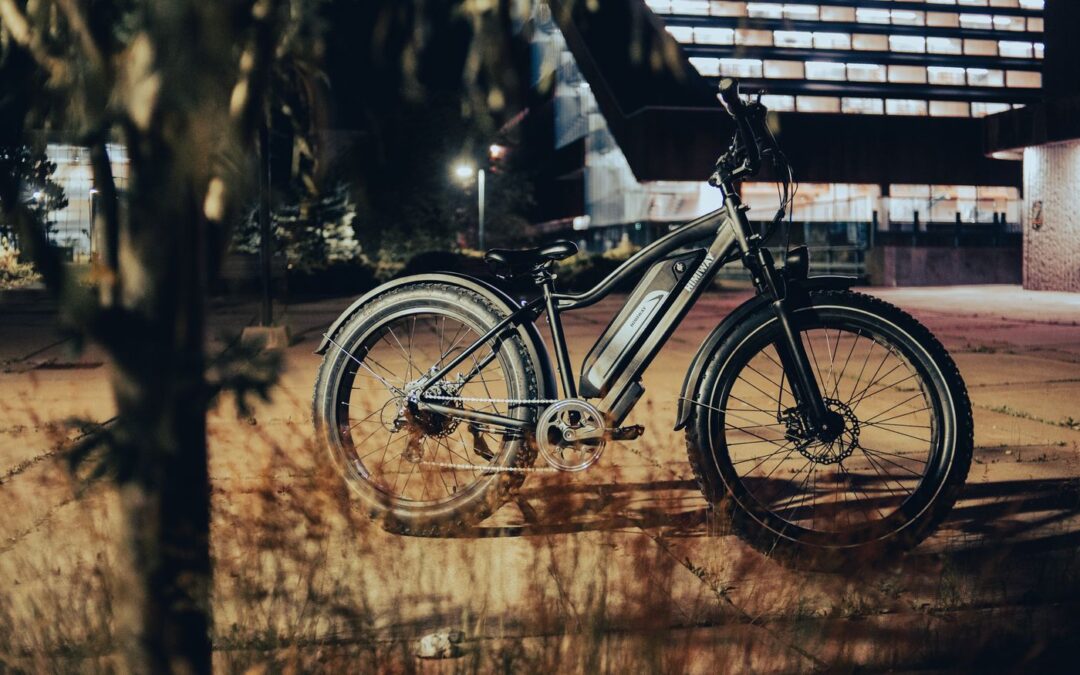
An electric bike is legal in Britain only inside three numbers: a motor with a continuous rated power of no more than 250W, assistance that cuts out at 15.5mph, and pedals that actually propel it. Those are the GOV.UK EAPC rules, read 16 October 2026. Fall outside them and the law reclassifies your bicycle as a moped: registration, driving licence, motorcycle helmet, insurance, and a possible seizure if you skip any of it.
So we read the top twenty Amazon UK electric bike listings on 16 October 2026, titles and feature bullets, expecting the amp-and-watt inflation we have found everywhere else this week. The opposite: 18 of 20 state exactly 250W and not one claims more. It is the only aisle we have audited where the big number has disappeared, because here the big number is illegal. The inflation has simply moved house. It now lives in the range column, where claims run to 120km from the smallest battery on the page, with no stated assist level, rider weight or terrain behind any of them.
The short answer
- Best stated-numbers package: HEADEER BK1350 has 250W, 15.5mph, and a full 48V 15Ah battery spec, which prices its claimed 62 miles at 0.3p a mile in electricity.
- The one that leads with the law: GB1 27.5", with "Road-Legal" in its title and 250W and 25km/h in its bullets.
- Folding commuter: URLIFE 16" (48V 13Ah, 100km claimed).
- Cheapest with a full battery spec: 14" folder (48V 15Ah).
- The warning in the results: an "electric dirt bike for teens" sits in the same twenty with a throttle, a 53-mile range and no stated motor power or assist limit at all. By the GOV.UK tests, a machine outside the EAPC rules is a moped in law, whatever aisle it is sold in.
Prices are the Amazon buy box on 16 October 2026 and will move. No lab, no test rides: every figure comes from the maker, the listing or a named source, read on the date shown.
Prices and specs last checked by Look Into on 16 October 2026 · next check 11 December 2026 · how we picked
What twenty listings state, against the law's three numbers
Titles and feature bullets, top twenty Amazon UK electric bike results, 16 October 2026, read against the GOV.UK EAPC rules:
- 18 of 20 state 250W; 0 of 20 claim more. After a week of auditing 9,000A jump starters and 1,500W mixers, this is what an aisle looks like when a number has legal consequences: everyone recites it. Reciting is not proving ("continuous rated" is doing silent work in several of those bullets), but the arms race is gone.
- 15 of 20 state the 15.5mph / 25km/h cut-off. Five sell an electric bike in Britain without mentioning the one speed that defines it.
- 3 of 20 mention a throttle. GOV.UK is specific here: throttle-only propulsion to 15.5mph is legal only on a type-approved machine, and none of the three mentions approval. If the throttle moves the bike without pedalling and there is no approval number on the frame, it is not an EAPC.
- 2 of 20 state no motor power at all, and one of them is the teen "dirt bike" above. The law requires an EAPC to be marked with its continuous rated power and maker, so a listing that cannot name a wattage is telling you which side of the line it lives on.
- The range column is the new watt column. 17 of 20 claim a range, and the claims refuse to reconcile with each other's batteries: one bike claims 120km from a 468Wh battery (3.9Wh per claimed km) while another claims 62 miles from 720Wh (7.2Wh per km). By their own printed numbers, one maker is promising nearly double the efficiency of another from the same physics. Not one listing states the assist level, rider weight or terrain its figure assumes.
How we chose
Desk research, not a test ride. A pick had to state the two legal numbers (250W and the assist cut-off) in its own listing, and we favoured bikes that also print a full battery spec, because volts times amp-hours is what lets you check the range story and price a charge. Throttles without a stated approval, and machines with no stated power, were excluded. The exclusion is about their listings, which fail the only test that matters here.
The six picks
1. HEADEER BK1350: best stated-numbers package
Live price on Amazon (checked 16 Oct 2026) · 250W stated · 15.5mph stated · 48V 15Ah (720Wh) stated · 62 miles claimed
The fullest honest spec sheet in the twenty: both legal numbers, a complete battery spec, and a range claim whose arithmetic (7.2Wh per claimed km) is the most conservative on the page, which is the direction honesty points. A full charge is about 19p at the October cap; its claimed range prices at 0.3p a mile.
The catch: the conservative range claim is still a claim. No assist level or rider weight is stated behind it.
2. GB1 27.5": the one that leads with the law
Live price on Amazon (checked 16 Oct 2026) · "Road-Legal" in the title · 250W stated · 25km/h stated · walk-assist
The only listing in the twenty that makes legality its headline. In an aisle where the law decides what the product even is, that is the right thing to sell on.
The catch: its bullets state no battery voltage or amp-hours, so its range story cannot be checked the way the HEADEER's can.
3. URLIFE 16" folding: the checkable commuter
Live price on Amazon (checked 16 Oct 2026) · 250W stated · 25km/h stated · 48V 13Ah (624Wh) removable battery · 100km claimed
A folder with the full battery spec printed and the battery removable for flat-dwellers who charge indoors. About 16p a charge; 0.26p per claimed mile.
The catch: 6.2Wh per claimed km is an optimistic ask of a 624Wh pack. Budget for the lower assist levels if you want the three-figure range.
4. Finbike M50: the range-claim case study
Live price on Amazon (checked 16 Oct 2026) · 250W stated · 25km/h stated · 36V 13Ah (468Wh) · 120km claimed
Both legal numbers stated, a full battery spec, seven gears, a sensible commuter shape.
The catch: 120km from 468Wh is 3.9Wh per claimed kilometre, the boldest efficiency promise in the twenty, made from the smallest battery among our picks. Buy it as a good bike with a marketing range, and halve the number in your head.
5. 29" electric mountain bike: the biggest battery
Live price on Amazon (checked 16 Oct 2026) · 250W stated · 15.5mph stated · 48V 18.6Ah (893Wh), the largest here
The most watt-hours on the page by a third, which is the one spec money genuinely buys in this category: real range comes from the battery, not the range claim.
The catch: the bullets mention a throttle. GOV.UK allows throttle-to-15.5mph only on type-approved machines, and the listing states no approval. Ask the seller for the approval number before road use, or treat the throttle as a feature you must not need.
6. 14" folding e-bike: the cheapest with a full battery spec
Live price on Amazon (checked 16 Oct 2026) · 250W stated · 48V 15Ah (720Wh) stated
The least money in the twenty that still buys a stated 250W motor and a fully specified 720Wh battery. On paper, that is the same energy as the HEADEER for less money on the day we checked (live prices are in the table above).
The catch: no assist cut-off stated in its bullets, and no range claim at all. That is refreshingly free of marketing, but it leaves the legal limiter as something you have to assume, because nothing in the listing states it.
Compare the picks
The live table pulls prices from Amazon's product feed, which can sit off the buy box you pay; the prices in the cards above are the buy box as read on 16 October 2026.
Prices in this table come from Amazon and are refreshed at least once a day, with the date of the last update under the table. The cost-per-use and running-cost figures on this page use prices Look Into read on 16 October 2026, so they can differ from today's price.
Compare live prices for every pick



As an Amazon Associate, Look Into earns from qualifying purchases. Product prices and availability are accurate as of 6 November 2026 8:46 am and are subject to change.
What a charge costs, by each listing's own numbers
Volts times amp-hours gives the battery's watt-hours; at the October 2026 cap's 26.32p/kWh unit rate, a full charge from empty costs, before charger losses:
| Bike | Stated battery | Cost per full charge | Claimed range | Pence per claimed mile | Wh per claimed km |
|---|---|---|---|---|---|
| HEADEER BK1350 | 48V 15Ah (720Wh) | 19.0p | 62 miles | 0.31p | 7.2 |
| URLIFE 16" folding | 48V 13Ah (624Wh) | 16.4p | 100km (62mi) | 0.26p | 6.2 |
| Finbike M50 | 36V 13Ah (468Wh) | 12.3p | 120km (75mi) | 0.17p | 3.9 |
| 29" mountain bike | 48V 18.6Ah (893Wh) | 23.5p | not stated with units we could price | n/a | n/a |
| 14" folding | 48V 15Ah (720Wh) | 19.0p | none claimed | n/a | n/a |
| GB1 27.5" | not stated | n/a | n/a | n/a | n/a |
Read the last column as a credibility score in reverse: the lower the watt-hours per claimed kilometre, the harder the claim is working. Even on the most conservative figures here, an e-bike moves you for under a third of a penny per mile. That is the honest headline this aisle could run and doesn't.
Electricity carries no VAT from 1 October 2026 to 31 March 2027, so 26.32p is the full price you pay per kWh (Ofgem). The same rate prices every appliance in the UK Running Cost Index; to price your own battery, put its watt-hours into the appliance running cost calculator. For how an e-bike mile compares with a petrol or electric car mile, see the EV vs petrol cost per mile tracker, and for what the cap is and when it changes, the October 2026 price cap explainer.
Who should skip these e-bikes
- Anyone tempted by the throttle machines and "dirt bikes" in the same search results. Off the EAPC rules, the law does not see a bicycle: it sees an unregistered, uninsured moped, with the fines and seizure powers that follow. Off-road use on private land with permission is the only home for them.
- Riders under 14, because that is the legal floor for any EAPC, per GOV.UK.
- If a 120km range claim is the reason you're paying more: the battery's watt-hours are the spec you are actually buying. Two picks here print the same 720Wh at different prices.
Commuting, hills and how much to spend
For commuting, the spec that matters most is the battery, because it decides whether you charge daily or weekly. Divide watt-hours by about 10 for a working range in kilometres: the 720Wh HEADEER and 14" folder above give roughly 70km, the 468Wh Finbike about 47km, whatever their listings claim (how far an e-bike really goes). If the commute involves a train, a folding e-bike is the only kind Transport for London allows on the Tube.
For hills, the 250W limit applies to every legal e-bike, so the differences are in torque (where a listing states it in Nm), gearing and battery size. The WITAMBIKE above states 75Nm; most of the twenty state no torque at all. A bigger battery also matters more on hills, because climbing uses more energy per kilometre.
On budget, the picks here sit at the budget end of the market; check the live table above for today's prices. Branded e-bikes from bike shops cost more, and the battery alone can cost £400 to £1,000 to replace (our battery price read), so ask any seller whether a replacement pack is available before you buy.
Before you buy
- Is it legal? The three tests, Northern Ireland, throttles and police seizure are on our UK e-bike laws page.
- What will it cost to run? Charging, per-mile and yearly costs, and why battery wear costs more than the electricity: what it costs to charge an e-bike.
- Is it safe to charge indoors? Official fire figures and the government's charging advice: e-bike battery fire safety.
- Would an e-scooter do? Not on a public road: e-bike vs e-scooter.
After dark the law has one more requirement this page can help with: our bike lights guide covers the rechargeable sets and the reflector rule most guides skip.