
Key takeaways
- Every air source heat pump sold in the UK carries two efficiency figures: a SCOP measured at 35°C flow (W35) and one at 55°C (W55). The number in the adverts is almost always the higher W35 one.
- Across five popular models the W35 SCOP averages 4.40 and the W55 SCOP averages 3.30. That is about a quarter less efficient, and it lifts the cost of heat from roughly 5.98p to 7.98p per kWh at the October 2026 price cap.
- At that cap (electricity 26.32p/kWh, gas 7.97p/kWh) a 90% gas boiler delivers heat for about 8.86p per useful kWh, so the SCOP a heat pump has to beat to be cheaper than gas is about 2.97.
- On a medium-use home the flow temperature alone swings the yearly saving against gas from roughly £300 at 35°C to under £100 at 55°C, on the very same appliance.
“Best air source heat pump” is one of the busiest searches this site sees, and the review pages that rank for it all quote a headline SCOP: a seasonal efficiency figure, usually somewhere north of 4. What almost none of them tell you is the flow temperature that figure was measured at. It matters more than the model you pick.
A heat pump’s efficiency falls as it has to push hotter water round your radiators. Manufacturers test and publish two numbers to reflect that: one for a 35°C flow (a low-temperature system with big radiators or underfloor heating) and one for a 55°C flow (closer to what a straight swap onto existing radiators needs). The gap between them decides whether the pump beats gas by a comfortable margin or barely at all. This index puts a price on that gap using the October 2026 cap and five popular models’ own datasheets.
The W35 footnote
SCOP stands for seasonal coefficient of performance. A SCOP of 4 means the pump gives out four units of heat for every unit of electricity it draws across a heating season. It is measured to a European standard, EN 14825, at a set of conditions that includes the flow temperature: the temperature of the water the pump sends to your radiators.
Here is the catch that rarely makes the headline. The impressive SCOP you see quoted is the W35 figure, measured at a 35°C flow. You only get a 35°C flow with a system designed for it: oversized radiators, or underfloor heating, in a well insulated home. Most UK homes have radiators sized for a gas boiler running much hotter. Grant’s own installer manual puts it plainly, noting that “a typical condensing oil or gas fired boiler operates with a flow of 70°C and a return of 50°C”. Drop a heat pump onto those same radiators and it has to run nearer 55°C to keep the house warm, which is the W55 figure, not the W35 one.
So the advertised number describes a system many buyers will not have on day one. The W55 number describes the one they will. Nobody puts a pound sign on the difference, so we did.
The index: five models at 35°C and 55°C
Every SCOP below is read from the manufacturer’s own datasheet or catalogue, listed in the sources. The cost per kWh is what that efficiency works out to at the October 2026 electricity cap of 26.32p per kWh (26.32 divided by the SCOP). For comparison, a gas boiler running at 90% efficiency delivers a useful kWh of heat for about 8.86p at the same cap (gas is 7.97p per kWh, and roughly a tenth is lost up the flue).
| Model (output) | SCOP at 35°C | Cost of heat at 35°C | SCOP at 55°C | Cost of heat at 55°C |
|---|---|---|---|---|
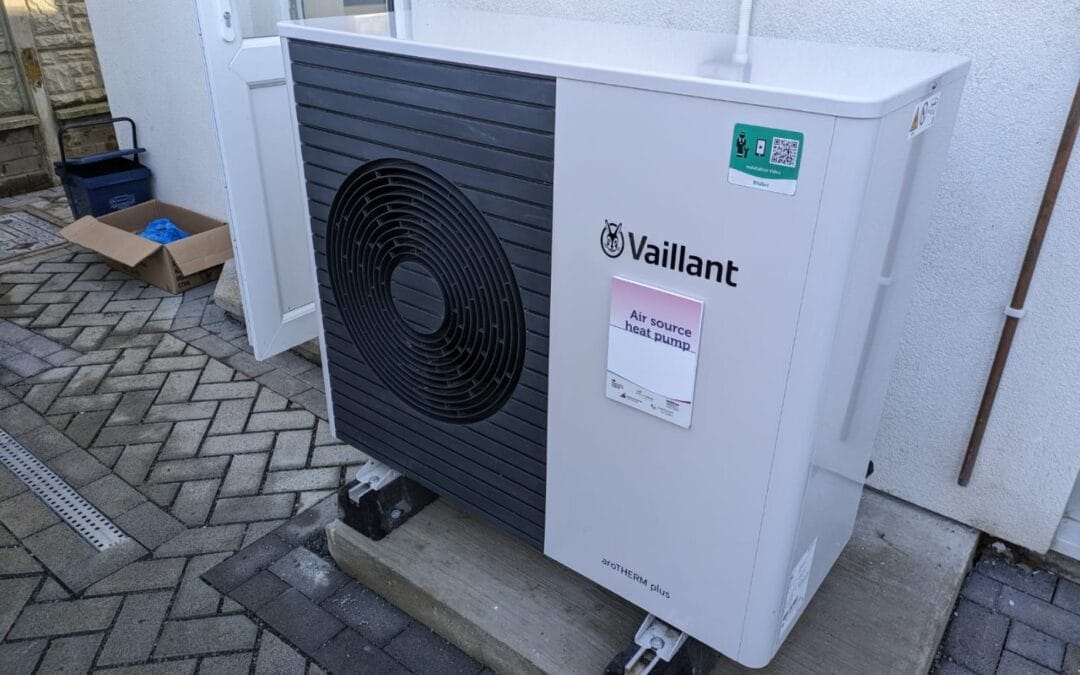
| Vaillant aroTHERM plus 5kW | 4.48 | 5.87p | 3.06 | 8.60p |
| Daikin Altherma 3 8kW | 4.47 | 5.89p | 3.32 | 7.93p |
| Grant Aerona³ R32 6kW | 4.61 | 5.71p | 3.29 | 8.00p |
| Mitsubishi Ecodan 8.5kW | 4.01 | 6.56p | 3.18 | 8.28p |
| Stiebel Eltron WPL 19 I | 4.44 | 5.93p | 3.64 | 7.23p |
| Average | 4.40 | 5.98p | 3.30 | 7.98p |
Read across any row and the pattern holds. At 35°C every model delivers heat for under 7p, a clear win over gas at 8.86p. At 55°C the same machines land between 7.23p and 8.60p. Still cheaper than gas, but the comfortable 30% lead has shrunk to single figures on most of them. The Vaillant, which looks strongest on the W35 headline, ends up closest to gas at W55 because its efficiency falls the furthest.
The break-even SCOP is 2.97
There is a single number that tells you whether a heat pump is cheaper to run than a gas boiler at today’s prices. Divide the electricity rate by the effective cost of a useful kWh from gas: 26.32p divided by 8.86p gives 2.97. Any heat pump running above a SCOP of about 2.97 is cheaper to run than a 90% gas boiler at the October 2026 cap. Below it, gas wins.
At 35°C flow, every model here clears that bar with room to spare. At 55°C, they all still clear it, but the Vaillant at 3.06 is only just above the line. Push the flow a little higher, to the 60°C an older or undersized radiator system might need on the coldest days, and a real SCOP can dip under 2.97, at which point the pump costs more to run than the boiler it replaced. That is the outcome the W35 headline never warns you about.
What the gap costs in a year
Ofgem’s typical medium home uses 11,500 kWh of gas a year. A 90% boiler turns that into about 10,350 kWh of useful heat, at a gas unit cost of about £917. Deliver the same 10,350 kWh of heat with a heat pump and the electricity bill depends entirely on the SCOP you actually run at:
- At the average W35 SCOP of 4.40: about 2,350 kWh of electricity, or roughly £619 a year. That saves close to £300 against gas.
- At the average W55 SCOP of 3.30: about 3,135 kWh of electricity, or roughly £825 a year. That saves about £90 against gas.
- At a real 60°C-flow SCOP near 2.9: about 3,570 kWh, or roughly £940 a year, which is more than the gas boiler.
Same house, same appliance, same energy prices. The only thing that changed is the flow temperature, and it moved the annual saving by more than £200. That is why the flow temperature belongs in the headline, not the footnote.
The catch: a low flow temperature is not free
None of this is an argument against heat pumps. It is an argument for reading the right number. A well designed low-temperature system genuinely delivers the W35 efficiency and the bigger saving. The honest point is that getting there usually costs money the quote may not spell out: larger radiators, sometimes underfloor heating, and a proper room-by-room heat loss survey so the system is sized to run cool.
The Boiler Upgrade Scheme grant of £7,500 helps with the pump itself, but it does not stretch to a house full of new radiators. So when you compare two installers’ quotes, the cheaper one that reuses your existing radiators may lock you into W55 running costs for the life of the system, while the dearer one that upsizes emitters is really selling you the W35 figure the brochure promised. Ask any installer which flow temperature they have designed for, and which SCOP that produces. If they only quote the W35 number, you have found the footnote.
How we worked this out
SCOP figures at 35°C and 55°C are taken from each manufacturer’s published technical data (linked in the sources), all measured to EN 14825 for an average climate. Running costs use the Ofgem default tariff cap for 1 October to 31 December 2026: electricity 26.32p per kWh and gas 7.97p per kWh. Cost of heat is the electricity rate divided by SCOP for the pump, and the gas rate divided by an assumed 90% seasonal boiler efficiency for the boiler. Annual figures use Ofgem’s typical medium consumption of 11,500 kWh of gas. We have not included standing charges, which are broadly similar between the two, though a home that removes its gas connection also drops the gas standing charge of about £108 a year. No figure here is modelled or estimated beyond those stated steps.
Other Look Into indexes
Frequently asked questions
Is the advertised SCOP a lie?
No. It is a real, standardised figure, and manufacturers also publish the W55 number alongside it. The issue is selective quoting: the marketing and many review pages show only the flattering W35 figure, without saying it needs a low-temperature system to achieve. Both numbers are on the datasheet if you look.
What flow temperature will my home actually run at?
It depends on your radiators and insulation. A home with radiators sized for a gas boiler, swapped over with no other changes, typically needs 50°C to 55°C on cold days, which is the W55 figure. Upsize the radiators or add underfloor heating and you can drop towards 45°C or even 35°C, which is where the higher efficiency lives. A heat loss survey is the only way to know for your house.
At the October 2026 cap, is a heat pump still cheaper than gas?
At a sensible flow temperature, yes. Every model here beats gas at both 35°C and 55°C. The size of the saving is what changes: large at 35°C, thin at 55°C. Only if a poorly designed system is forced to run at 60°C or above does the running cost climb past gas.
Which of these models is most efficient?
On the W35 headline, the Grant Aerona³ leads at 4.61. But at W55 the Stiebel Eltron holds its efficiency best at 3.64, which makes it the cheapest to run on unimproved radiators. That reversal is the whole point of the index: the model that wins the advert is not always the one that wins your bill. Our air source heat pump roundup covers how the main models compare on more than efficiency.
Sources
- Ofgem, energy price cap unit rates and standing charges, 1 October to 31 December 2026
- Vaillant aroTHERM plus installer quick guide (SCOP by flow temperature)
- Daikin Altherma 3 technical specifications
- Grant Aerona³ R32 installer manual (DOC 0136 Rev 2.4)
- Mitsubishi Electric Ecodan monobloc product information
- Stiebel Eltron WPL 19 I technical datasheet
This page carries no affiliate links. The October 2026 price cap was confirmed at Ofgem on 18 September 2026; the manufacturer SCOP figures are read from the datasheets cited in the sources. Prices and product data change, so treat the numbers as a snapshot of the October 2026 price cap.