
Read aloud by your device’s built-in voice. Tables and price boxes are skipped.
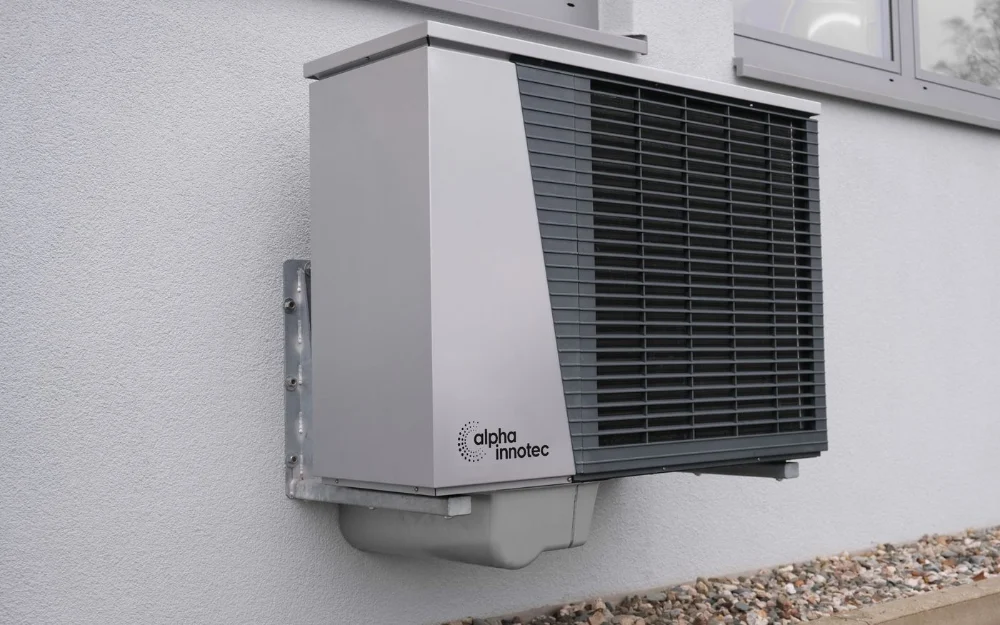
This guide compares six air source heat pumps. Heat pumps qualify for a £7,500 government grant. Under the October 2026 price cap a mid-range heat pump heats a typical home for around £106 a year less than a 90% efficient gas boiler on Look Into's heating cost index. Part of that comes from VAT relief on electricity, which is due to end on 31 March 2027.
- Heat pumps qualify for a £7,500 government grant.
- At the October 2026 cap, a mid-range heat pump costs around £106 a year less to run than a 90% efficient gas boiler.
- Part of that gap comes from VAT relief on electricity, due to end on 31 March 2027.
- Picks include the Vaillant aroTHERM plus, Daikin Altherma 3 and Samsung Gen7 EHS Mono.
An air source heat pump heats a home using electricity and warmth from the outside air. There is a £7,500 grant towards fitting one. At current prices it costs slightly less to run than a gas boiler, though that depends on a tax relief that ends in March 2027.
Summaries were generated with AI from the text of this page. If a summary and the page disagree, the page is right.
Explore other styles:
The brand of heat pump matters less than two things decided by the installer: whether the unit is sized from a proper heat loss survey, and how low a flow temperature your radiators let it run at. A well-designed install of a mid-range unit will usually beat a poorly designed install of the “best” one. This guide compares six common models on what their makers publish, then shows what to check on a quote.
What changed, 16 November 2026. Rewritten so the page agrees with its own corrections. The opening box no longer calls the Vaillant “class-leading” on efficiency, because Vaillant publishes no SCOP. We removed an undated running cost table that contradicted the dated figure on our heating cost index, claims about market share and installer networks we could not source, and a planning answer that had been out of date since 29 May 2025.
Run your own numbers before you shortlist
Under the October 2026 price cap a mid-range heat pump heats a typical home for slightly less than a 90% efficient gas boiler, and the gap on our heating cost index is around £106 a year in the heat pump's favour. Part of that comes from the VAT relief on electricity, which is due to end on 31 March 2027, so the sums are worth rechecking against your own tariff.
Heat pump cost and grant calculator (net cost after the £7,500 BUS grant) · Heating cost index (heat pump vs gas at the current cap) · Heat pump grants guide · How to compare installer quotes
Prices and specs last checked by Look Into on 12 October 2026 · next check 7 December 2026 · how we picked
Six air source heat pumps at a glance
| Model | Capacity | SCOP (Efficiency) | Noise Level | Quote range before grant (April 2026 estimate) |
|---|---|---|---|---|
| Vaillant aroTHERM plus | 3.5kW to 12kW | A+++ class | 54 dB | £10,000 – £14,000 |
| Daikin Altherma 3 | 4–16kW | Up to 4.64 | 55 dB | £9,000 – £12,000 |
| Samsung Gen7 EHS Mono | 5–16kW | Up to 4.65 | 47 dB | £8,500 – £11,500 |
| Mitsubishi Ecodan R290 | 5–14kW | Up to 4.30 | 58 dB | £9,500 – £13,000 |
| Nibe F2120 | 8–20kW | Up to 4.50 | 56 dB | £10,000 – £15,000 |
| Grant Aerona³ R32 | 6–17kW | Up to 4.52 | 56 dB | £8,000 – £11,000 |
Corrected 12 October 2026: the Vaillant row previously read 3 to 15kW and SCOP up to 5.08. Vaillant's UK product page for the aroTHERM plus, opened on 12 October 2026, lists outputs of 3.5kW, 5kW, 7kW, 10kW and 12kW and an energy efficiency class of A+++, and states no SCOP, so both figures have been changed to match what the maker publishes. The other five rows carry manufacturer and installer figures that were not re-read on this date.
Two warnings about this table. Quote ranges are April 2026 estimates and were not re-checked; your installation cost depends far more on your house than on the brand. Noise figures are as each maker states them, and makers do not all measure the same way (sound power at the unit and sound pressure at a distance are different numbers), so a few decibels’ difference between brands may not mean much. The planning test that matters is the one your installer runs for your site, described below.
Three worth shortlisting, and the catch with each
1. Vaillant aroTHERM plus: for keeping your radiators
Vaillant states flow temperatures up to 75°C, which gives an installer more room to work with existing radiators. It uses R290 (propane) refrigerant, and Vaillant’s UK page puts it in energy efficiency class A+++.
The catch: Vaillant publishes no SCOP on its UK product page, so you cannot compare its efficiency with the others from the maker’s figures. And running any heat pump hot to avoid changing radiators lowers its efficiency, which raises the running cost.
Best for: homes where replacing radiators would be disruptive or expensive.
Ask the installer: what SCOP the design assumes at the flow temperature they plan to run, and which radiators, if any, they would upsize instead.
2. Daikin Altherma 3: a widely fitted alternative
Daikin states a SCOP of up to 4.64 and a range from 4 to 16kW, which covers most houses.
The catch: it uses R32, a refrigerant with a higher global warming potential than R290, and its stated maximum flow is 65°C, so some homes may need larger radiators.
Best for: buyers who get a competitive quote from an installer who fits Daikin regularly.
Ask the installer: whether the design needs radiator changes at 65°C or below, and what they cost.
3. Samsung Gen7 EHS Mono: where noise is the constraint
Samsung states 47dB, the lowest noise figure in the table.
The catch: see the warning above: makers measure noise differently, so check how Samsung’s figure was measured before treating it as quieter. Like the Daikin, it uses R32 and its stated maximum flow is 65°C.
Best for: terraces and semis where the outdoor unit will sit near a neighbour’s window.
Ask the installer: for the MCS 020a noise calculation for your site, in writing, before you sign.
The Mitsubishi Ecodan R290, Nibe F2120 and Grant Aerona³ R32 are in the table at their April 2026 figures. We have not written them up separately because their published figures do not put any of them clearly ahead for a particular kind of home.
How to choose the right size heat pump
| Home Type | Bedrooms | Heat Loss (approx.) | Recommended Size |
|---|---|---|---|
| Well-insulated flat | 1–2 | 3–4kW | 5kW |
| Mid-terrace house | 2–3 | 5–7kW | 8kW |
| Semi-detached (average insulation) | 3 | 7–9kW | 10–12kW |
| Detached house | 4+ | 10–14kW | 12–16kW |
| Older/poorly insulated detached | 4+ | 14–20kW | 16–20kW |
When a heat pump costs less to run than gas
Efficiency is what decides whether a heat pump costs less to run than gas. At the October 2026 price cap, electricity is 26.32p a unit and gas is 7.97p. Put gas through a boiler that is 90% efficient and its heat works out at about 8.9p per useful kWh, so a heat pump reaches break-even at a SCOP of roughly 3.0. Below that it costs more to run than a gas boiler, and above it the saving grows as the SCOP rises. The five makers in the table that publish a SCOP all state an “up to” figure above 4.0, but the figure that counts is the one your installer designs for your house at your flow temperature. We work the numbers through in full in our heat pump vs gas boiler cost comparison.
The Boiler Upgrade Scheme (£7,500 Grant)
The UK government's Boiler Upgrade Scheme (BUS) offers a £7,500 grant towards the cost of an air source heat pump. The scheme covers England and Wales. Check gov.uk for the current end date before you rely on it.
Checked 12 October 2026: the air source grant is still £7,500, and gov.uk now also shows an extra £1,500 where the home is heated by oil or LPG and has no mains gas connection, which takes the air source grant to £9,000. That uplift runs until March 2027. The biomass boiler grant is £5,000. Source: gov.uk, Boiler Upgrade Scheme, what you can get.
- Property must have an EPC (any rating)
- Must replace an existing fossil fuel heating system
- Installer must be MCS-certified
- The installer applies for the voucher on your behalf
Frequently asked questions
Do heat pumps work in cold UK winters?
Yes, but efficiency falls as the outside temperature drops, so a heat pump uses more electricity per unit of heat on the coldest days. That is why sizing from a heat loss survey matters: an undersized unit struggles in a cold spell, and an oversized one costs more and cycles on and off.
Do I need planning permission?
Usually not in England. Since 29 May 2025, permitted development no longer requires the unit to be at least a metre from the boundary. It must still pass the MCS 020a noise assessment, which limits it to 42 dB(A) at the nearest neighbouring window, and the installer must be MCS certified. Wales, Scotland and Northern Ireland have their own rules.
Do I need underfloor heating?
No. Heat pumps are most efficient at low flow temperatures, which underfloor heating suits, but most homes keep radiators. Some rooms may need larger ones so the system can run cooler. Ask the installer which, and what it adds to the quote.
Does a heat pump cost less to run than gas?
At the October 2026 price cap, a heat pump breaks even with a 90% efficient gas boiler at a SCOP of roughly 3.0, and saves more the higher the SCOP goes. Our heating cost index shows the current figures. Part of today’s gap comes from VAT relief on electricity that is due to end on 31 March 2027.
Installation, costs and grants
The heat pump guide covers what installation involves, what it costs and how the grants work.
 Claims CheckedThe energy label audit: 100 best-selling appliances, and what the letter really tells you
 Solar PanelsPlug-in solar panels UK 2026: the rules, what they save and what 20 listings tell you
 Household SavingsRepair or replace calculator: washing machines, dryers, fridges and dishwashers
 Household SavingsThe 10 cheapest ways to heat one room this winter, ranked by cost per hour
New on other desks
- Buying DeskBest portable solar panels UK 2026: what a rated watt makes in winter
- MobilityUK Accessibility Equipment Affordability Report 2026: a stairlift in weeks of benefit
- Home & GardenThe Missing Number Report 2026: what 658 UK product listings leave out