
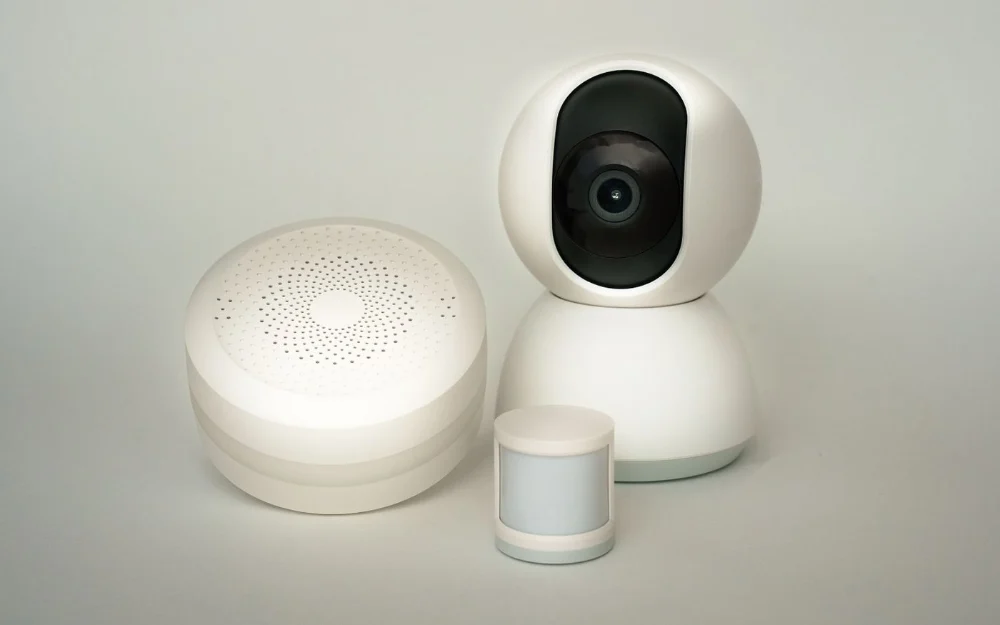
A DIY home security system costs £180 to £350 for a starter kit in the UK, with no monthly fee if you self-monitor, while a professionally installed and monitored system runs to £199 or more upfront plus £27 to £45 a month. For most households the DIY route is the right one, but it buys deterrence and evidence rather than police attendance, and that difference matters more than any feature comparison. This guide covers what each system does, what the evidence says it achieves, and the two UK-specific rules that catch people out.
How Look Into made this guide: desk research, not a hands-on test. We shortlist on UK availability, compare published specifications and warranty terms, and read verified UK owner reviews, discounting incentivised ratings. Prices in the comparison table are pulled live from Amazon UK. Look Into has not handled these products: every figure comes from the maker, the listing or a named source, read on the date shown.
Prices in this table come live from Amazon and can change through the day. Prices quoted in the text were checked by Look Into on 30 August 2026, so the two can differ.




As an Amazon Associate I earn from qualifying purchases. (paid link)
Prices and specs last checked by Look Into on 30 August 2026 · how we picked
Best Home Security Systems 2026: Quick Comparison
| System | Type | Monthly Fee | Starting Price | Best For |
|---|---|---|---|---|
| Ring Alarm Pro | DIY + optional monitoring | £4.99–£29.99 | £150 (smallest pack) | Best overall |
| SimpliSafe | DIY + optional monitoring | £0–£28 | £200 | No contract flexibility |
| Yale Sync Smart Alarm | DIY smart alarm | £0 | £250 | Traditional alarm feel |
| Arlo Pro 5S | Camera system | £0–£13 | £200 per camera | Outdoor camera quality |
| Eufy Security | Camera + alarm | £0 | £150 | No subscription fees |
| ADT Smart Home | Professional install + monitoring | £27–£45 | £199 setup | Full professional service |
Detailed Reviews
1. Ring Alarm Pro - Best Overall
Ring's ecosystem is hard to beat for value and expandability. The base kit includes a base station (which doubles as a Wi-Fi 6 router), keypad, contact sensor, motion detector, and range extender. Add Ring cameras and doorbells for a complete system. Ring has since replaced its old Protect plans: subscriptions now run from £4.99 a month for one device to £7.99 for every device at one address, with a £15.99 Pro tier and a £29.99 tier that sends a third-party security guard out to alarms. There is no traditional monitored-alarm plan any more, and arming or disarming the alarm from the app now needs a subscription.
Check Ring Alarm price on Amazon →
Pros
- Affordable starting price
- Huge ecosystem (cameras, doorbells, sensors, locks)
- Easy DIY installation (30–60 minutes)
- Ring Multi covers every device at one address for £7.99 a month
- Built-in Wi-Fi 6 router (Pro model)
- Alexa integration
Cons
- Best features, including app arming and disarming, need a subscription
- Amazon ecosystem lock-in
- Video quality good but not best-in-class
2. SimpliSafe - Best No-Contract Monitoring
SimpliSafe offers professional 24/7 monitoring without tying you into a long contract. You can switch monitoring on and off month-to-month. This makes it ideal if you want professional response during holidays or vulnerable periods. The equipment is well-built and the app is straightforward.
Check SimpliSafe price on Amazon →
Pros
- No contract - cancel monitoring anytime
- Professional monitoring available month to month
- Cellular backup (no Wi-Fi dependency)
- Clean, modern design
Cons
- Camera range is limited vs Ring/Arlo
- Monitoring is 66p to 93p a day, roughly £20 to £28 a month
- Fewer smart home integrations
3. Eufy Security - Best for No Subscription
If you refuse to pay monthly fees, Eufy is the answer. All video storage is local (on the HomeBase unit), so there's no cloud subscription required. Camera quality is excellent, the app works well, and the system integrates with Apple HomeKit, Google Home, and Alexa.
Pros
- Zero monthly fees - ever
- Local storage (16GB built-in, expandable)
- Excellent camera quality (2K/4K)
- Works with all major smart home platforms
Cons
- No professional monitoring option
- If HomeBase is stolen, footage is lost
- Slightly less polished app than Ring
4. Yale Sync Smart Home Alarm - the traditional alarm, made smart
Yale is the name most British households already associate with locks, and the Sync alarm is the closest thing here to a conventional wired burglar alarm without the wiring. The hub sits by the front door, the external siren goes on the wall where a neighbour can hear it, and the sensors talk to it over Yale's own radio protocol rather than your Wi-Fi. There is no subscription of any kind.
Check Yale Sync price on Amazon →
Pros
- No monthly fee at all
- External siren box, which is the part burglars actually look for
- Does not depend on your broadband staying up
- Familiar British brand with high-street support
Cons
- No professional monitoring option
- Camera range is thin next to Ring or Arlo
- App is functional rather than slick
5. Arlo Pro 5S - best outdoor camera picture
If your priority is seeing a face clearly at 2am rather than sounding a siren, Arlo is the camera range to look at. The Pro 5S shoots 2K with HDR and colour night vision, runs on a rechargeable battery so it goes where there is no power, and has a built-in spotlight and siren. It is a camera system rather than an alarm, so treat it as the thing you add to an alarm, not a replacement for one.
Check Arlo Pro 5 price on Amazon →
Pros
- Best image quality of the systems here, day or night
- Battery powered, so placement is not limited by sockets
- Spotlight and siren built into the camera
Cons
- Cloud recording needs a subscription; without one you get alerts but no saved video
- Batteries need recharging every few months in winter
- Per-camera cost adds up quickly
6. ADT Smart Home - when you want somebody else to deal with it
ADT is the professionally installed and professionally monitored option. An engineer specifies and fits the system, and the alarm signals to a manned alarm receiving centre rather than to your phone. That is a genuinely different product from everything else on this page, and the reason to buy it is not the hardware but the response arrangement behind it. It is also the only route on this list that can lead to police response, for the reasons set out below.
Pros
- Professional survey, installation and maintenance
- Signals to a manned alarm receiving centre
- The route to a police-response system if you need one
Cons
- Much the most expensive over three years
- Contract lengths of 12 to 36 months
- You cannot simply take it with you when you move
DIY vs Professional Installation
| Factor | DIY (Ring, SimpliSafe, Eufy) | Professional (ADT, Verisure) |
|---|---|---|
| Install cost | £0 (self-install) | £199–£500 |
| Monthly cost | £0–£28 | £27–£50 |
| Equipment cost | £200–£600 | Often "free" (bundled into contract) |
| Contract length | None or monthly | 12–36 months |
| Installation time | 30–90 minutes | 2–4 hours (engineer visit) |
| Best for | Tech-comfortable homeowners | Hands-off, want guaranteed response |
Important Security Devices Ranked by Impact
| Device | Deterrence Impact | Cost | Priority |
|---|---|---|---|
| Video doorbell | 5 out of 5 | £80–£200 | Buy first |
| Outdoor camera (front) | 5 out of 5 | £100–£250 | Buy first |
| Smart alarm with siren | 4 out of 5 | £200–£350 | High priority |
| Smart lock | 3 out of 5 | £150–£300 | Nice to have |
| Indoor camera | 2 out of 5 | £50–£150 | Optional |
| Window/door sensors | 3 out of 5 | £15–£30 each | High priority |
Does a home security system actually reduce crime?
Home security systems do reduce crime, but by less than the marketing implies, and the effect depends heavily on where the cameras are. The College of Policing's crime reduction toolkit, which pools the available research rather than any single study, reports that crime fell by 13% overall in areas with CCTV compared with areas without.
The detail matters more than the headline:
- Residential areas: a 12% reduction. Real, but modest. A camera is not a force field.
- Car parks: a 37% reduction, the strongest result in the evidence. If you have a driveway and a car, that is where a camera earns its keep.
- Property crime and vehicle crime: about 14% each. These are the categories most householders are actually worried about.
- Violence and disorder: no statistically significant effect. Cameras do not stop confrontations.
- Crime was not simply displaced to neighbouring streets, which is the objection usually raised and, on this evidence, not supported.
Two findings are worth acting on when you spend. CCTV worked better when it was actively monitored rather than only recording, and better again when combined with other measures such as better lighting and fencing. A £40 outdoor light on the side return may do more than a fourth camera.
Will the police respond to your alarm?
Almost certainly not, if you buy any of the DIY systems on this page. This is the single most misunderstood thing about home alarms in the UK, and it is worth being blunt about, because American marketing copy travels badly.
UK forces divide alarms into two classes. A Type A system is one that meets the relevant British Standards, is installed to those standards, and signals to a manned alarm receiving centre. Those systems are issued a unique reference number by the force's alarms department, and only they get a planned police response, subject to conditions including having at least two nominated keyholders. Everything else is a Type B system, and, in the words of one force's published policy, "generally, a planned response is not provided to non-accredited signalling systems".
A self-installed alarm that pings your phone is a Type B system. So is a bells-only siren. Neither is registered with anyone, and a 999 call reporting "my app says my alarm is going off" is treated on its own merits like any other report, not as a police-response alarm activation.
That does not make DIY systems pointless. Most burglaries are opportunistic and a siren, a visible camera and a phone alert are aimed at deterrence and evidence, not dispatch. But if what you actually want is police attendance, you need a professionally installed monitored system with a URN, which means an installer inspected by a recognised body, a contract, and a monthly fee. Decide which of those two things you are buying before you spend.
One consequence: be careful with any product page promising "police dispatch". Check what the provider's UK monitoring contract actually commits to, which is usually a keyholder or a private response service rather than the police.
Doorbell cameras and the law on filming your neighbours
If your camera or video doorbell captures anything beyond your own boundary, UK data protection law applies to you personally, and the household exemption no longer covers you. The Information Commissioner's Office is explicit: if the camera "captures someone else's property, a public area or communal space, then data protection law applies".
In practice that gives you five obligations, none of them onerous but all of them real:
- Have a clear reason for running the camera.
- Capture no more than you need. Position cameras at your own property where you can, and use the privacy-zone masking built into Ring, Arlo, Eufy and most others to black out a neighbour's window or the pavement.
- Tell people. A small sign by the door is enough.
- Hand over footage of someone if they ask for it.
- Delete recordings regularly, ideally automatically.
If a neighbour objects and you have no good reason to keep filming their property, the expectation is that you stop. Getting the privacy zones right on the day you install the camera avoids almost every version of this argument.
Renting, and other practical constraints
Most tenancy agreements rule out drilling into exterior walls, which removes wired alarms, external siren boxes and most permanent camera mounts. Battery cameras on adhesive or clamp mounts, a plug-in indoor camera and a doorbell that fits over the existing bell wiring are usually acceptable, but check the agreement and, for a shared entrance, remember that a communal hallway is not your property for data protection purposes.
Two more constraints worth checking before you buy. Battery cameras lose a noticeable amount of runtime in a British winter, and a camera on a busy street triggers far more often than the manufacturer's quoted battery life assumes. Broadband dependency matters too: Wi-Fi systems stop working when the router does, so if your connection is unreliable, favour a system with cellular backup or one like Yale's that uses its own radio link to the hub.
Frequently Asked Questions
Do home security cameras actually deter burglars?
Yes, though by less than most marketing suggests. The College of Policing's review of the evidence found crime fell by 13% overall where CCTV was in place, and by 12% in residential areas specifically. The effect was strongest in car parks, at 37%, and there was no significant effect on violence. Cameras worked better when actively monitored and when combined with other measures such as better lighting.
Will the police come if my DIY alarm goes off?
Not as a matter of course. Police forces provide a planned response only to Type A systems, which meet British Standards, signal to a manned alarm receiving centre and hold a unique reference number issued by the force. A self-installed alarm that alerts your phone is a Type B system and does not qualify. If police attendance is what you want, you need a professionally installed monitored system.
Do I need professional monitoring?
For most households, no. A phone alert arrives within seconds and you can decide what to do with it. Monitoring is worth paying for if you are often out of signal, travel a lot, live somewhere remote, or specifically want the police-response route described above.
Is my video doorbell legal if it films the pavement?
Yes, but you become responsible under data protection law once the camera sees beyond your boundary. The ICO expects you to have a reason for filming, capture no more than you need, put up a sign, provide footage to anyone who asks for their own images, and delete recordings regularly. Use the privacy-zone masking in the app to black out a neighbour's property.
Will an alarm reduce my home insurance premium?
Sometimes, but do not buy one expecting it to. Insurers differ on what they recognise and some ask for a professionally installed and maintained system rather than a DIY one. Check your own policy wording before you buy, and tell your insurer if you fit an alarm, because some policies require you to set it whenever the house is empty.
Are smart locks safe?
Modern smart locks from established brands are secure, and they remove the risk of a copied key. Look for a physical key override, a published encryption standard, and a battery-low warning that gives you weeks rather than hours of notice.
What should I buy first on a small budget?
A video doorbell and one outdoor camera covering the main approach. That combination is the cheapest way to get both deterrence and usable evidence, and it addresses the front of the house, where most opportunistic entry starts. Add door and window sensors and a siren after that.
Explore Home Security
Our complete home security guide covers cameras, alarms, smart locks, and more.
Read the Full Security Guide →Before the alarm, there is the door. Our UK Home Security Value Index prices the locks and hardware that cover the entry routes burglars actually use, against ONS data, for less than the cheapest kit on this page.