
Key takeaways
- In England the carbon monoxide alarm duty sits with landlords. GOV.UK guidance says plainly that the regulations do not apply to owner occupiers.
- Scotland is different. Every home with a boiler, open fire, flue or non-electric heater must have a CO detector in the same room, and that duty falls on the owner.
- Scotland also rules out most of Amazon’s bestsellers. A battery CO alarm there must have a sealed battery lasting the life of the unit, so anything running on replaceable AAs will not do.
- The NHS goes further than either law and advises one alarm for every room containing an appliance that burns gas, oil, coal or wood. The six alarms here cost £11.99 to £29.97.
Carbon monoxide alarms are quietly having a moment. As of this week the Kidde 5CO sits at number 10 in Amazon UK’s entire DIY & Tools chart, which is the sort of ranking a £14 safety device only reaches when the boilers go back on. Britain is heading into the first properly cold weeks of the year, gas fires and log burners are being lit for the first time since spring, and people are buying the one gadget that catches a fault they cannot see or smell.
The buying advice around these is worse than it should be. Most roundups tell you to get one and leave it there. The useful question is which alarm the rules where you live will actually accept, because that answer is different in Edinburgh and Exeter, and it rules out several of the cheapest units on the shelf.
Prices in this table come live from Amazon and can change through the day. Prices quoted in the text were checked by Look Into on 2 September 2026, so the two can differ.



As an Amazon Associate I earn from qualifying purchases. (paid link)
Prices and specs last checked by Look Into on 2 September 2026 · how we picked
What the law asks for, and where
In England, the Smoke and Carbon Monoxide Alarm (Amendment) Regulations 2022 came into force on 1 October 2022. Landlords must fit a CO alarm in any room used as living accommodation that contains a fixed combustion appliance, with gas cookers excluded. Councils enforce it and can fine a landlord up to £5,000 for ignoring a remedial notice. The same GOV.UK guidance answers the question most people actually have: the regulations do not apply to owner occupiers.
Scotland took the opposite approach. Under the standard that changed in February 2022, if you own your home and it has a carbon-fuelled appliance such as a boiler, a fire, a flue or a non-electric heater, you must have a CO detector in that room. Gas cookers and hobs are exempt, and mygov.scot warns against putting a detector right beside a gas cooking appliance because you will get false alarms.
The detail that trips people up is the battery. Scottish guidance states that if a CO alarm uses batteries, it must have a sealed battery for the duration of its lifespan. Replaceable AAs do not qualify. That single line removes the Kidde 5CO, the Kidde 5DCO and most sub-£15 alarms from consideration for a Scottish home, which is why two of the picks below carry a sealed 10-year cell instead.
Nobody in England is obliged to fit one in their own house. The NHS still recommends it, and recommends one alarm for each room containing an appliance that burns gas, oil, coal or wood rather than a single unit for the whole property.
How we picked these
We started from what the guidance asks for rather than from star ratings.
- Domestic alarms should meet BS EN 50291-1. There is a separate standard, BS EN 50291-2:2019, written for continuous operation in recreational vehicles and craft, so a caravan or boat wants an alarm carrying that second part.
- GOV.UK guidance for landlords says that where a battery alarm is chosen, sealed-for-life is the better option. Scottish guidance goes further and makes a sealed battery mandatory.
- The electrochemical sensor inside these wears out. Every alarm here is rated for 10 years, and we favoured units that chirp or display a code when they expire rather than dying quietly.
- A digital readout showing parts per million tells you about a low-level leak long before an alarm sounds, which matters if someone in the house gets headaches at home and not at work.
- We used the single-unit price on Amazon UK at the time of writing. Multipacks often work out cheaper per alarm if you need three.
At a glance
| Alarm | Best for | Power | Display | Meets Scottish battery rule | Price |
|---|---|---|---|---|---|
| Kidde 5CO | Most homes in England | 2 x AA, replaceable | LED only | No | £13.99 |
| FireAngel FA3820 | Fit and forget | Sealed 10-year | LED only | Yes | £22.00 |
| FireAngel SCB10-R | Smoke and CO in one | Sealed 10-year | LED only | Yes | £29.97 |
| Kidde 5DCO | Seeing the ppm number | 2 x AA, replaceable | Digital | No | £17.99 |
| X-Sense XC0C-SR | Spending the least | Replaceable | Digital | No | £11.99 |
| FireAngel FA6813 | Caravans and boats | 2 x AA, replaceable | LED only | No | £14.39 |
The six alarms
Kidde 5CO
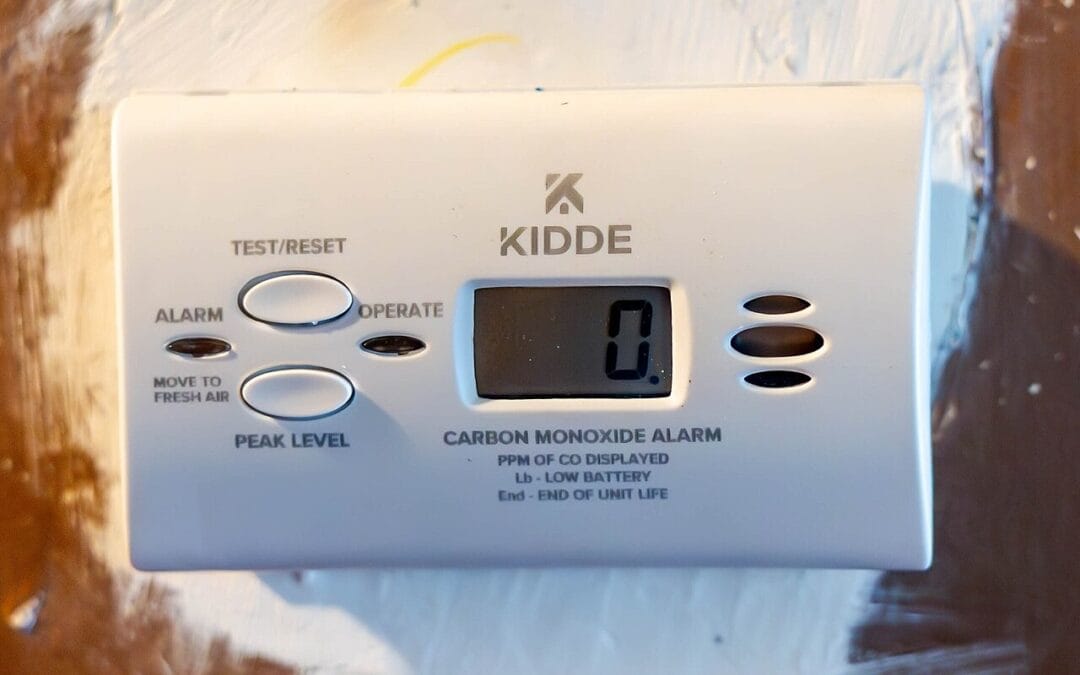
Best for most homes in EnglandThis is the one currently climbing the DIY chart, and the reason is not complicated. It does the job for less than the price of a takeaway, the sensor is rated for 10 years, it warns you when it reaches end of life, and Kidde backs it with a seven-year warranty. There is no screen and no app. It sits on the wall and screams if there is carbon monoxide in the room, which is the entire brief.
The catch: it runs on two replaceable AA batteries, so it will not satisfy the Scottish sealed-battery rule, and you are the one who has to remember to change them when it starts chirping at 3am.
10-year sensor, AA powered, 7-year warranty · around £14
Check price on Amazon →FireAngel FA3820
Best sealed 10-year alarmThe sealed, tamper-proof battery lasts the life of the alarm, which makes this the straightforward answer for a Scottish home and the safer buy for a rental anywhere else. It is Kitemark certified and adds two things the cheap units skip: a high-sensitivity mode that alerts early if it predicts levels heading past 180ppm, and an alarm memory that tells you it went off while you were out. It stands on a shelf or screws to a wall.
The catch: it is the dearest single-purpose alarm here, and when the sealed cell dies at 10 years the whole unit goes in the bin rather than taking a fresh battery.
Sealed 10-year battery, Kitemark, alarm memory · around £22
Check price on Amazon →FireAngel SCB10-R
Best two-in-oneOne unit covering both smoke and carbon monoxide, with a sealed 10-year battery and separate alert patterns so you can tell which hazard it has found. The optical smoke sensor is the type that cuts down on burnt-toast false alarms. For a landing with a boiler cupboard on it, this saves buying and mounting two devices, and it is Kitemark certified for both jobs.
The catch: the two alarms want different heights. Smoke detection works best on a ceiling, CO detection works best at head height near the appliance, and one box cannot be in both places. Buy it knowing you are trading ideal placement for convenience.
Smoke plus CO, sealed 10-year battery, Kitemark · around £30
Check price on Amazon →Kidde 5DCO
Best digital displayThe 5CO with a screen. It shows CO from 30ppm and only sounds the alarm at 50ppm, so there is a window where you can see a low-level reading and go looking for the cause before anything is dangerous. That is genuinely useful if a household member has recurring headaches at home, which is the classic slow-leak pattern. Kitemarked to BS EN 50291-1 for domestic use.
The catch: replaceable AAs again, so Scotland is out, and the display invites people to watch a number instead of getting the appliance serviced.
Reads from 30ppm, alarms at 50ppm, 10-year sensor · around £18
Check price on Amazon →X-Sense XC0C-SR
Best budgetThe cheapest alarm here that still gives you a 10-year sensor and a display of the current CO level. It is compact at 75 by 142 by 32mm, the buttons are different sizes so you can find the right one in a panic, and a tri-colour LED tells you at a glance whether it is fine, faulty or alarming. If the alternative is having no alarm in the spare room, buy this one.
The catch: the freestanding design tempts you to leave it flat on a shelf or a windowsill, which is usually the wrong height and the wrong distance from the appliance. Mount it properly or it is decoration.
10-year sensor, CO level display, freestanding · around £12
Check price on Amazon →FireAngel FA6813
Best for caravans and boatsThis is the one to take away with you. FireAngel lists it as conforming to BS EN 50291-1 and BS EN 50291-2, and that second part is the standard written specifically for CO alarms in recreational vehicles and craft. A gas-heated caravan or a boat with a diesel heater is a small sealed space with a combustion appliance in it, which is exactly the situation domestic-only alarms are not tested for. It comes with a mounting bracket and screws, and a sleep-easy function to mute the low-battery chirp overnight.
The catch: being described as portable encourages people to carry it between the house and the caravan and then leave it in the wrong one. Buy a second alarm rather than sharing one.
BS EN 50291-1 and -2, 120 x 73 x 35.5mm, bracket included · around £14
Check price on Amazon →Where to put it
Follow the instructions that come with your alarm, because manufacturers specify distances and heights that vary by model. Two rules hold across all of them. Put the alarm in the same room as the appliance, since carbon monoxide will not reliably reach a unit on a different floor. And keep it away from directly above or beside a gas cooking hob, which mygov.scot flags as a false-alarm trap.
If you are already looking at what makes a house safer for the money, our UK Home Security Value Index costs out entry-route hardware against monitored alarm subscriptions. And if the heating bill is the reason the boiler is on your mind this month, the UK Running Cost Index tracks what each appliance actually costs to run at current cap rates.
Frequently asked questions
Do I legally need a carbon monoxide alarm if I own my home?
It depends which country you are in. GOV.UK guidance on the 2022 regulations states that they do not apply to owner occupiers in England. In Scotland the duty does reach homeowners, and you must have a CO detector in any room with a carbon-fuelled appliance. Either way the NHS recommends fitting one.
Do I need one for a gas cooker?
No. Gas cookers are excluded from the England regulations, and mygov.scot says gas cookers and hobs do not need a carbon monoxide detector. It also warns that installing one right next to a gas cooking appliance can cause false alarms.
Do carbon monoxide alarms expire?
Yes. The electrochemical sensor has a working life, and every alarm in this list is rated at 10 years. Mains-wired alarms in Scotland should be replaced every 10 years too. A good alarm signals end of life with a distinct chirp or a code on the display, so check the manual for what that pattern sounds like rather than assuming a chirp means a flat battery.
How many alarms do I need?
The NHS advises one for each room in your home containing an appliance that burns gas, oil, coal or wood. For a typical house with a boiler in a utility room and a log burner in the living room, that means two.
What are the symptoms of carbon monoxide poisoning?
The NHS lists headache, dizziness, feeling or being sick, weakness, tiredness and confusion, chest and muscle pain, and shortness of breath. The gas is colourless and has no smell, so there is nothing to notice on your own. If you think you have been exposed, get fresh air and seek medical help, and call 999 for anyone who has lost consciousness.
Sources
- GOV.UK, Smoke and Carbon Monoxide Alarm (Amendment) Regulations 2022: guidance for landlords and tenants
- mygov.scot, Fire safety if you own your home
- NHS, Carbon monoxide poisoning
- BSI, BS EN 50291-2:2019
Prices were taken from Amazon.co.uk on 2 September 2026 and change often. Look Into earns a commission on Amazon purchases made through the links above, at no extra cost to you. That does not affect which products we include.