

The short version
- A window vac lifts condensation off the glass in one pass, so it stops running down into the frame, the sill and the plaster behind it.
- Run time is the spec that decides which one you need. Around 20 minutes covers a one bed flat. Around 35 minutes covers most three bed houses.
- The Kärcher WV 2 at around £40 is the sensible middle of the range. The WV 1 at around £30 does the same job on a shorter battery.
- Wiping is only the symptom. Government guidance puts the actual fix on ventilation, heating and finding the moisture source.
Every year the same thing happens in British homes. The clocks are still on summer time, the heating clicks on for the first time in months, and the next morning there is a puddle sitting in the bottom of every window frame. Sales of window vacs climb through September and October for exactly that reason, and this year the run-up feels earlier than usual because damp and mould have stayed in the news since Awaab's Law came in.
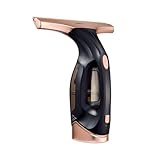
A window vac is a simple thing. It is a rechargeable handheld with a rubber blade and a small tank, and it sucks water off glass instead of smearing it around with a tea towel. Two minutes a window, no drips, no soaked cloths drying on the radiator and adding the moisture straight back into the room. Here are six worth looking at, with prices checked on Amazon UK on 26 August 2026.
Prices in this table come from Amazon and are refreshed at least once a day, with the date of the last update under the table. The cost-per-use and running-cost figures on this page use prices Look Into read on 26 August 2026, so they can differ from today's price.



As an Amazon Associate, Look Into earns from qualifying purchases. Product prices and availability are accurate as of 26 October 2026 and are subject to change.
Prices and specs last checked by Look Into on 26 August 2026 · next check 9 November 2026 · how we picked
How we picked these
We started from what the job actually is in a UK winter, which is clearing condensation off cold single or double glazing first thing in the morning, not cleaning the outside of a conservatory. That pushed four specs to the front.
- Run time. The battery is the limit, not the suction. If you have twelve windows and a 20 minute battery you will be fine. If you have twenty five and you want to do them all before work, you will not.
- Tank size. Heavy condensation fills a 100ml tank faster than you would think. A bigger tank means fewer trips to the sink.
- Blade width. A 280mm blade clears a standard pane in two or three strokes. A 170mm blade is slower on big panes but much better on small Georgian-style panes and around handles.
- Weight. You are holding it above shoulder height. Anything over about 1kg starts to tell by the fifth window.
We also read the government's damp and mould guidance before writing any of this, because it changes what a window vac is for. It is a way of stopping standing water doing damage while you sort out the ventilation, and it is not a cure on its own.
At a glance
| Model | Run time | Blade | Around | Best for |
|---|---|---|---|---|
| Kärcher WV 2 | 35 min | 280mm | £40 | Most houses |
| Kärcher WV 1 | 20 min | 250mm | £30 | Flats and small homes |
| EAVE WC03 | 45 min | 280mm | £36 | Heavy condensation |
| Kärcher WV 5 Plus | 35 min | 280mm | £50 | Buying the whole kit at once |
| Kärcher WV 6 Plus | 100 min | 280mm | £70 | Big houses, one charge |
| Tower T131001BLG | Up to 30 min | Standard | £25 | Spending as little as possible |
The six worth buying
Kärcher WV 2
Best overallThis is the one most people should buy. Thirty five minutes of battery is enough to walk a three bed house top to bottom with the battery to spare, the 280mm blade clears a standard double glazed pane in a couple of strokes, and at 0.6kg you can hold it up to a bedroom window without your arm complaining. The LED shows what charge is left rather than making you guess.
The catch: it comes as the bare vac. No spray bottle, no microfibre cloth, no cleaning concentrate, so if you also want to wash the glass rather than just dry it you are buying those separately or stepping up to the WV 5 Plus.
35 min run time · 280mm blade · 0.6kg · around £40
Check price on Amazon →Kärcher WV 1
Best for a flatThe entry model, and for a one or two bed flat it is all you need. Kärcher pitch it directly at condensation removal, it weighs half a kilo, and twenty minutes of running is more than enough for six or eight windows. It is also the cheapest way into the Kärcher accessory range if you later want the smaller blade for narrow panes.
The catch: the 100ml tank. On a bad January morning with streaming windows you will empty it once or twice mid-session, which is annoying enough that anyone with a whole house should pay the extra ten pounds for the WV 2.
20 min run time · 100ml tank · 0.5kg · around £30
Check price on Amazon →EAVE WC03 window vac set
Best big tankThe specs here undercut Kärcher on the two things that slow you down. The tank holds 200ml, double the WV 1, and the battery is quoted at 45 minutes, longer than anything Kärcher does below £70. It ships with two blades and two microfibre cloths, so you get the narrow blade for small panes in the box.
The catch: it is a much smaller brand with a much shorter track record, and window vac blades are a wear part. If EAVE stops selling replacements in three years you are throwing the whole thing away, whereas Kärcher blades will still be on the shelf.
45 min run time · 200ml tank · 280mm blade · around £36
Check price on Amazon →Kärcher WV 5 Plus
Best complete kitSame 35 minute battery and same 280mm blade as the WV 2, but the box also has the spray bottle with a microfibre cover and a 20ml bottle of glass cleaner concentrate. That matters if you want one tool that both washes and dries the glass, because the spray bottle is what turns a condensation vac into a proper window cleaning setup.
The catch: you are paying about ten pounds over the WV 2 for accessories that cost less than that bought on their own, and if all you ever do is clear morning condensation the spray bottle will sit in a cupboard.
35 min run time · 280mm blade · spray bottle and concentrate included · around £50
Check price on Amazon →Kärcher WV 6 Plus
Best battery lifeA hundred minutes on one charge, which is roughly triple the WV 2. For a big house, a house with a conservatory, or anyone who would rather do the whole place once a week than a room at a time, that is the difference between finishing the job and waiting on a charger. It carries the same 280mm blade and includes the spray bottle kit.
The catch: most people will never use the extra battery. Unless you genuinely have more than about twenty windows, you are paying £30 over the WV 2 for run time that will sit unused.
100 min run time · 280mm blade · spray bottle and concentrate included · around £70
Check price on Amazon →Tower T131001BLG
Cheapest that worksUnder £25 and it does the basic job. The 20W motor pulls condensation off glass, the tank holds 150ml which is half as much again as the WV 1, and Tower quote up to 30 minutes of running. If you are buying one to try the idea before committing, this is the sensible place to risk your money.
The catch: a three hour charge for 30 minutes of use, and the review average sits below the Kärchers. Build quality is where the money went missing, so treat it as a two or three season tool rather than something you will still be using in 2032.
Up to 30 min run time · 150ml tank · 20W · around £25
Check price on Amazon →What a window vac will not fix
Worth being straight about this. Condensation forms because there is more moisture in the air than the cold surfaces in your home can hold, and drying the glass does nothing about the moisture. The Energy Saving Trust's advice is to reduce the moisture getting into the air in the first place and to improve ventilation, which in practice means extractor fans that actually run, lids on pans, and not drying washing on radiators in a closed room.
If you are getting condensation across the whole house rather than on one cold bedroom window, a vac is treating a symptom. That is the point at which a dehumidifier starts to make more sense, and our guide to what size dehumidifier you need covers how to work out the capacity. Plenty of people end up running both, the dehumidifier for the air and the vac for the glass.
Questions people ask
Does a window vac actually stop mould?
Not by itself. What it stops is water pooling on the sill and soaking into the frame and the wall, and that standing water is what feeds the black mould you see in window corners. Remove it every morning and you take away the wet surface mould needs. Leave the underlying humidity untouched and it will keep coming back somewhere else.
How often do I need to use it in winter?
In a badly affected bedroom, every morning from about November to March. Elsewhere it tends to be the coldest days only. Most households find it takes two or three minutes a room once you have a route worked out.
Can I use one on car windows and shower screens?
Yes, and that is where a lot of the value hides. Shower screens dry without limescale spotting, tiles come up without a squeegee, and car windscreens clear in seconds on a frosty morning. Kärcher list car glass, mirrors, tiles, worktops and hobs as intended surfaces on the WV 5 Plus.
Is it worth paying for Kärcher over a cheaper brand?
The suction is not the reason. Where the money goes is the blade quality, which is what decides whether you get streaks, and the fact that replacement blades and batteries will still be available in a few years. If you want the cheapest thing that works this winter, the Tower is fine. If you want to still be using it in 2031, buy the Kärcher.
Do they leave streaks?
Clean condensation off cold glass and no, because there is nothing on the window but water. Streaks show up when you are washing dirty glass with a worn blade or a dirty one. Wipe the rubber lip after each session and check it for nicks once a season.
Sources
- Understanding and addressing the health risks of damp and mould in the home, Ministry of Housing, Communities & Local Government, Department of Health & Social Care and UK Health Security Agency, updated 1 April 2026.
- How to get rid of damp, Energy Saving Trust.
- How to improve your home's ventilation, Energy Saving Trust.
Prices checked on Amazon.co.uk on 26 August 2026 and will move. Look Into is a participant in the Amazon EU Associates Programme and earns from qualifying purchases, at no extra cost to you.
A window vacuum clears the water but not the cause. Our guide to stopping condensation on windows sets out what each fix costs to run at the October 2026 cap.