
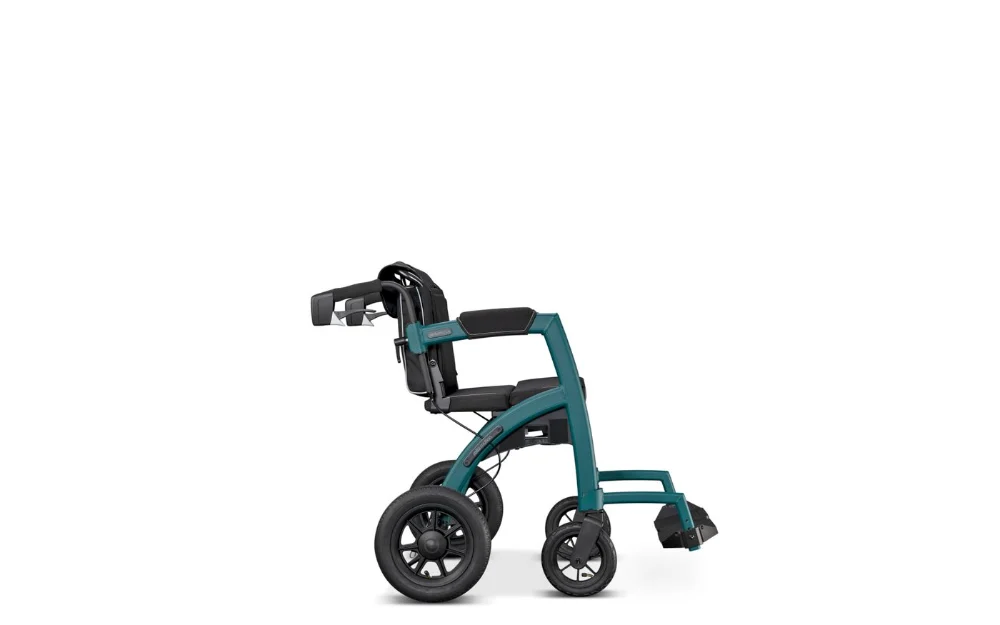
A walking frame or rollator is often the first piece of equipment that keeps someone steady, confident and independent on their feet. The right one prevents falls, saves energy and makes trips out possible again. The wrong one gets left in the hallway. This guide covers the main types, what they cost in the UK in 2026, and how to pick the one that fits your home, your strength and where you want to go.
Some links below are affiliate links. If you buy through them we may earn a small commission at no extra cost to you. See our affiliate disclosure.
Walking frame vs rollator: what's the difference?
A walking frame (or Zimmer frame) has no wheels, or two front wheels, and you lift or push it forward a step at a time. It gives maximum stability but is slow and tiring. A rollator has three or four wheels, brakes and usually a seat, so it rolls smoothly with you. Rollators suit people who can walk reasonably well but need support, balance and somewhere to rest.
Types and typical costs
| Type | Best for | Seat? | Typical cost |
|---|---|---|---|
| Walking frame / Zimmer | Maximum stability indoors, slow careful walking | No | £15 – £40 |
| Three-wheel (tri-walker) | Narrow doorways and tight indoor spaces; lightweight | No | £40 – £90 |
| Four-wheel rollator | Everyday indoor and outdoor use, shopping, resting | Yes | £55 – £300 |
| Upright / forearm rollator | Better posture, less wrist and back strain | Yes | £150 – £450 |
| Premium / carbon | Very light (under 5kg), easy to lift into a car | Yes | £300 – £600+ |
For everyday use, a four-wheel rollator with a seat is the most popular choice and offers the best balance of price and usefulness. Our partners at Review Mobility round up the best rollators currently on sale.
Our top picks on Amazon
Hand-picked options to suit most needs. Prices change often, so tap through to check the latest price on Amazon.
How to choose
- Indoor or outdoor? Small wheels are fine indoors and on smooth floors; larger wheels (20cm+) handle pavements, kerbs and rough ground far better.
- Do you need a seat? If you tire easily or stop often on walks, a padded seat with a backrest is invaluable. Tri-walkers are lighter but have no seat.
- Set the handle height. Stand upright with arms relaxed, the handles should sit at wrist-crease height. Too low makes you stoop; too high lifts your shoulders.
- Check the weight, both ways. A lighter frame is easier to lift into a car boot, but make sure the user weight capacity suits you. Bariatric rollators are made for heavier users.
- Test the brakes. Loop brakes (squeeze to slow, push down to park) are standard. Make sure your hands can operate them comfortably.
- Storage. Check it folds narrow enough for your hallway and car. Look for a basket or bag if you will use it for shopping.
VAT relief and getting one for free
All rollators and walking frames are zero-rated for VAT when bought by someone with a disability or long-term condition, you sign a short declaration and pay no 20% VAT. You do not need to be formally registered disabled.
You may also be able to get a basic walking frame or rollator free of charge through the NHS. Ask your GP or physiotherapist for a referral; an occupational therapist or physio will assess you and can issue the right aid. Provision is usually a standard model, so many people buy privately if they want a lighter or better-featured rollator. See more mobility funding options.
Frequently asked questions
What is the difference between a walker and a rollator?
A walker (walking frame) has no wheels or two front wheels and is lifted or pushed forward a step at a time for maximum stability. A rollator has three or four wheels, brakes and usually a seat, so it rolls with you and suits people who can walk but need support and a place to rest.
Do I really need brakes?
Yes, on any wheeled rollator. The brakes let you slow down safely and lock the frame in place when you sit on the seat or stop on a slope.
Three wheels or four?
Three-wheel tri-walkers are lighter and turn in tight spaces but have no seat. Four-wheel rollators are more stable, carry a seat and basket, and are better outdoors.
Can I get a rollator free on the NHS?
Often yes, after a referral to a physiotherapist or occupational therapist. NHS-provided frames are basic standard models; buy privately if you want something lighter or with more features.
Are rollators VAT exempt?
Yes. Bought by a person with a disability or long-term illness, they are zero-rated for VAT. You sign a simple eligibility declaration at purchase.
Looking for smaller home aids too? See our daily living aids guide, or if you need wheeled mobility over longer distances, compare mobility scooters and wheelchairs. Back to the mobility hub.
This page is part of Look Into's UK household cost research. For the costed figures behind it, with capture date, method and sources, see the Mobility Cost Index.