
The short version
- A mesh system never switches off. At the makers' maximum draw and the October 2026 cap of 26.32p per kWh, a TP-Link three-pack costs up to £79.54 a year (Deco X10) or £103.75 a year (Deco X55) to run.
- Amazon's eero publishes a typical figure instead, 4.5W a unit, which is £10.38 a year each. A maximum and a typical figure are not the same thing, so the two cannot be compared directly.
- Of the 41 mesh systems and units in Amazon UK's top 50 on 15 September 2026, none states its power draw. 31 print a coverage area. One puts a caveat next to it.
- TP-Link's own UK site says its coverage is "not guaranteed" and varies with building materials. That footnote does not appear on its Amazon listings. We call this the footnote that stayed home.
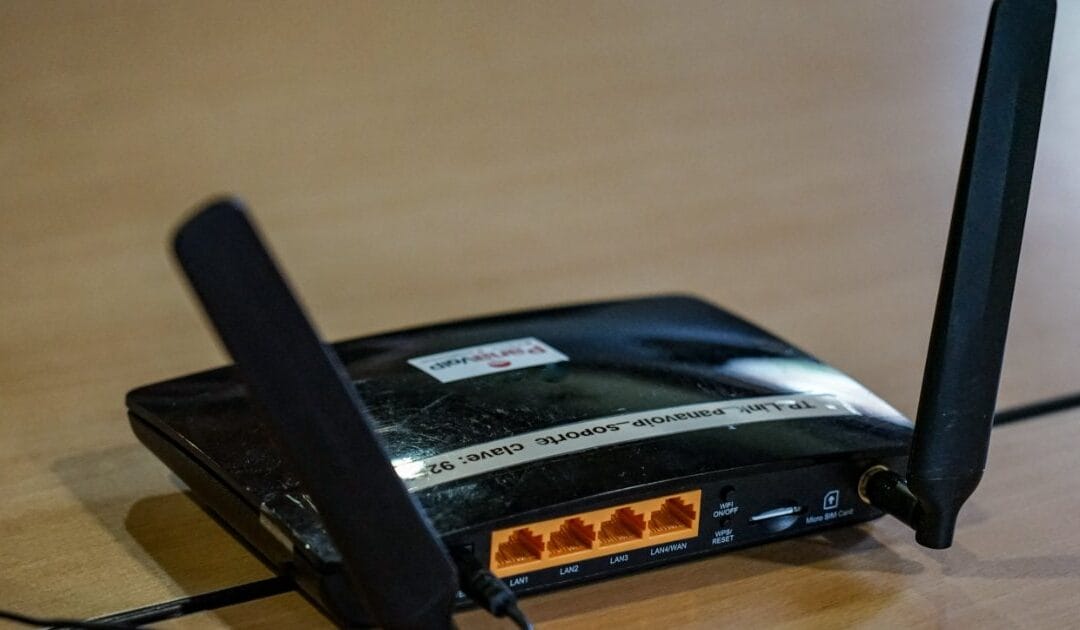
A mesh Wi-Fi system is two or three boxes that share one network around the house. It fixes dead spots in a way a single router often cannot. It also runs 8,760 hours a year, which makes it one of the few gadgets whose electricity cost is worth working out.
Nobody selling one on Amazon UK tells you that cost. So we went to the makers' datasheets, priced every published figure at the Ofgem cap from 1 October 2026, and said so where there was no figure to price.
The short answer
For most homes, the TP-Link Deco X10 three-pack is the sensible buy: Wi-Fi 6, 520 m² of claimed coverage, and a published maximum of 11.5W a unit, so no more than £79.54 a year for all three. The cheapest to run with a published figure is the eero 6+, at a typical 4.5W, £10.38 a year a unit. No mesh listing we read states its power draw.
How Look Into made this guide: desk research, not a hands-on test. We have not set these systems up. Coverage claims, Wi-Fi standards and prices are from each seller's Amazon UK listing, read on 27 October 2026. Power figures are from the makers' own datasheets and support pages, linked below. We price them at 26.32p per kWh, the Ofgem cap rate from 1 October 2026, for every hour of the year, because a mesh is never off. A maximum figure gives a ceiling, not what your system will actually use. Prices move often.
Prices and specs last checked by Look Into on 27 October 2026 · next check 22 December 2026 · how we picked
How they compare
| System | Units | Wi-Fi | Claimed coverage | Maker's power figure, per unit | A year, all units, 24/7 | Price per 100 sq ft covered |
|---|---|---|---|---|---|---|
| Mercusys Halo H60X | 3 | Wi-Fi 6 | 6,000 sq ft | Not published | Not published | £1.50 |
| TP-Link Deco M4 | 3 | Wi-Fi 5 | 4,000 sq ft | Not published (12V 1.5A adapter) | Not published | £2.98 |
| Amazon eero 6+ | 1 | Wi-Fi 6 | 140 m² (about 1,507 sq ft) | 4.5W typical | £10.38 | £9.29 |
| TP-Link Deco X10 | 3 | Wi-Fi 6 | 5,600 sq ft (520 m²) | 11.5W maximum, with adapter | up to £79.54 | £2.68 |
| TP-Link Deco X55 | 3 | Wi-Fi 6 | 6,500 sq ft | 15W maximum, with adapter | up to £103.75 | £3.08 |
| TP-Link Deco BE3600 | 3 | Wi-Fi 7 | 6,500 sq ft | 13.1W maximum, without adapter | up to £90.61, plus adapter losses | £3.54 |
| NETGEAR Orbi 370 | 3 | Wi-Fi 7 | 4,500 sq ft (UK page) | Not published | Not published | £5.11 |
A year is the per-unit figure times the number of units times 8,760 hours at 26.32p per kWh. Coverage and prices from Amazon UK on 27 October 2026. Price per 100 sq ft is our arithmetic on the claimed coverage, which is a claim, not a measurement.
The always-on bill
Most gadgets cost pennies because they are off most of the time. A mesh is the exception. TP-Link's EU datasheets give a maximum of 11.5W for a Deco X10 unit and 15W for a Deco X55, both measured with the power adapter. Three X10 units at full draw would use 302 kWh a year, which is £79.54 at 26.32p. Three X55 units would use 394 kWh, £103.75. Each extra unit you add costs up to £26.51 (X10) or £34.58 (X55) a year.
Those are ceilings. A unit rarely runs flat out all day. Amazon's eero publishes a typical figure instead, 4.5W for an eero 6+, measured to the US CTA 2049-A test, which is £10.38 a year a unit. The EU Code of Conduct on broadband equipment, a voluntary efficiency benchmark, allows a home gateway 2.3W to 3.0W when idle, plus about 1.7W to 1.8W for each Wi-Fi 6 radio. We would expect real draw to sit somewhere between those allowances and the makers' maximums, but no maker here publishes a measured figure for a UK home.
The honest range, then, is roughly £10 to £35 a unit a year. For a three-pack that is £30 to £105. It is not a reason to avoid mesh. It is a reason not to buy four units when two would do.
The footnote that stayed home
We read the 50 bestsellers in Amazon UK's Whole Home and Mesh Wi-Fi Systems chart on 15 September 2026. We set aside nine that are not mesh products: seven wall mounts, a 4G router and a standalone router. Of the remaining 41, none states how much power a unit draws. The only W we found on those pages is in the dimensions field, where it means width.
31 of the 41 print a coverage area, from 500 sq ft for a single add-on unit to 8,000 sq ft for a premium Wi-Fi 7 system. Only one, NETGEAR's Orbi 370, puts a caveat next to its figure on Amazon, saying actual coverage may vary with the home's layout and construction.
The caveats exist. They stay on the makers' own sites. TP-Link's UK page for the Deco X10 says coverage is "not guaranteed" and will vary with building materials and obstacles. Mercusys's datasheet carries the same footnote. NETGEAR's own figures also shift by region: the Orbi 370 three-pack is up to 4,500 sq ft on NETGEAR's UK page and 6,000 sq ft on its US page. Treat any coverage number as a best case, and count on fewer square feet in a brick or stone house.
The seven mesh systems worth considering
Ordered by price. Each card gives the maker's power figure, whether it is a maximum or a typical draw, and what that means over a year.
Mercusys Halo H60X (3-pack)
CheapestOne of the cheapest Wi-Fi 6 three-packs in the chart, and the lowest price per claimed square foot of our seven: £89.99 for up to 6,000 sq ft, £1.50 per 100 sq ft. Mercusys is a budget brand from the same group as TP-Link. Its datasheet gives the coverage with a clear footnote that it is not guaranteed.
The catch: Mercusys publishes no power consumption and no adapter rating, so we cannot give a running cost at all.
3 units · Wi-Fi 6, AX1500 · Up to 6,000 sq ft (550 m² on the datasheet) · live price on Amazon (checked 27 October 2026)
Behind this verdict: The Amazon UK listing, read 27 October 2026, for coverage and price. Mercusys's EU datasheet (December 2023) for coverage and the footnote. No power figure is published, so this system has no running cost in our table.

As an Amazon Associate, Look Into earns from qualifying purchases. Product prices and availability are accurate as of 27 October 2026 and are subject to change.
TP-Link Deco M4 (3-pack)
Cheapest Wi-Fi 5An older Wi-Fi 5 system. It suits a home with a modest broadband line and older devices. The listing claims up to 4,000 sq ft. TP-Link's own UK page gives 2,000 sq ft for one unit and 2,800 for two, "based on test results under normal usage conditions".
The catch: TP-Link gives only the adapter rating for this model, 12V at 1.5A. That caps a unit at 18W but says nothing about what it really draws, so we give no yearly cost.
3 units · Wi-Fi 5, AC1200 · Up to 4,000 sq ft · 12V 1.5A adapter · live price on Amazon (checked 27 October 2026)
Behind this verdict: The Amazon UK listing, read 27 October 2026, for coverage and price. TP-Link's Deco M4 3-pack datasheet (June 2021) for the adapter rating, and TP-Link UK's product page for the per-unit coverage basis. No consumption figure is published for this model.

As an Amazon Associate, Look Into earns from qualifying purchases. Product prices and availability are accurate as of 27 October 2026 and are subject to change.
Amazon eero 6+ (1-pack)
Lowest published drawA single Wi-Fi 6 unit that can be the start of a mesh. eero publishes a typical draw of 4.5W, which is 39 kWh and £10.38 a year, the lowest published figure here. One unit claims up to 140 m², about 1,507 sq ft.
The catch: This price buys one unit, not three, so it is the dearest here per square foot. Some features sit behind eero's paid subscription, so check what you need before buying.
1 unit · Wi-Fi 6 · Up to 140 m² · 4.5W typical · live price on Amazon (checked 27 October 2026)
Behind this verdict: The Amazon UK listing, read 27 October 2026, for coverage and price. eero's support article on power use for the 4.5W typical figure and its CTA 2049-A test basis. The £10.38 is our arithmetic. eero's figure is typical, not maximum, so it cannot be compared like for like with TP-Link's.

As an Amazon Associate, Look Into earns from qualifying purchases. Product prices and availability are accurate as of 27 October 2026 and are subject to change.
TP-Link Deco X10 (3-pack)
Best for most homesWi-Fi 6 at a mid price. TP-Link's EU datasheet gives a maximum of 11.5W per unit including the adapter, so three units cost no more than £79.54 a year, £6.63 a month. Claimed coverage is 5,600 sq ft, 520 m².
The catch: TP-Link's UK page says that coverage is "not guaranteed". The Amazon listing does not.
3 units · Wi-Fi 6, AX1500 · Up to 5,600 sq ft · 11.5W maximum per unit · live price on Amazon (checked 27 October 2026)
Behind this verdict: The Amazon UK listing, read 27 October 2026, for coverage and price. TP-Link's Deco X10 EU datasheet (October 2023) for 11.5W maximum, and TP-Link UK's product page for the coverage footnote. The £79.54 is our arithmetic. 11.5W is a maximum, so the real bill will be lower by an amount we cannot measure.

As an Amazon Associate, Look Into earns from qualifying purchases. Product prices and availability are accurate as of 27 October 2026 and are subject to change.
TP-Link Deco X55 (3-pack)
BestsellerNumber one in the chart. Faster Wi-Fi 6 (AX3000) than the X10 and more coverage, up to 6,500 sq ft. It is also the hungriest with a published figure: 15W maximum per unit including the adapter, so up to £103.75 a year for three.
The catch: The extra speed only matters if your broadband and devices can use it. On a typical line the X10 does the same job for £50 less and up to £24 a year less to run.
3 units · Wi-Fi 6, AX3000 · Up to 6,500 sq ft · 15W maximum per unit · live price on Amazon (checked 27 October 2026)
Behind this verdict: The Amazon UK listing, read 27 October 2026, for coverage and price. TP-Link's Deco X55 EU datasheet (April 2024) for 15W maximum. The £103.75 is our arithmetic. 15W is a maximum, not a typical draw.

As an Amazon Associate, Look Into earns from qualifying purchases. Product prices and availability are accurate as of 27 October 2026 and are subject to change.
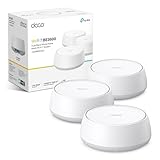
TP-Link Deco BE3600 (3-pack)
Cheapest Wi-Fi 7A Wi-Fi 7 three-pack for about the price of the X55. TP-Link's EU datasheet gives 13.1W maximum per unit, measured without the adapter, which is up to £90.61 a year for three before the adapter's own losses. Claimed coverage is 6,500 sq ft.
The catch: Wi-Fi 7 needs Wi-Fi 7 devices to make a difference, and few homes have many yet. TP-Link's UK page for this model shows the coverage figure without a footnote.
3 units · Wi-Fi 7, BE3600 · Up to 6,500 sq ft · 13.1W maximum per unit, without adapter · live price on Amazon (checked 27 October 2026)
Behind this verdict: The Amazon UK listing, read 27 October 2026, for coverage and price. TP-Link's Deco BE3600 EU datasheet (June 2025) for 13.1W maximum without adapter. The £90.61 is our arithmetic. Because the figure excludes the adapter, the wall draw is higher by an amount TP-Link does not state.
As an Amazon Associate, Look Into earns from qualifying purchases. Product prices and availability are accurate as of 27 October 2026 and are subject to change.
NETGEAR Orbi 370 (3-pack)
Only honest Amazon caveatA Wi-Fi 7 system from a premium brand, and the only listing in the chart that says, next to its coverage claim, that actual coverage may vary with your home's layout and construction.
The catch: NETGEAR's UK page claims up to 4,500 sq ft for the three-pack and its US page 6,000 sq ft for what it sells as the same system. NETGEAR's spec sheet and manual give no power figure, so we give no running cost.
3 units · Wi-Fi 7 · Up to 4,500 sq ft (UK page) · live price on Amazon (checked 27 October 2026)
Behind this verdict: The Amazon UK listing, read 27 October 2026, for the caveat and price. NETGEAR's UK and US product pages for the two coverage claims, and NETGEAR's EU spec sheet, which gives 360 m². No power figure is published in the documents we could open.

As an Amazon Associate, Look Into earns from qualifying purchases. Product prices and availability are accurate as of 27 October 2026 and are subject to change.
How to choose one
Start with your broadband speed. For most UK broadband lines, a Wi-Fi 6 system such as the Deco X10 is enough. Wi-Fi 7 costs more and only helps devices that support it. Then count rooms, not square feet. Thick walls, floors and long thin houses matter more than the area on the box. Two units often cover a flat or a small semi. Then check your router. Many mesh systems replace your provider's router's Wi-Fi rather than adding to it, and a provider's router left broadcasting alongside is one more box drawing power.
Buy the fewest units that work. Every extra unit adds up to £26 to £35 a year at the makers' maximum figures for the TP-Link units here. Most systems let you add another unit later.
Common questions
How much does it cost to run a mesh Wi-Fi system?
At the October 2026 cap of 26.32p per kWh, up to £79.54 a year for a TP-Link Deco X10 three-pack and up to £103.75 for a Deco X55 three-pack, at the makers' maximum draw. eero gives a typical 4.5W a unit, £10.38 a year each.
Should I turn my mesh Wi-Fi off at night?
It would save a few pounds a year at most, and it can disconnect smart devices, alarms and phone calls over Wi-Fi. If you do, use the system's own schedule rather than the plug.
Is mesh Wi-Fi better than a Wi-Fi extender?
A mesh shares one network name and moves devices between units on its own. An extender is cheaper and fine for one dead room. Both add a box that draws power all day.
Are mesh Wi-Fi coverage claims accurate?
They are best cases. TP-Link's UK site says its coverage is not guaranteed and varies with building materials. Of 31 bestselling Amazon UK mesh listings that print a coverage area, only one caveats it on the listing.
How many mesh units do I need?
Fewer than the box suggests for a flat or a small house, and possibly more for a long or stone-built home. Start with two or three and add one if a room still drops out.
What changed in this re-check
Re-checked on 27 October 2026. All seven systems were opened on their Amazon UK product pages and all seven are in stock with a working buy box. Nothing was dropped and nothing was replaced. Three price-per-coverage figures had moved enough to correct.
- Mercusys Halo H60X fell from £99.99 to £89.99, so its cost per 100 sq ft of claimed coverage drops from £1.67 to £1.50. It stays the cheapest of the seven on that measure.
- TP-Link Deco BE3600 is now £229.99, so its cost per 100 sq ft rises from £3.27 to £3.54.
- NETGEAR Orbi 370 is now £229.99, so its cost per 100 sq ft falls from £5.53 to £5.11.
- Deco M4, eero 6+, Deco X10 and Deco X55 came back within a penny of their September prices, so those figures stand unchanged, and the order of the seven on cost per 100 sq ft is the same as it was.
- The running-cost figures are unchanged. They were already priced at 26.32p per kWh, the Ofgem cap in force from 1 October to 31 December 2026, so no rebase was needed. The makers’ power figures were not re-read at source today and keep their September reading dates in the source list below.
- The chart positions quoted in this piece were read on 15 September 2026 and were not re-read, so those sentences keep their original date.
Sources
- Ofgem, Energy price cap unit rates and standing charges (electricity 26.32p per kWh, 1 October to 31 December 2026, read 15 September 2026)
- Amazon UK, Best Sellers in Whole Home and Mesh Wi-Fi Systems (top 50 read 15 September 2026)
- TP-Link, Deco X10 (EU) datasheet (October 2023)
- TP-Link UK, Deco X10 product page (read 15 September 2026)
- TP-Link, Deco X55 (EU) datasheet (April 2024)
- TP-Link, Deco BE3600 (EU) datasheet (June 2025)
- TP-Link, Deco M4 (3-pack) datasheet (June 2021)
- TP-Link UK, Deco M4 product page (read 15 September 2026)
- Mercusys, Halo H60X (3-pack) datasheet (December 2023)
- eero, How much power does eero use? (read 15 September 2026)
- NETGEAR UK, Orbi 370 series (read 15 September 2026)
- NETGEAR, RBE373 EU spec sheet (read 15 September 2026)
- European Commission JRC, Code of Conduct on Energy Consumption of Broadband Equipment, version 8.1 (March 2023)
Prices checked on Amazon UK on 27 October 2026 and change often. Look Into earns a commission on qualifying purchases made through the links above, at no extra cost to you. Nobody pays for a place in this guide.